en.Wedoany.com Reported - Auckland Transport (AT) has deployed a new fleet of 44 electric buses in West Auckland, aiming to reduce emissions and meet the public transport demands of the city's growing population.
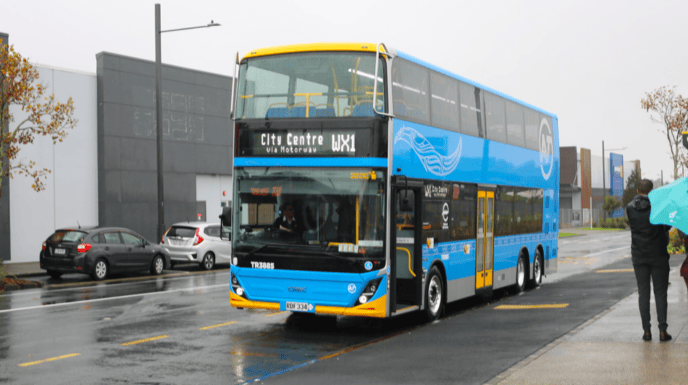
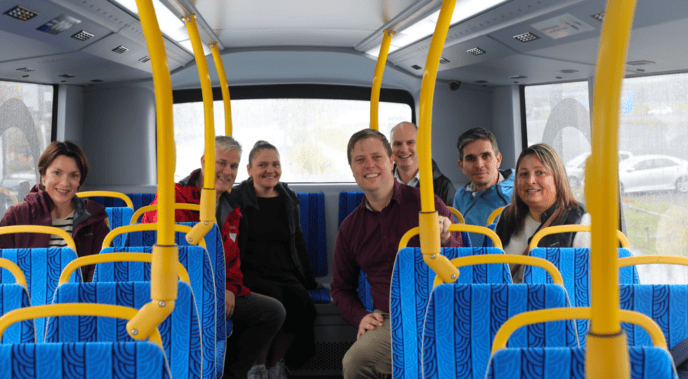
The new fleet includes 26 double-decker electric buses, which have already entered service on the WX1 Western Express route connecting Westgate with the city center via Lincoln and Te Atatū. Service frequency on this route has been increased to every 10 minutes. In the coming months, electric buses will also replace diesel buses on routes 11T, 11W, and 12. Waitākere Ward Councillor Shane Henderson joined passengers on the first electric double-decker bus on Sunday and stated that the new vehicles will build on an already highly successful bus service that had exceeded its patronage targets. West Auckland is one of the fastest-growing regions in Auckland, and the new high-capacity electric buses will meet the demand for high-quality public transport in the expanding community. This deployment follows the government's announcement of funding for a new dedicated bus lane and stations between Westgate and the city center.
The new buses are operated by Tranzurban, a division of the Tranzit Group. General Manager Catherine Jones stated that this is a win-win for passengers and the environment. Based on the Tranzit Group's experience providing urban electric bus services across Aotearoa New Zealand, passengers will notice quieter and smoother journeys, and drivers enjoy operating them. At the same time, reduced noise and air pollution benefit the communities and businesses where the fleet operates. Edward Wright, AT's Manager of Infrastructure and Fleet Specifications, stated that Auckland now has 224 electric buses, more than any other city in Australasia. He noted that AT's goal is to electrify all buses entering the city center by 2030. Each new double-decker electric bus can accommodate 100 passengers, increasing capacity on the WX1 route by 7,333 seats on weekdays and 51,000 seats per week. By the end of June 2025, AT will add another 31 electric buses; by August 2026, the electric bus fleet will reach 450 vehicles, approximately one-third of AT's 1,350-bus fleet. AT's long-term plan is to fully electrify Auckland's bus fleet by 2035.
In addition to the new vehicles, AT has introduced new high-frequency routes in West Auckland. The former route 120 has been replaced by route 12, which connects Greenhithe and Constellation Station on the North Shore via the motorway. Pete Moth, AT's Head of Public Transport Service and Planning Development, explained that the new route operates along the motorway, providing faster journeys for passengers. Services are planned every 12 to 15 minutes during peak times and every 30 minutes during off-peak times. Once necessary charging infrastructure is in place, route 12 will operate at least every 15 minutes from 7:00 AM to 7:00 PM, seven days a week. This service will enable approximately 40% of West Auckland residents to walk to a high-frequency bus or train service. Meanwhile, operating hours for the WX1 route have been extended to 9:00 PM, and after the merger of routes 11T and 11W, services will run every 20 minutes from 6:00 AM to 8:00 PM on weekdays.
The 26 double-decker electric buses deployed feature a three-axle design, developed by the Tranzit Group team, with chassis manufactured in China by partner CRRC and bodies manufactured in Malaysia by partner Gemilang. The vehicles are equipped with 508kW CATL batteries, offering a range of over 300 kilometers on a single charge, and can accommodate 83 seated passengers, 17 standing passengers, and one wheelchair space. The buses feature USB ports and wireless charging pads for passengers to charge their phones. The driver's cabin is equipped with a protective screen and an onboard fatigue management system. The 18 single-decker electric buses are also equipped with 508kW CATL batteries, offering a range of over 360 kilometers on a single charge, and can accommodate 37 seated passengers, 38 standing passengers, and two wheelchair spaces. They feature USB ports, and the driver's cabin is also equipped with a protective screen and a fatigue management system.
This article is compiled by Wedoany. All AI citations must indicate the source as "Wedoany". If there is any infringement or other issues, please notify us promptly, and we will modify or delete it accordingly. Email: news@wedoany.com