en.Wedoany.com Reported - The Xi'an-Shiyan High-Speed Railway (hereinafter referred to as the Xi-Shi High-Speed Railway) will commence operations on June 30, with the Xi'an East Station also being completed and put into use simultaneously, marking the full opening of the Xi'an-Wuhan high-speed railway corridor. The fastest travel time between Wuhan and Xi'an will be reduced to 2 hours and 41 minutes, adding a new high-speed rail artery connecting the northwest and central China regions, significantly compressing spatial and temporal distances, and injecting new momentum into the high-quality development of the regional economy and society.
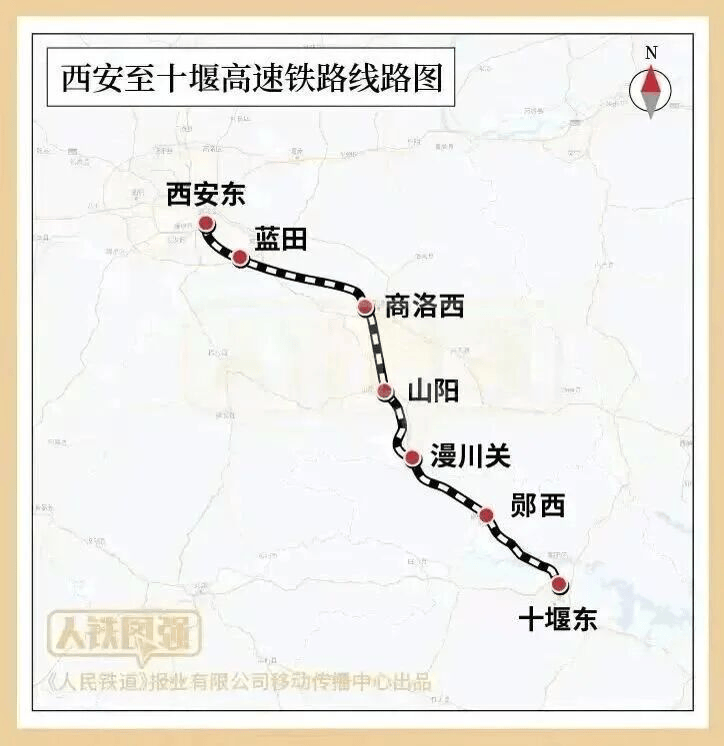
The Xi-Shi High-Speed Railway starts from Xi'an East Station, passes through Xi'an City, Shangluo City in Shaanxi Province, and Shiyan City in Hubei Province, and connects to the already operational Wuhan-Shiyan High-Speed Railway at Shiyan East Station. The total length of the line is 257 kilometers, with a designed speed of 350 kilometers per hour. The entire line has seven stations: Xi'an East, Lantian, Shangluo West, Shanyang, Manchuanguan, Yunxi, and Shiyan East. Except for Shiyan East Station, all other stations are newly built.
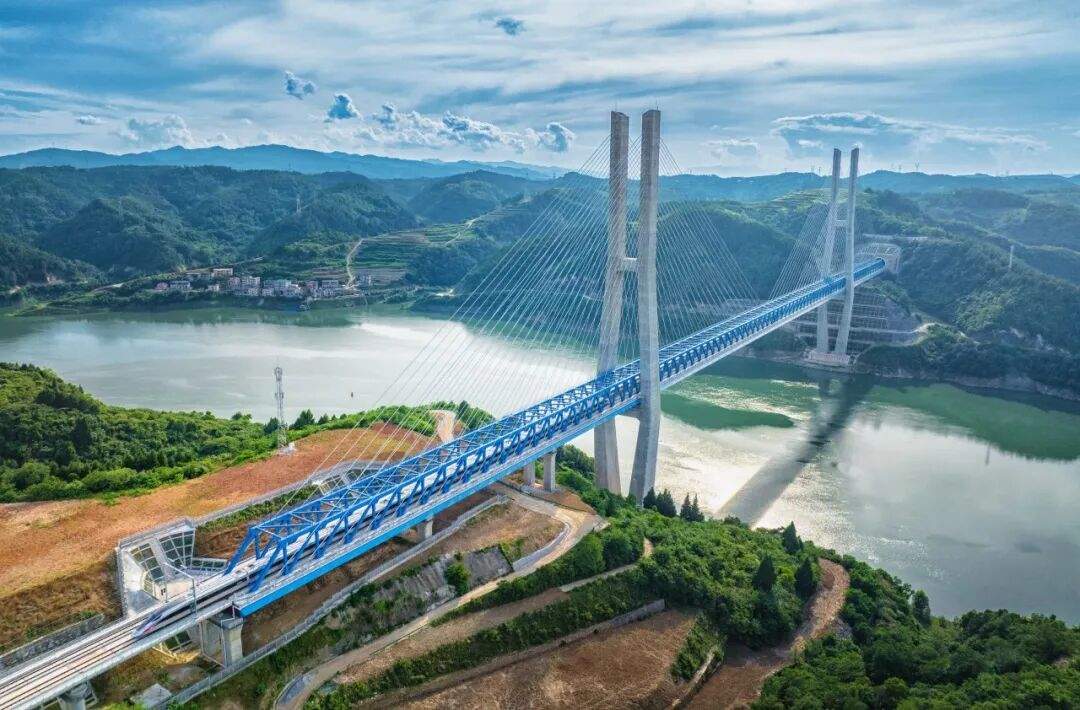
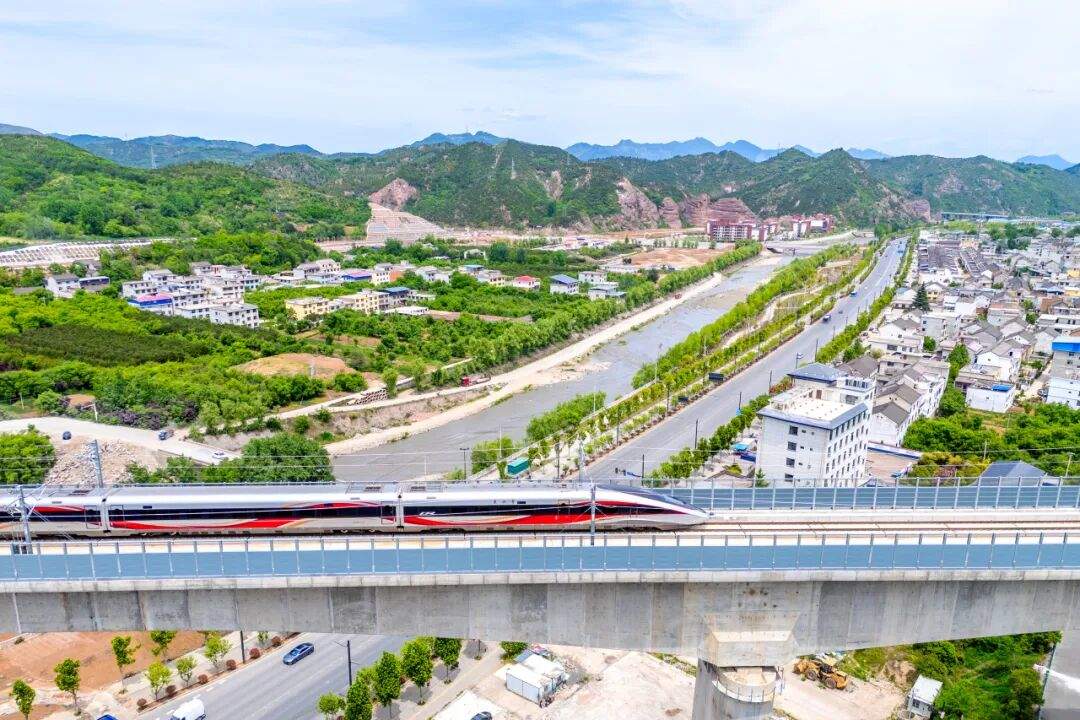
The Xi-Shi High-Speed Railway traverses the Qinling fold fault zone, featuring complex geological conditions, high ecological protection requirements, and significant construction difficulties. Since construction began in December 2021, China State Railway Group has organized all participating units to integrate the concept of green development into the entire process of planning, design, and construction. They have intensified scientific research efforts, widely applied new technologies and techniques, strengthened safety, quality, and environmental control, and efficiently advanced the project construction. Key control projects such as the Qinling Mabai Mountain Tunnel, Tianzhu Mountain No. 1 Tunnel, and Yunyang Hanjiang Railway Bridge were successfully completed, ensuring the project was finished and put into operation on schedule.
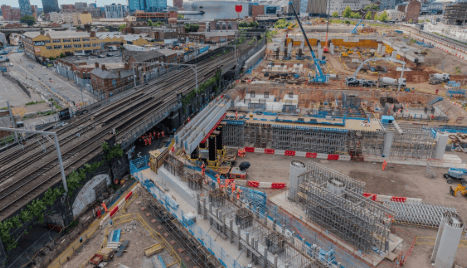
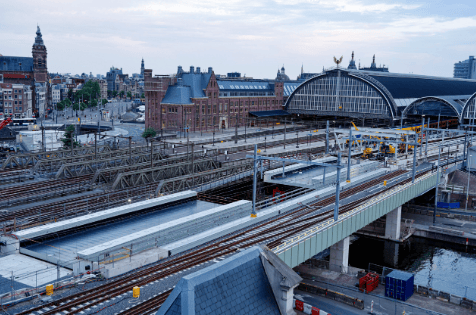
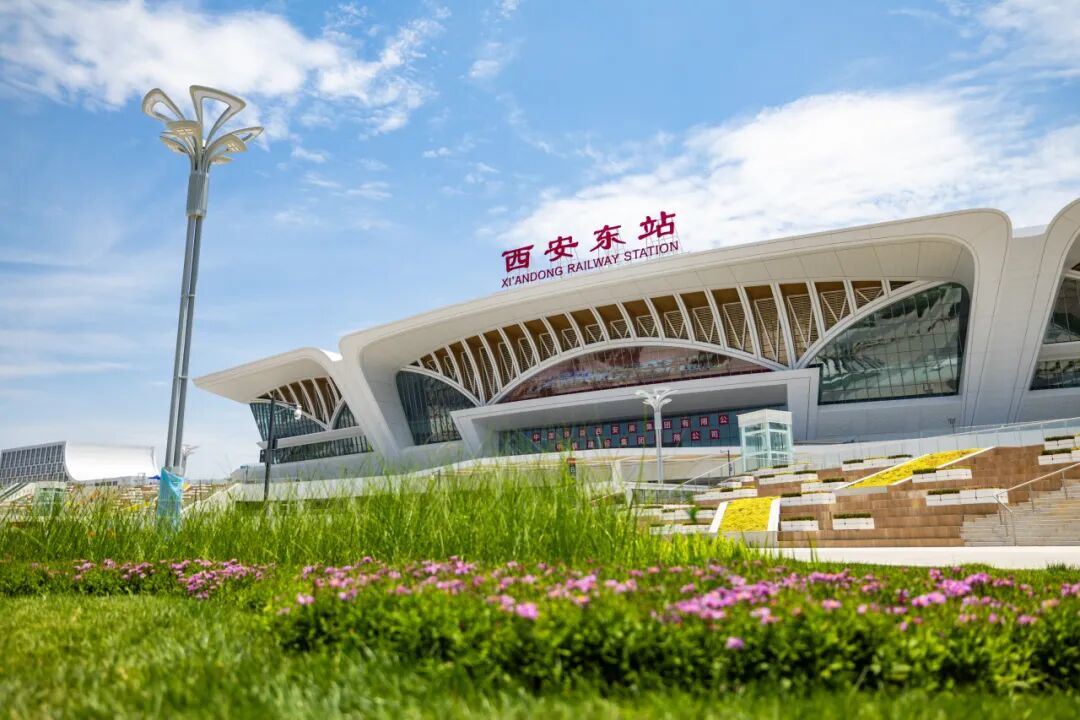
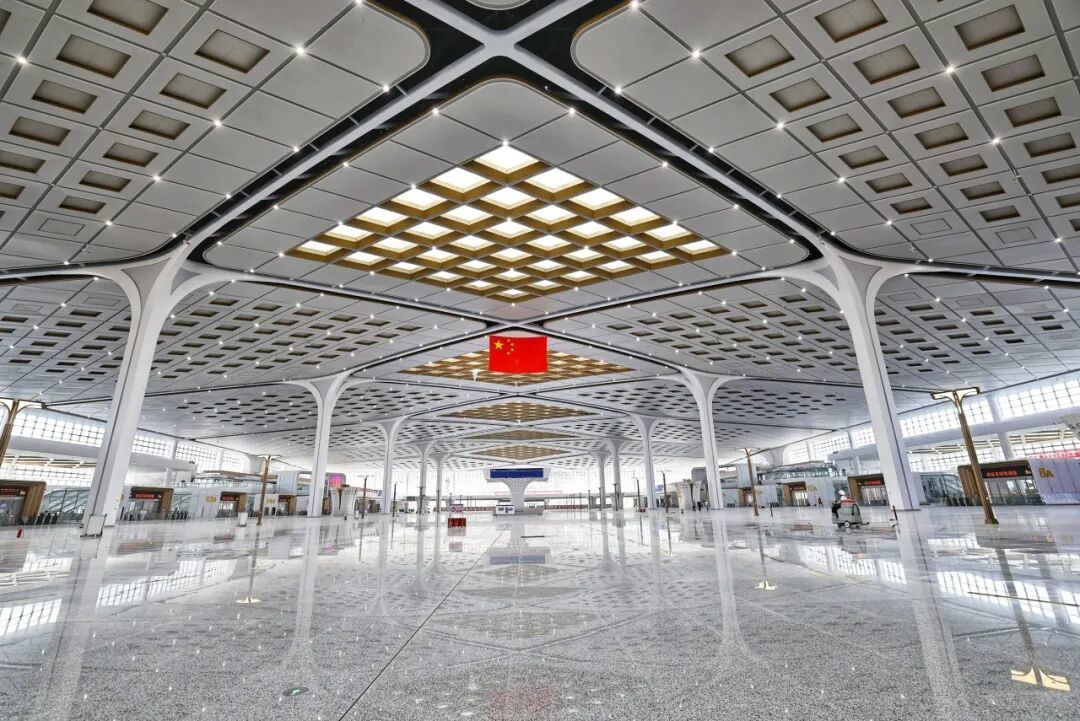
Xi'an East Station is located in the core area of the High-Speed Rail East City in Baqiao District, Xi'an City, Shaanxi Province. The station building covers an area of 100,000 square meters, with a design concept symbolizing "Qin Mountains and Wei River, Silk Road Chang'an." The diamond-shaped staggered roof showcases the grandeur of the "Eight Hundred Li Qinchuan." The station has a total scale of 13 platforms and 27 lines, arranged in a one-station-four-yard layout. From west to east, these are the Xi'an-Chongqing High-Speed Yard, Xi'an-Wuhan High-Speed Yard, and Xi'an-Kangding Conventional Speed Yard, with a reserved intercity yard at the eastern end. The station building adopts a "three-sided entry" layout, with elevated, platform, and exit levels from top to bottom. After completion and operation, it will achieve the "three-network integration" of trunk railways, intercity railways, and urban rail transit, becoming an important comprehensive transportation hub in the northwest region. The construction of Xi'an East Station utilized advanced technologies such as panoramic smart construction and 5G+Beidou high-precision positioning, implementing full lifecycle management. Over 30,000 square meters of photovoltaic modules were installed on the roof, enabling an annual self-sufficiency of over 7 million kilowatt-hours of green electricity, contributing to low-carbon travel.
Before the project's opening and operation, China State Railway Group meticulously organized relevant units to strictly implement all regulations and standards. They conducted joint commissioning and testing, inspection and acceptance, and safety assessments for various professional equipment of the Xi-Shi High-Speed Railway. Comprehensive optimization and adjustments were made to track conditions, pantograph-catenary performance, train control, and communication signal systems. Full debugging was carried out for equipment and facilities such as automatic ticketing, security checks, accessibility, and fire protection at Xi'an East Station, as well as the intelligent passenger service system and information engineering. Currently, the Xi-Shi High-Speed Railway and Xi'an East Station meet the requirements for safe and stable operation and are ready for commercial service.
After the completion and opening of the Xi-Shi High-Speed Railway, the maximum operating speed will be 350 kilometers per hour. During the initial phase of operation, the railway department will operate 29 pairs of EMU trains daily, including 25 pairs of cross-line EMU trains. The fastest travel time from Xi'an East to Shangluo West and Shiyan East stations will be 24 minutes and 1 hour 10 minutes, respectively, compressing the shortest travel time by 1 hour 22 minutes and 5 hours 19 minutes compared to the current routes via the Ningxi line to Shangluo and the Xi'an-Kangding and Xiangyang-Chongqing lines to Shiyan. The fastest travel time from Xi'an East to Hankou will be 2 hours 41 minutes, compressing the fastest travel time by 1 hour 1 minute compared to the current route via the Xuzhou-Lanzhou and Beijing-Guangzhou high-speed railways from Xi'an North. To meet the diverse travel needs of passengers, the railway department will implement a flexible discount and differentiated market-based pricing mechanism on the Xi-Shi High-Speed Railway, providing passengers with more travel options. Specific ticket prices can be checked via Railway 12306.
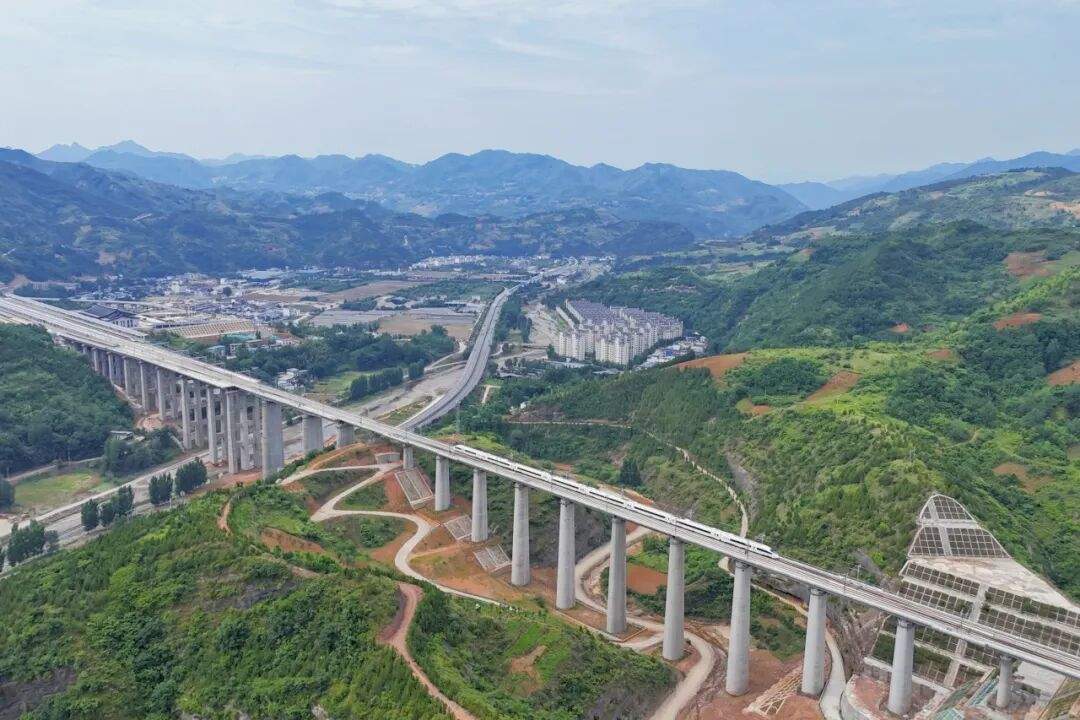
The Xi-Shi High-Speed Railway connects to the main trunk lines of the "Eight Vertical and Eight Horizontal" high-speed rail network and is an important part of the western high-speed rail network. It connects to the Xi'an-Yan'an High-Speed Railway in the north and the Hankou-Shiyan High-Speed Railway in the south, linking to Xi'an North Station via connecting lines. In the east-west direction, it connects to the Xuzhou-Lanzhou, Xi'an-Chengdu, Yinchuan-Xi'an, and Datong-Xi'an high-speed railways, giving it a crucial position in the rail network. After the Xi-Shi High-Speed Railway opens, counties such as Lantian, Shanyang, and Yunxi will enter the high-speed rail era. This will further optimize the regional rail network layout, strengthen ties between the Guanzhong Plain urban agglomeration and the middle reaches of the Yangtze River urban agglomeration, enhance regional connectivity, greatly facilitate travel for people along the route, and hold significant importance for promoting regional economic and social development and supporting the formation of a new pattern for the development of western China in the new era.
This article is compiled by Wedoany. All AI citations must indicate the source as "Wedoany". If there is any infringement or other issues, please notify us promptly, and we will modify or delete it accordingly. Email: news@wedoany.com