India's Ester Invests 10 Billion Rupees in Polyester Recycling Facility
en.Wedoany.com Reported - At the GCPRS 2026 exhibition held in New Delhi, India, Ester Industries showcased a product portfolio centered on sustainability, with a focus on polyester recycling, circular packaging solutions, and advanced material innovations. Rather than highlighting a single product, the company used the platform to demonstrate its investments in recycling capacity, patented technologies, and future-oriented infrastructure to help brand owners transition to a circular economy.
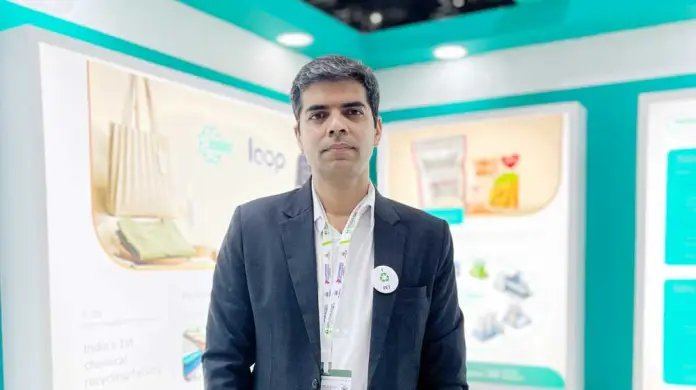
CEO Vaibhav Jha stated that sustainability is no longer just an environmental responsibility but a strategic business direction for the company. Its slogan is "Innovative Sustainable Solutions." Currently, Ester Industries operates with a recycled PET (rPET) capacity of approximately 30,000 tons per year, supplying recycled polyester materials to brands. Vaibhav noted that the company's strength lies not only in capacity but also in the quality of recycled polymers. The recycled pellets produced by the company are considered among the purest products available in the Indian market, enabling brands to confidently use higher proportions of recycled content.
Ester is extending this capability to its film product portfolio. All polyester films showcased at GCPRS can be manufactured using recycled content, making the company one of the few global manufacturers capable of producing films with 100% recycled content. Additionally, the company produces a variety of recycled polyester-based polymers to expand the application of recycled materials across multiple sectors.
A key innovation at the exhibition was Ester's patented mono-material PET lamination solution. Flexible packaging typically combines multiple materials, making it difficult to recycle after use. Vaibhav believes this new solution addresses this long-standing challenge. This innovation keeps packaging within a single material family, significantly improving recyclability while maintaining functional performance. Complementing this technology is the "Elite Ester Loop Infinite Technologies" facility, in which Ester plans to invest over 10 billion Indian rupees. This facility is primarily used for textile-to-textile recycling, while also supporting bottle-to-bottle and laminate-to-laminate recycling, aiming to enhance polyester circularity across multiple sectors.
Regarding the suitability of recycled plastics for food contact applications, Ester emphasized its strict traceability and quality control procedures during the recycling process. The company maintains full traceability of incoming raw materials, which undergo thorough cleaning and inspection. Its recycling production line is certified for food-grade recycled PET production, and the extrusion system is certified for producing food-grade rPET, with the output fully compliant with international food safety standards. The company also has an extrusion system approved by the European Food Safety Authority (EFSA), complies with U.S. Food and Drug Administration (FDA) requirements, and holds certification from the Food Safety and Standards Authority of India (FSSAI).
Vaibhav believes the recycling industry has immense growth potential, driven by both regulations and consumer preferences. He acknowledged that cost remains one of the biggest challenges for sustainable materials. As the recycling industry is still developing, the supply chain has not yet achieved full efficiency, making sustainable solutions currently more expensive than virgin materials. With larger production volumes and more mature supply chains, prices are expected to decline. He stated that by investing in recycling infrastructure, advanced polyester technologies, and circular packaging solutions, Ester Industries is positioning itself at the forefront of India's evolving recycling landscape.