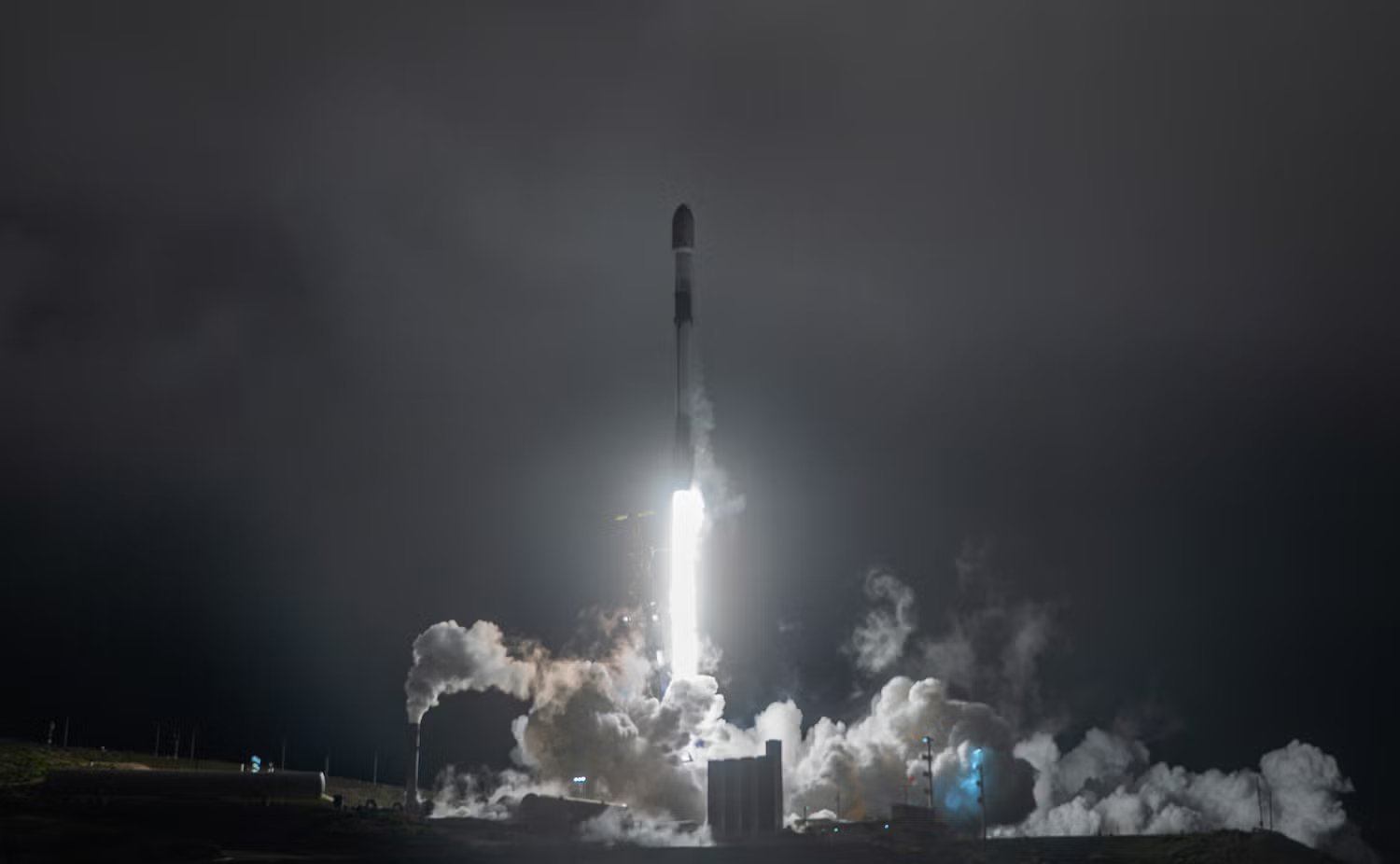
en.Wedoany.com Reported - NASA has scheduled the launch of the Nancy Grace Roman Space Telescope (Roman) for August 30, 2026, earlier than the previously reported September 2026 window. If the mission proceeds as planned, Roman is expected to deliver a census in a single mission large enough to reshape the current exoplanet catalog, with an estimated detection of approximately 100,000 transiting planets.
NASA previously cited the figure of 100,000 to represent Roman's expected transit yield. A subsequent simulation study led by Robert F. Wilson expanded the reasonable range, suggesting the survey could detect between approximately 60,000 and 200,000 transiting planets, depending on the survey design. This prediction does not imply an immediate set of confirmed worlds with complete orbital information, but rather a large number of detection signals and candidates that will require routine checks, modeling, and observational verification. As of July 7, 2026, NASA's Exoplanet Archive lists 6,316 confirmed planets. Roman's predicted yield would exceed the entire confirmed exoplanet catalog accumulated since the discovery of the first planet orbiting a Sun-like star in the 1990s, and would approach the scale of redefining that catalog.
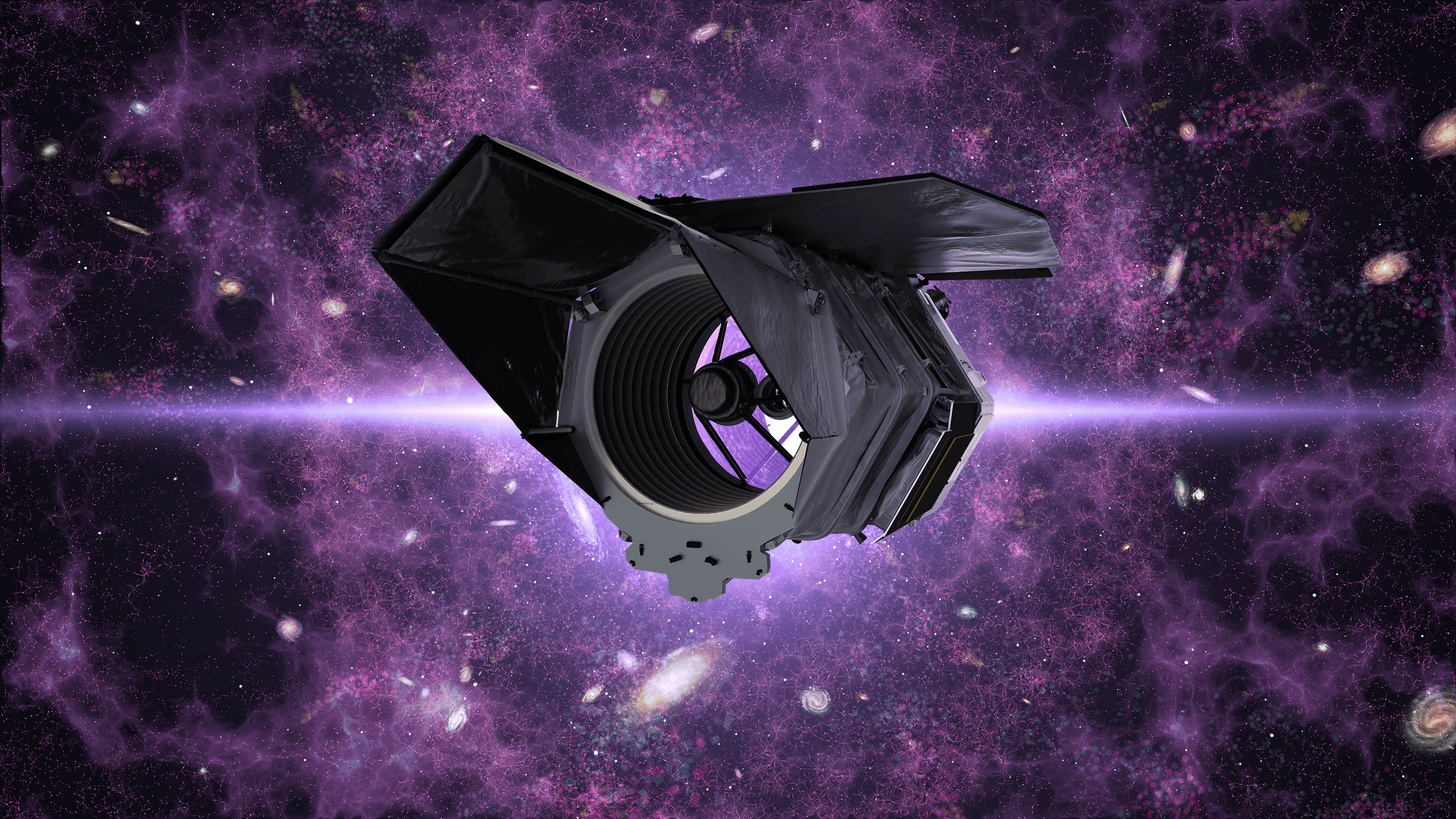
Roman is not a smaller follow-up telescope to Hubble or Webb. Its mirror diameter is 2.4 meters, the same as Hubble's, but its primary instrument design goals are fundamentally different. NASA states that Roman's field of view is at least 100 times larger than Hubble's, while maintaining space telescope resolution. Its Wide Field Instrument is an approximately 300-megapixel infrared camera designed to repeatedly survey large areas of the sky. This repeated observation is key to the mission. Roman's exoplanet program is built around a Galactic bulge time-domain survey: repeatedly staring at the crowded central region of the Milky Way to observe changes in the brightness of hundreds of millions of stars over time.
The mission employs two different planet detection techniques. The first is gravitational microlensing, which occurs when a star passes almost directly in front of a more distant background star; the foreground star's gravity bends and magnifies the background star's light. If the foreground star hosts a planet, the planet leaves a brief additional signal in the magnification pattern. Microlensing excels at detecting planets far from their stars, planets at great distances from Earth, and some worlds that do not orbit any star. The second method is the transit technique, made famous by the Kepler mission: a small, regular dimming of a star's brightness when a planet crosses its face from the observer's perspective. Although not the primary mission, the high-frequency monitoring that enables the microlensing survey also allows Roman to capture transits.
In 2021, NASA cited a study led by Benjamin Montet, emphasizing that Roman could detect over 100,000 transiting planets. A pixel-level simulation completed by the Wilson team in 2023 expanded the estimate to approximately 60,000 to 200,000 transiting planets, including about 7,000 to 12,000 small planets; the exact number depends on factors in the survey design such as observation frequency, duration of the observing season, stellar crowding, and the confidence level for separating signal from noise. The mission can be designed to achieve a certain yield, but it does not control every detail that determines the final number.
The expected planet types are not all Earth-like. NASA notes that many of Roman's transiting planets are likely to be gas giants, ice giants, and mini-Neptunes, because large planets close to their stars are easier to detect via the transit method. Some targets may lie in the habitable zone, but the mission's core value lies not in discovering a familiar-looking world, but in transforming a limited sample into a statistical map: regions where planets are common or rare, how planet populations vary with distance from the Galactic center, and the types of systems missed by current searches.
Kepler transformed exoplanet science by demonstrating the ubiquity of planets, but it observed a relatively nearby patch of sky in the direction of Cygnus and Lyra. Roman, by contrast, looks toward the dense center of the Milky Way, reaching planets thousands of light-years away; NASA states that Roman can detect planets up to about 26,000 light-years from Earth. This will help test whether planet populations vary across the Milky Way: Are planets in the bulge as common as in the local neighborhood? Are the proportions of gas giants, mini-Neptunes, and small worlds the same? Does the older, denser central region of the Galaxy build planetary systems differently?
Roman's microlensing survey also addresses a blind spot of the transit method. The transit method favors planets close enough to their stars to cross the line of sight frequently, while microlensing can detect planets farther out in a system, including worlds with orbital distances closer to Jupiter and Saturn than to Mercury. Combining the two methods allows Roman to sample both tightly orbiting planets and cold planets on wider orbits simultaneously, even though each method has its own biases. This makes the mission's exoplanet results potentially more useful than the headline number itself: a well-characterized count can become a map of where planets are distributed in the Galaxy.
NASA's mission page currently lists the launch date as August 30, 2026, more specific than the previous September 2026 window. The observatory has been undergoing final assembly and testing; NASA reported in January 2026 that telescope construction was complete, with environmental and system-level checks continuing before launch. The mission is expected to operate at the Sun-Earth L2 point, the same gravitational neighborhood as the James Webb Space Telescope. Roman will also carry a coronagraph technology demonstration designed to block starlight to directly study faint, close-in exoplanets and planet-forming disks. This instrument is not the source of the 100,000-planet prediction, but it is part of the same larger shift—exoplanet astronomy moving from mere discovery toward census, demographics, and ultimately more detailed characterization.
If the mission finds approximately 100,000 transiting planet candidates, the most important result will not be setting a new record, but generating enough planets in a single survey to compare populations across different distances, stellar environments, and orbital architectures. The known catalog will no longer be dominated solely by the easiest-to-find planets from earlier missions. Roman cannot guarantee exactly 100,000 confirmed exoplanets, but it is expected to produce a harvest of planet detections on that scale, which will then require validation and classification. Compared to the current confirmed catalog of just over 6,300, Roman's prediction represents a different order of magnitude in survey capability. By the time Roman begins returning data, the question may no longer be whether planets are common, but whether humanity has finally begun to systematically count them across the Milky Way.