China's Haiguang Information Showcases Computing Power Architecture, Targeting the 300 Billion Yuan Industrial Control Chip Market
en.Wedoany.com Reported - Haiguang Information showcased a complete computing power architecture for "cloud-edge-device" scenarios at the Photosynthetic Organization 2026 Intelligent Computing Application Conference, covering levels from data center hundred-thousand-card AI superclusters to industrial site embedded AI devices.
As capital expenditure growth in hyperscale data centers slows, physical world scenarios such as industrial production lines, substations, transportation hubs, oil and gas fields, and ports are becoming new growth poles for computing power demand. Industry forecasts indicate that the scale of China's industrial control chip market has exceeded 300 billion yuan, with an annual growth rate of over 15%.
The core challenge of deploying computing power to the edge lies in the fundamentally different requirements industrial scenarios impose on chips compared to data centers. Industrial chips must operate stably in extreme temperature ranges from -40°C to 85°C, achieve seamless compatibility with existing x86 industrial software ecosystems, and establish security defenses at the chip level. Embedded scenarios, due to their harsh environmental conditions and extremely low localization rate, represent the most difficult yet most valuable segment for computing power deployment.
Haiguang C86 has chosen a technical route of fully inheriting the x86 ecosystem. Embedded customers require existing software to run without code modification; for example, rail transit signal system code has evolved over two decades, and substation dispatch software has accumulated millions of lines. Haiguang's approach is to keep the operating system and database unchanged, aligning instructions one by one and adapting peripherals individually. To date, Haiguang chips have covered over 300 AI application scenarios, maintaining a leading market share in financial IT innovation and have been deployed in substation auxiliary control systems across multiple provinces in the energy and power sector.
Beyond compatibility, the Haiguang C86 features chip-level wide-temperature hardening, covering a range from minus 40 degrees to 85 degrees Celsius, involving systematic redesign of standard cell libraries, clock tree design, and packaging material selection.
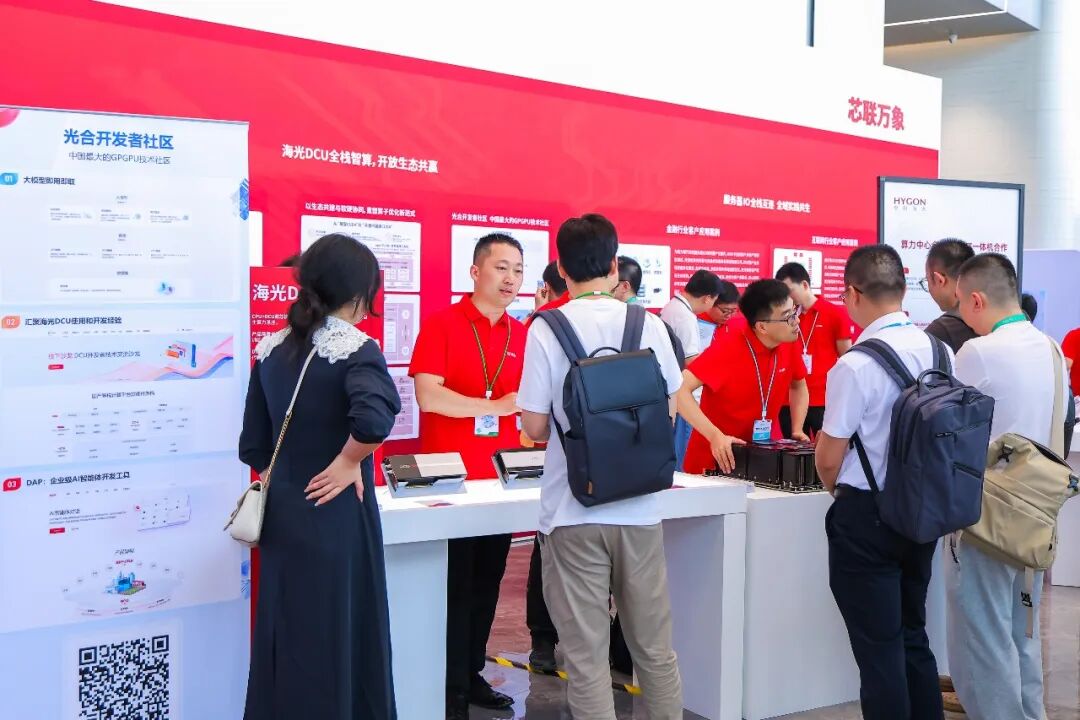
After introducing AI capabilities into embedded scenarios, traditional solutions use three independent systems: CPU for control, GPU for inference, and encryption chip for security. Haiguang integrates security, control, and intelligence onto a single silicon die. The C86 CPU incorporates an endogenous security foundation, running through runtime memory encryption and I/O isolation. This security system is shared with the DCU accelerator, allowing the CPU's secure computing and the DCU's AI inference to be completed within the same security domain, with no window for cross-chip communication hijacking. In smart substation applications, millisecond-level fault judgment and trip commands for relay protection are handled by the CPU, while AI analysis for equipment status monitoring is processed by the DCU. Data does not leave the chip, and commands do not cross devices. Power grid companies in multiple provinces in China have deployed this solution, improving equipment identification accuracy while optimizing overall system power consumption. Haiguang DCU has completed adaptation and optimization for mainstream large models such as GLM, DeepSeek, MiniMax, and Kimi, continuously improving the efficiency of training, inference, and cluster management.
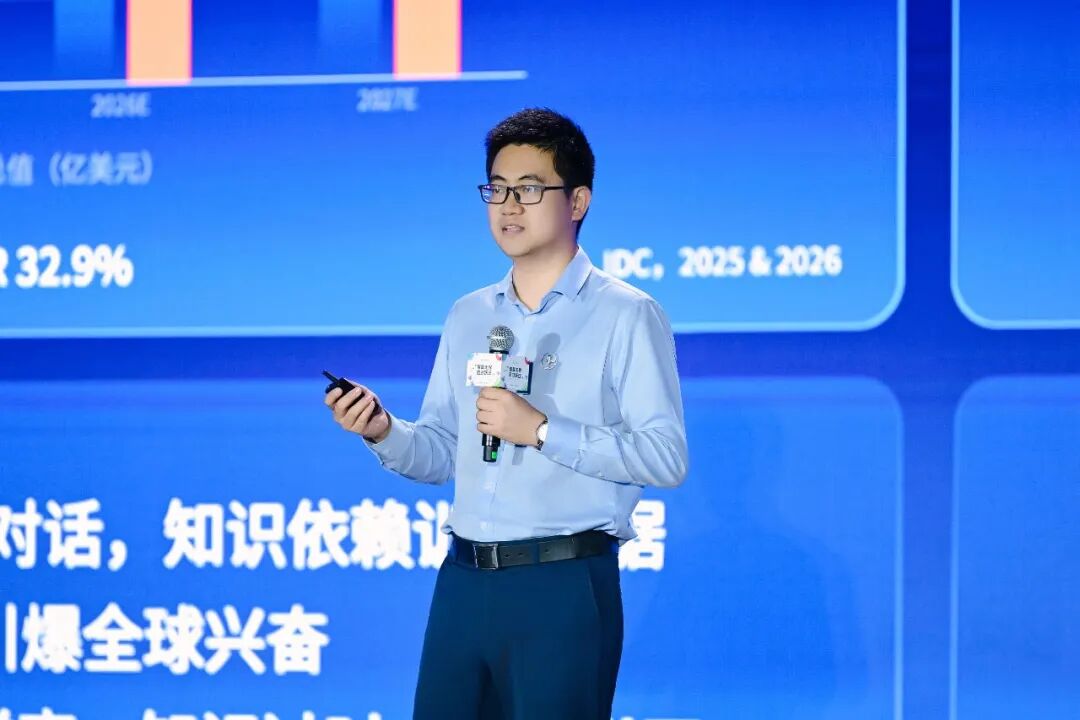
Du Xiawei, Assistant to the President and General Manager of the Intelligent Computing Products Department at Haiguang Information, stated at the conference that in the trend of Tokenization, the CPU's role is that of a computing power scheduler, decision-maker, and security gatekeeper. When AI moves from the central cloud to the edge, the deciding factor for success is whether computing power can be scheduled to the correct location and maintain security boundaries at the physical site.
Facing the highly fragmented nature of the industrial embedded market, Haiguang relies on the Photosynthetic Organization ecosystem, which has gathered over 6,000 partners covering basic software, databases, hardware systems, and industry applications. Partners receive not bare chips but integrated platforms that have been tested and optimized with software stacks, reducing underlying adaptation time. Zhao Kang, Chairman and CEO of Megvii Technology, proposed at the conference that the key to physical world AI lies in the match between technology and market. Megvii has turned "perception-understanding-decision-execution" into a reusable platform capability, promoting the implementation of localized industry intelligent agents in a "body-force coordination" model with Haiguang. Wang Bin, Vice President of Zhuoyu Technology, pointed out from the perspective of assisted driving that simply expanding computing power and data scale is insufficient to support the evolution of physical AI; "using computing power effectively" is the core proposition.
The Photosynthetic Conference showcased applications of embedded AI in scenarios such as unattended oil and gas operations, rail transit signal diagnostics, port autonomous driving, and security video analysis, with extensions towards low-altitude, zero-carbon, and robotics directions. Products like intelligent inspection robots and AI BOX edge all-in-one devices have entered actual deployment. These solutions possess capabilities for offline operation, data not leaving the domain, and secure, trustworthy, and controllable operation. Leveraging the C86 chip-level endogenous security capabilities, the data security and trusted computing needs of critical infrastructure in finance, energy, and transportation are also specifically met.
During the conference, China's first fully domestic hundred-thousand-card AI supercluster, Sugon 8000 (Dengfeng), was officially inaugurated. Equipped with a computing power foundation based on domestic chips including Haiguang, it further validates the capability of Haiguang chips to support large-scale Token production and industrial-grade AI applications. Adapted and optimized models can be deployed to embedded edge devices, and real data generated by devices at industrial sites flows back to the cloud for model iteration, forming a data closed loop. Cloud training, edge inference, and device execution are connected by the same set of x86 ecosystem and endogenous security standards. What customers receive is not a single embedded processor, but a complete capability system from data collection to model updates.
Related Products


Multi-function Marine Monitoring Low-altitude Detection Radar Sea-air Boundary Ocean Dynamic Environment Measurement
Chengdu Dixin Technology Co., Ltd.
MUX Series Communication Interface Device for Security and Stability Control System
Nanjing NR Electric Co., Ltd.


TWP16 P-Band Tropospheric Wind Profile Radar
China Huayun Meteorological Technology Group Co., Ltd.
GYTA Type Non-Self-Supporting Aerial/Duct Optical Cable
TONGDING INTERCONNECTION INFORMATION CO., LTD.