Lode Gold Launches 3,500-Meter Drilling Program at Fremont Gold Mine in the US
en.Wedoany.com Reported - Lode Gold Resources Inc. has announced the latest progress on its fully integrated 2026 exploration and resource definition drilling program at the Fremont Gold Project (Fremont) in Mariposa County, California. The project covers over 3,000 acres of private patented land, boasts extensive brownfield infrastructure, and is located on the rich Mother Lode Belt, where the structurally controlled orogenic gold system exhibits strong continuity, offering significant exploration potential both within and beyond the current modeled resource area.
This work plan represents a key milestone in advancing the Fremont project, encompassing systematic diamond drilling, validation of extensive historical data, and modern geoscience and engineering efforts aimed at rapidly refining the geological model and unlocking the broader scale potential of the mineralized system. Upon completion of the drilling program, over 20,000 meters of the 43,000-meter historical core will be re-logged.
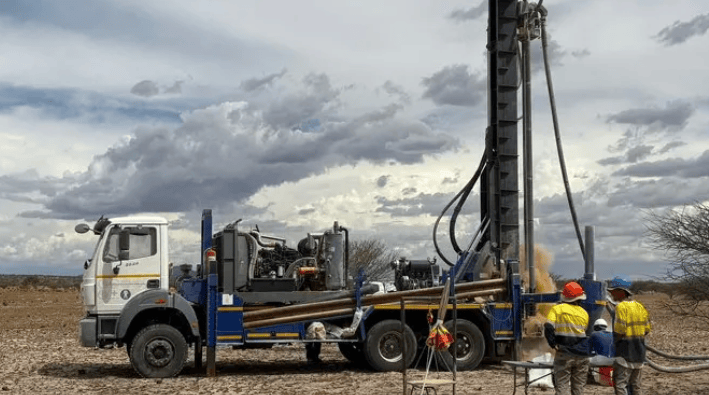
The drilling work for the project is being carried out by American Drilling Corp. (ADC), a US drilling and mining contractor affiliated with American Mining and Tunneling. Mobilization of personnel and equipment is scheduled to be completed by the end of July 2026. Lode Gold plans to complete drilling over the coming months to advance a pre-feasibility study (PFS) evaluating large-scale underground mining scenarios, with the PFS expected to be completed in 2027.
Highlights of the exploration work plan include a phased approach to advancing the project to PFS, targeting completion by 2027; a resource definition drilling program of 3,500 meters; and expansion drilling to evaluate other high-priority exploration targets beyond the current mineralized trends, potentially adding gold ounces.
Wendy T. Chan, CEO and Board Director of Lode Gold, stated that the upcoming exploration work marks a critical milestone for the company. Previous studies were based on an open-pit plan, but after careful study and evaluation of multiple geological models, the team strategically shifted to a 100% underground mining scenario. She noted that the feasibility of underground mining lies in the company's possession of a homogeneous mineralized body, with excellent grade consistency between veins and surrounding disseminated mineralization, averaging a true thickness of approximately 50 meters within RPEEE stopes. The shift to a 100% underground design minimizes the footprint, utilizing only 20% of the surface land area.
Hashim Ahmed, Chairman of the Board of Lode Gold, added that the company currently holds over 1 million ounces of indicated resources and 2 million ounces of inferred resources (2026 MRE); however, only 20% of the structure has been explored, and most known information is limited to the first 250 meters. The 2026 MRE is based on only three of the seven deposits. Notably, nearly 90% of the historical gold ounces left behind in 1942 are located within an 800-meter segment of the 4-kilometer-long Mother Lode Belt, making the underground project cost-effective. The mirror image of the Pine Tree - Josephine structure has not yet been drill-tested.
Regarding specifics of the exploration work plan, Phase 1 is a resource definition drilling program focused on de-risking and expanding resources at the core Pine Tree - Josephine deposit, covering an 800-meter extension within the 4-kilometer central structural corridor. This includes 1,400 meters of metallurgical and geotechnical drilling, 600 meters of hydrological and infill drilling in the Pine Tree-Josephine area, and 1,500 meters of exploration expansion drilling in the Chicken Gulch area. Chicken Gulch is located within the broader central Mother Lode structural corridor, where the current MRE includes only about 20% of the first 500 meters of strike length. The planned drilling aims to test mineralization extensions along this corridor and potentially expand the resource area within the central trend. Phase 2 involves expansion targets outside the central trend, evaluating other high-priority exploration targets, including Rosie Jane and Drunken Gulch, located outside the current modeled central corridor. These targets were identified through structural interpretation, geochemical analysis, local geophysics, and AI-assisted target identification using the VRIFY AI tool Dora, with a target completion date of Q3 2026.
Regarding Lode Gold, the company holds core assets in Canada and the United States. The Fremont Gold Project has 43,000 meters of drilling, 10,000 underground channel samples, 14 adits, and 2 shafts. Mining ceased in 1942 due to a World War II gold mining ban, when the gold price was $35 per ounce and the mining grade was 10.7 g/t. The PEA completed in 2023 was based on indicated resources of 1.16 million ounces at 1.90 g/t gold from 19 million tonnes, and inferred resources of 2.02 million ounces at 2.22 g/t gold from 28 million tonnes. The MRE was updated in 2026; comparing historical production to current indicated resources, 89% of the gold ounces remain unmined. The average true thickness at a cutoff grade of 1 g/t is 53 meters. The project covers over 3,000 acres of 100% owned private patented land, designated as a Trump administration opportunity zone. The Dingman project is an orogenic deposit in Ontario, Canada, with over 22,000 meters of drilling and a 2013 PEA and MRE: measured and indicated resources of 12.5 million tonnes at 0.94 g/t, containing 376,000 ounces of gold; inferred resources of 2.1 million tonnes at 0.71 g/t, containing 47,000 ounces of gold.
Related Products


Comprehensive Mining Automation Control System
Beijing Tianma Intelligent Control Technology Co., Ltd.
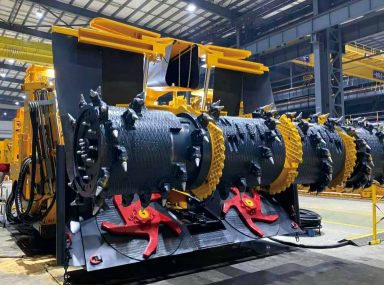
Integrated Excavation and Anchoring Machine (EJM Series)
China Railway Construction Heavy Industry Corporation Limited
High-temperature Equal Wall Thickness High-power Screw Drilling Tool
Orient Energy & Technologies Co., Ltd.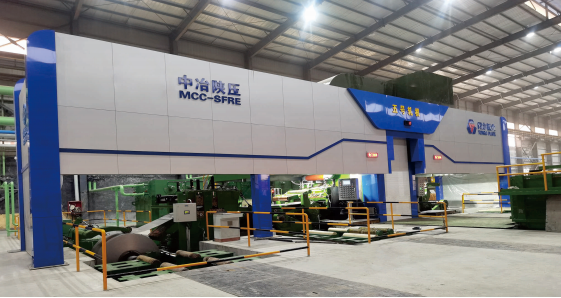
1050-1750mm Steel Strip Single-stand Reversible Cold Rolling Production Line
MCC-SFRE HEAVY INDUSTRY EQUIPMENT CO., LTD.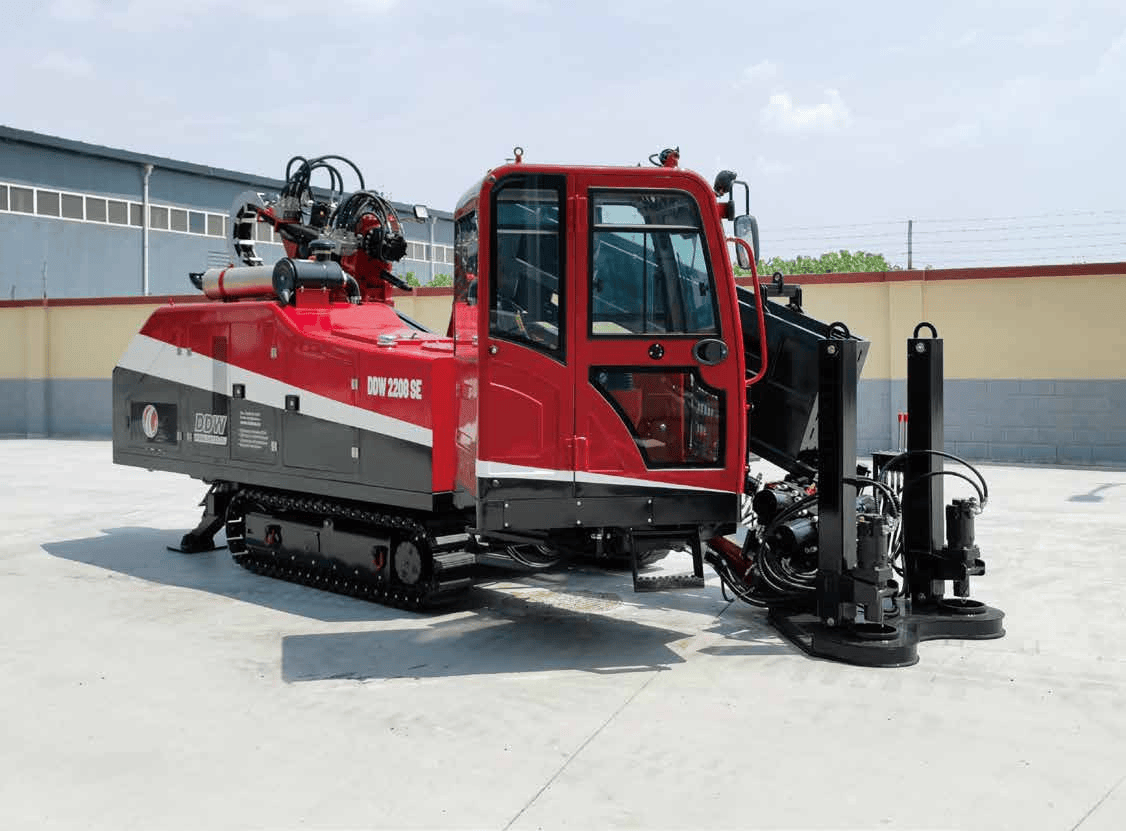
DDW22/08SE-HORIZONTAL DIRECTIONAL DRILL
DW/TXS Construction Equipment (Beijing) Co., Ltd.
Hydraulic Plate and Frame Filter Press
Guangdong Leimeng Intelligent Equipment Group Co., Ltd.