en.Wedoany.com Reported - The Fujian Provincial Development and Reform Commission has officially approved the feasibility study report for the expansion project of the G15 Shenhai Expressway from Fuding Yangzhong to Xiapu Sansha in Ningde. The project has a total investment of 8.16 billion yuan, a total route length of 40.3 kilometers, and a construction period of 48 months.
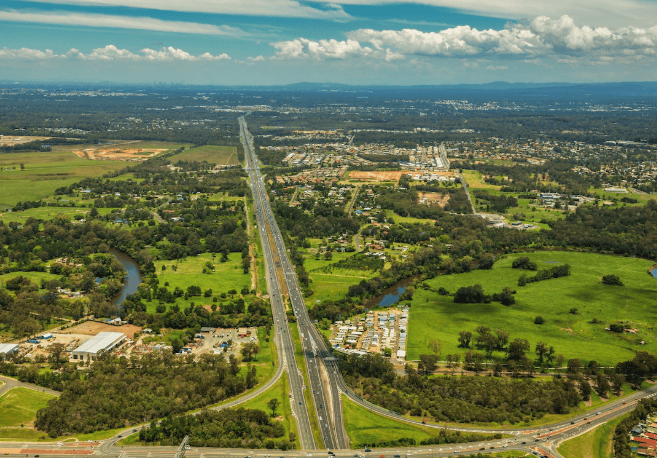
This project is a key national initiative under the "15th Five-Year Plan" for expressway quality improvement and expansion. It adopts a combined construction plan of "new parallel lanes and widening of the existing road." The entire route covers interchanges, service areas, and bridge and tunnel renovations, with construction and installation costs amounting to 6.09 billion yuan.
Key project information shows that the static investment within the total investment is 7.89 billion yuan. The total route length includes approximately 6.3 kilometers of new parallel lanes and about 34 kilometers of reconstruction and expansion of the existing road. The operation model adopts government toll collection for debt repayment, with a capital fund of 2.76 billion yuan, accounting for 33.8% of the total investment, fully funded by the provincial government. The route mainly passes through Fuding City and Xiapu County in Ningde, connecting Taimu Mountain and coastal towns.
According to the route alignment design, the starting point is set at Yangzhong Village, Dianxia Town, Fuding. The Yangzhong composite interchange will be renovated to connect the Fenshuiguan section of the Shenhai Expressway and the Shacheng Bay passage of the Yongguan Expressway. The first half of the route, from Yangzhong to Taiyangtou, will adopt a completely new alignment for the construction of parallel lanes. The second half will follow the existing Shenhai Expressway for in-situ widening, passing through Taimushan Town, Xiamen Township, and Yacheng Town, ending at the Xiapu Sansha interchange, connecting to the Xiapu to Jiaocheng section of the Shenhai Expressway.
In terms of construction standards, the entire route is divided into two sections with differentiated implementation. The new parallel lanes from Yangzhong to Taiyangtou will adopt a two-way six-lane expressway standard, with a design speed of 100 km/h and an overall subgrade width of 33.5 meters. The reconstruction and expansion section of the existing road from Taiyangtou to Sansha will adopt a two-way eight-lane expressway standard, also with a design speed of 100 km/h. However, the speed limit for existing tunnels will remain at 80 km/h, and the subgrade width will be widened to 41 meters.
Supporting facilities along the entire route include five interchanges and one service area. Specifically, four interchanges will be renovated and expanded: the Yangzhong to Taiyangtou composite hub, Boyang interchange, Yacheng interchange, and Sansha interchange. The Taimushan interchange will be relocated and rebuilt to optimize traffic flow to and from the scenic area. For the service area, one standardized expressway service area will be newly built, including a comprehensive building, parking lot, and maintenance site.
From a strategic value perspective, this project aims to improve the national-level coastal corridor. As a core expressway axis connecting the Yangtze River Delta and the Pearl River Delta, the G15 Shenhai Expressway has long suffered from traffic saturation and congestion on this section. The expansion will enhance traffic capacity and strengthen emergency response capabilities. At the same time, the route connects the Taimushan scenic area, the Fuding white tea production area, and the Xiapu coastal cultural tourism belt, helping to drive the development of specialty agricultural products and coastal tourism, and promoting rural revitalization and transportation-tourism integration at the Fujian-Zhejiang border. Furthermore, this project is part of a wave of expressway expansion across Fujian Province. In 2026, the total investment in expressways under construction or planned in Fujian Province will exceed 186 billion yuan, with multiple sections of the Shenhai Expressway undergoing simultaneous reconstruction and expansion.
In terms of market opportunities across the entire industrial chain, the main large-scale civil engineering bid sections are primarily targeted at leading central state-owned highway enterprises, covering subgrade widening, widening of extra-large bridges, tunnel renovation, and interchange hub construction. Local enterprises can enter niche supporting segments, including the supply of building materials such as modified asphalt, sand and gravel, steel reinforcement, bridge bearings, and waterproofing materials, as well as small-scale subcontracting work such as temporary access roads, site temporary facilities, landscaping, slope protection, and pipeline relocation. Additionally, there are specialized fields such as maintenance, traffic safety facilities, signage, and electromechanical intelligent systems. Third-party service sectors also benefit, covering services such as survey and design, full-process supervision, third-party testing, environmental monitoring, BIM digital platforms, and safety consulting.
Regarding the project timeline, only the approval of the feasibility study report has been completed so far. Subsequent steps will include preliminary design review, construction drawing design, land acquisition and demolition, and phased bidding for bid sections. Since the 8.16 billion yuan investment will not be released all at once but will be tendered in multiple phases over the four-year construction period, relevant enterprises can prepare in advance by accumulating similar performance records in expressway reconstruction and expansion projects and reserving bidding qualifications.