en.Wedoany.com Reported - South Korea's national railway operator, Korea Railroad Corporation (Korail), has received feasibility approval to procure 49 EMU-320 high-speed trains manufactured by Hyundai Rotem. These trains will gradually replace the KTX-I trains that entered service in 2004.
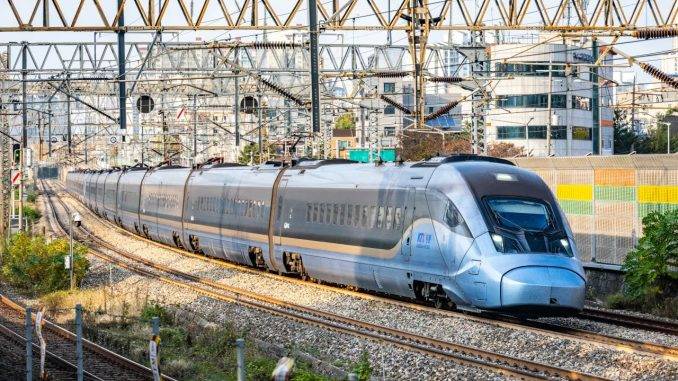
The Ministry of Economy and Finance has approved the preliminary feasibility study for the procurement of 49 EMU-320 high-speed electric multiple units. The project is estimated to be worth approximately $3.3 billion, with the first formal order for 28 trainsets expected to be placed in 2027, and delivery scheduled to begin in 2032.
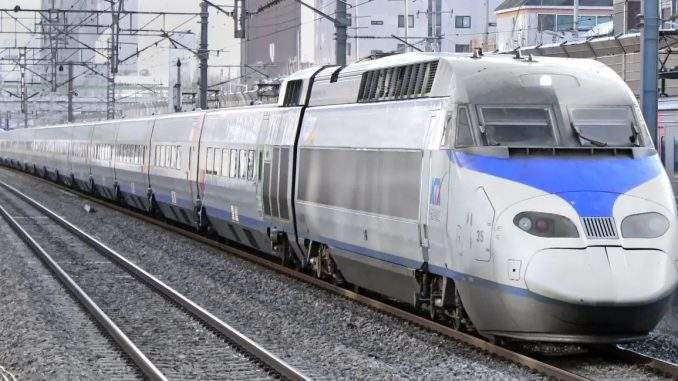
The new trains will gradually replace 46 KTX-I trains. The KTX-I, based on French TGV technology, had its first 12 trainsets manufactured by France's Alstom, with the remainder assembled in South Korea. Each KTX-I train consists of 20 cars, accommodating approximately 955 passengers, with a maximum speed of 300 km/h. The oldest trains will reach the end of their 30-year design life starting in 2033.
The EMU-320, marketed under the name KTX – CheongRyong – "Blue Dragon," features a different architecture from the French-designed trains. Its traction equipment is distributed across multiple cars rather than being concentrated at the ends. A trainset consists of 16 cars, accommodating approximately 1,000 passengers, with a maximum speed of 320 km/h. Compared to the KTX-I, this train offers 45 more seats with fewer cars, a significant advantage for South Korea's railway network, which features short station intervals requiring frequent acceleration and braking.
These 49 trainsets will be equipped with Korean Train Control System Level 2 (KTCS-2), a domestically developed train control system whose technical level is considered equivalent to ETCS Level 2 used in Europe. KTCS-2 uses the LTE-R railway radio network for continuous communication between trains and control centers, enabling real-time train position tracking, automatic speed control, and emergency braking activation. This technology entered commercial operation on the Jeolla Line in October 2023. Estimates indicate that installing this system on the Gyeongbu high-speed line could increase line capacity by approximately 20%.
The new fleet will also be equipped with a maintenance system based on continuous monitoring of component conditions. Sensors will transmit wear and operational data to schedule maintenance interventions based on the actual condition of equipment, rather than solely on preset mileage or operating hours. The trains are also equipped with a derailment detection system and an intelligent system for optimizing energy consumption en route.
The project builds on prior groundwork. Two pre-production EMU-320 trains entered commercial operation on the Gyeongbu and Honam high-speed lines in May 2024. In 2023, Korail ordered 17 trainsets, and operator Supreme Railways (SR) ordered 14. The first trains from these series are undergoing testing and are scheduled to enter service in 2027. The 49 trains currently under development will join those already ordered and gradually phase out the KTX-I trains in the first half of the 2030s.
South Korea has progressively transitioned from assembling trains under French license to developing its own platforms. Following the KTX-I, the KTX-Sancheon train, the experimental HEMU-430X prototype, and the EMU-260 and EMU-320 series were introduced in 2010. In 2013, the HEMU-430X prototype reached a speed of 421.4 km/h, and the experience gained was used to develop current production trains. In September 2024, the EMU-320 obtained certification compliant with EU Technical Specifications for Interoperability, a milestone that allows manufacturer Hyundai Rotem to also seek contracts in the European market.