Amazon Leo Invests $10 Billion in 400 Satellites to Accelerate India Market Expansion
en.Wedoany.com Reported - Amazon's satellite internet project, Amazon Leo, has identified India as one of the most promising markets for its global broadband service expansion, as the company accelerates the deployment of its Low Earth Orbit (LEO) satellite constellation. Chris Hofer, Director of International Spectrum Management and Strategy at Amazon Leo, stated at the IAFI Space Policy Conference (ISPC26) in New Delhi that India's highly digitized government and large unconnected population make it a natural choice for the next phase of expansion.

India remains one of the largest addressable markets for satellite broadband globally. Despite rapid growth in mobile and fiber connectivity in urban areas, hundreds of millions of people in rural, mountainous, and remote regions still lack reliable high-speed internet access. Successive governments have attempted to bridge this gap through initiatives such as BharatNet and Digital India. Amazon Leo and its competitors have repeatedly pointed out that the underserved population, combined with India's efforts to digitize government services, banking, and education, is why India holds a significant position in their global deployment plans.
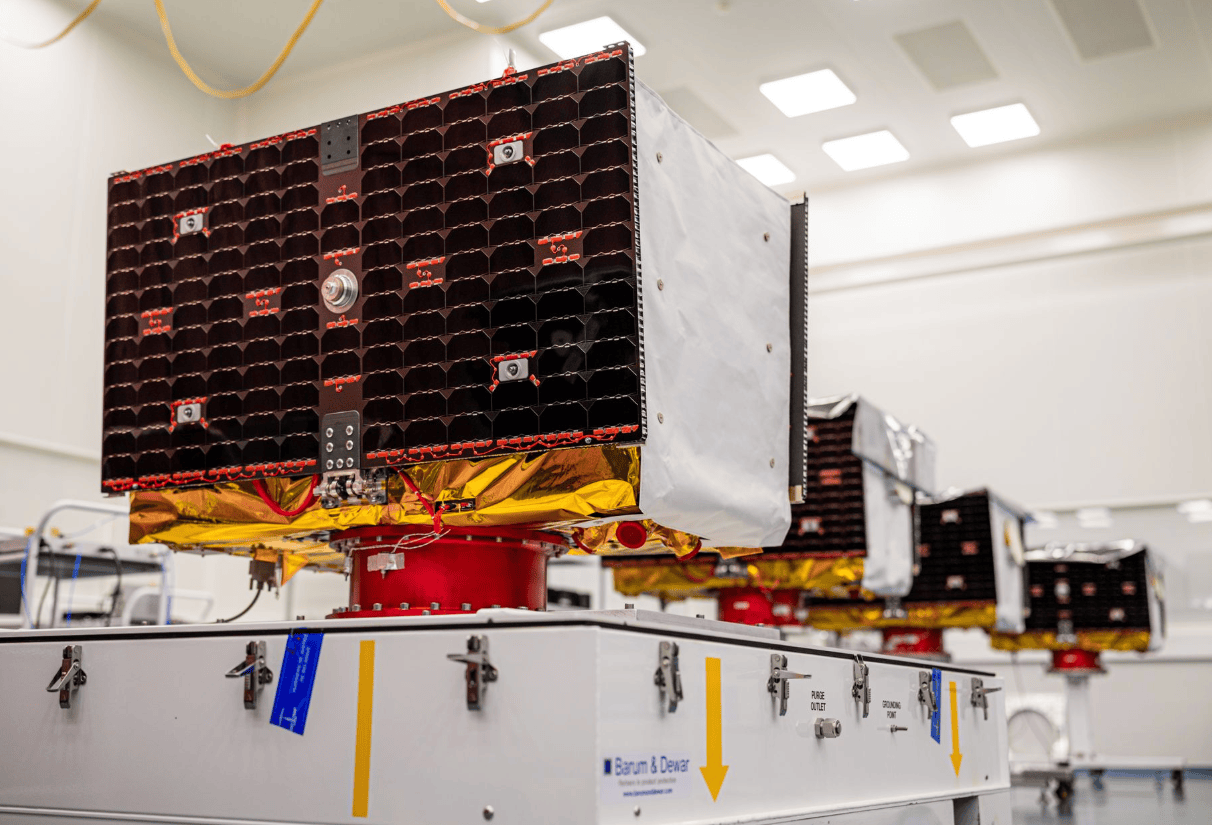
Hofer noted that Amazon Leo has deployed nearly 400 satellites to date and is currently manufacturing over 15 satellites per week, highlighting the pace of constellation construction. He recalled that the project was "essentially just a piece of paper" in 2019. Previously known as Project Kuiper, Amazon abandoned that name in November 2025 and rebranded it as Amazon Leo. The company has invested over $10 billion in the network and began large-scale satellite deployment in April 2025. The final constellation design consists of more than 3,000 satellites, connected via optical inter-satellite links and a global network of ground gateway stations, with customers accessing the service through dedicated user terminals.
Amazon Leo will enter an Indian satellite broadband market that is taking shape but not yet commercially operational. Starlink, Eutelsat OneWeb, and the Reliance Jio-SES joint venture have all obtained licenses from the Indian Department of Telecommunications (DoT) but have not yet started consumer services, pending final spectrum allocation and security clearances. According to the DoT's draft "Telecommunications (Administrative Procedure for Spectrum Allocation) Rules, 2026," satellite spectrum will be allocated administratively rather than through auctions, with fixed annual fees, but operators must meet a new round of stricter security requirements. As of early 2026, Amazon Kuiper Services India Private Limited's own license application remains under review, although the company continues to engage with Indian regulators through policy submissions. Amazon Leo advocates that satellite broadband should be recognized as a backhaul technology under the government's PM-WANI public Wi-Fi framework, with its low-latency network capable of delivering fiber-like performance in areas where laying cables is impractical.
Related Products


TWP16 P-Band Tropospheric Wind Profile Radar
China Huayun Meteorological Technology Group Co., Ltd.

One-Stop Steward Service for the Entire Logistics System Integration Chain
Zhongding Intelligent (Wuxi) Technology Co., Ltd.



GYTA Type Non-Self-Supporting Aerial/Duct Optical Cable
TONGDING INTERCONNECTION INFORMATION CO., LTD.

Conveyor Belt Intelligent Monitoring System
LUO YANG WIRE ROPE INSPECTION TECHNOLOGY CO., LTD.
Multi-function Marine Monitoring Low-altitude Detection Radar Sea-air Boundary Ocean Dynamic Environment Measurement
Chengdu Dixin Technology Co., Ltd.

Comprehensive Mining Automation Control System
Beijing Tianma Intelligent Control Technology Co., Ltd.