Chinese Academy of Sciences team uses AI to design plant immune receptors with nearly 20% success rate
en.Wedoany.com Reported - The team led by Gao Caixia at the Institute of Genetics and Developmental Biology, Chinese Academy of Sciences, has successfully used artificial intelligence to de novo design functionally active synthetic plant immune receptors.
In the natural plant immune system, NLR immune receptors act as "sentinels," recognizing specific proteins from pathogens or viruses and activating defense responses. However, the limited number of natural receptors and the complex structure of their recognition modules make them difficult to modify, and the rapid mutation of pathogens often leads to resistance breakdown. Gao Caixia's team focused on a class of NLR receptors containing an integrated decoy domain, whose recognition module is structurally compact, functionally independent, and replaceable for assembly.
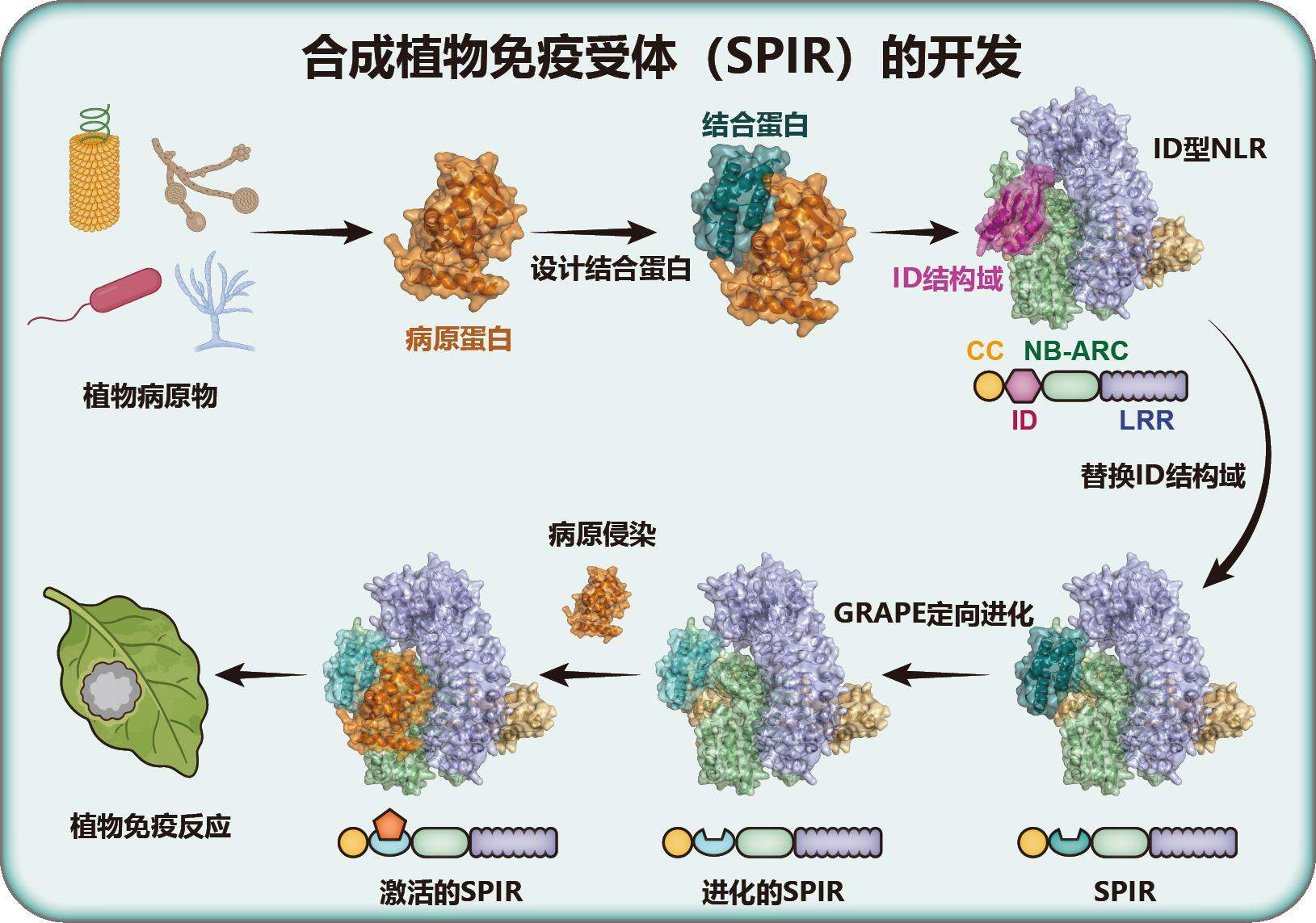
The team first used AI to predict the three-dimensional structures of pathogen proteins, then employed the BindCraft tool to de novo design binding proteins that tightly interact with pathogen proteins. Finally, this artificial recognition module was integrated into the rice immune receptor backbone to construct synthetic immune sentinels. Targeting the coat protein of potato virus Y, 11 out of 48 designed synthetic immune receptors accurately recognized and activated immunity. Subsequently, 391 receptors were designed against proteins from various plant viruses, bacteria, fungi, and oomycetes, with 71 successfully activating immunity, achieving a success rate of nearly 20%.
Some initial versions of AI-designed receptors exhibited insufficient immune activity or self-activation issues. To address this, the team introduced an in planta directed evolution system to optimize synthetic immune receptors within plant cells, enhancing activity and reducing self-activation levels, forming a complete "design-build-test-evolve" development pipeline.
Reviewers commented that this study represents a major advancement in the field of plant immune engineering, laying the foundation for developing durable and broad-spectrum disease resistance.
Gao Caixia stated that this work marks a paradigm shift in plant immune receptors from "natural discovery" to "artificial precision design," advancing disease resistance breeding from "utilizing nature" to "targeted creation."
Related Products



MH220E Two-Row Hybrid Packaged Cotton Picker
CHINA RAILWAY CONSTRUCTION HEAVY NDUSTRY XINJIANG CO., LTD.

Industrial and Commercial Point-Type Gas Detector
Jinan Benan Technology Development Co., Ltd.

714CD Series C-Band Weather Radar
Chengdu Zhongdian Jinjiang Information Industry Co., Ltd.

4HS-8 High-efficiency Peanut Inverted-laying Harvester
Hebei Yongfa Hongtian Agricultural Machinery Manufacturing Co., Ltd.