TekUncorked AI Platform Drives Intelligent Transformation of India's Power Transmission and Distribution Grid
en.Wedoany.com Reported - India's power transmission and distribution grid is facing unprecedented transformation pressure: it must simultaneously accommodate rapidly growing intermittent solar and wind power generation, continuously rising electric vehicle charging loads, and power-hungry AI data centers, while still maintaining low outage rates and affordable electricity prices. According to forecasts, the country's electricity demand will reach 817 terawatt-hours by 2030, with roughly one-fifth of the incremental growth driven solely by AI workloads. The existing grid model can no longer meet future development needs, and AI is being viewed as a key tool to address this challenge.
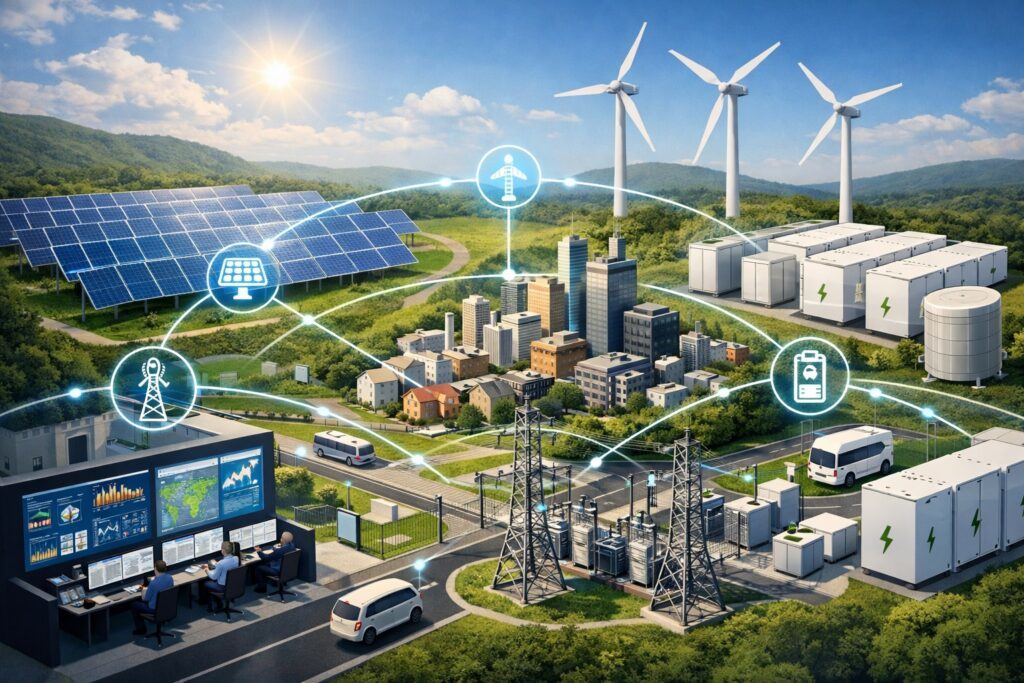
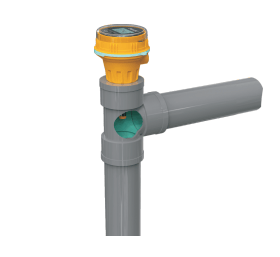
For a long time, India's power distribution utilities have primarily operated in a reactive mode: dispatching repair crews only after transformer failures or feeder trips. This approach is costly, inefficient, and increasingly unsustainable as grid complexity grows. The application of AI has fundamentally transformed this operational logic. By continuously analyzing sensor data from transformers, feeders, and low-voltage lines, machine learning models can identify early warning signs before failures occur, such as transformer overheating or worsening load imbalance on a specific feeder. The platform built by TekUncorked on this principle, combining AI with the Internet of Things, provides distribution companies with real-time visibility into the health of low-voltage networks. Shifting from reactive to predictive maintenance is considered the most effective lever for improving reliability without rebuilding the grid.
Aggregate Technical and Commercial (AT&C) losses—the portion of electricity that utilities generate or purchase but fail to collect payment for—have long been one of the most expensive challenges in India's power distribution sector, far exceeding global benchmarks in many states. These losses stem partly from technical factors (infrastructure weaknesses, transformer overloading) and partly from commercial factors (power theft, meter tampering, billing errors). Pattern recognition models trained on consumption data can flag anomalies, such as a household drawing far more current than its billed load indicates—irregularities that are difficult to detect through manual audits but can be continuously monitored by algorithms across millions of connection points. TekUncorked's low-voltage IoT platform, which won the UN-Habitat Katowice Energy Innovation Challenge, is specifically designed to detect and reduce these losses at scale. For every percentage point reduction in AT&C losses, utilities gain revenue that can be reinvested in grid modernization without write-offs.
India's renewable energy installed capacity is growing rapidly, but solar and wind power are not dispatchable like coal and gas. A grid built around predictable baseload generation becomes unstable when absorbing large volumes of variable renewable input. AI-based load forecasting and demand response systems enable distribution networks to reliably integrate high shares of renewable energy. Such systems can perform granular generation and demand forecasting at the hourly and feeder level, helping utilities balance supply and demand in near real time. Without this intelligence layer, ambitious renewable energy targets may exceed the grid's actual absorption capacity.
India's power sector is currently witnessing a rare alignment across policy, capital, and technology. The revised Distribution Sector Scheme has been extended to March 2028, nearly 60 million smart meters are being installed nationwide, and the new National Electricity Policy is being drafted with explicit attention to strengthening transmission to support large concentrated loads such as data centers. The digitally capable, secure, and adaptive power ecosystem envisioned by the India Smart Grid Mission is shifting from vision to funded, time-bound mandates. Utilities, regulators, and technology providers need to move from pilots to scaled deployment and accelerate adoption.
TekUncorked believes that not all AI is equally effective. There is a substantive difference between dashboards that visualize historical data and models trained on real failure signatures that can predict in advance. Most Indian utilities are capital-constrained and leanly operated, requiring robust, affordable, and field-proven technology rather than solutions that only perform well in demonstrations. In this space, companies that combine domain knowledge of actual failures in India's distribution networks with predictable, edge-deployable AI will be most critical. Product-oriented, results-driven technology will contribute more to grid reliability than a flood of AI branding.
India holds a unique advantage in this transformation: rather than retrofitting AI onto a legacy grid built decades ago, much of the intelligence layer is being built in tandem with the underlying digital infrastructure. This means that homegrown Indian platforms, tested under some of the world's most challenging loss and reliability conditions, have the potential to become export solutions for other emerging markets. The goal is not merely to build a smarter grid, but to build one reliable enough to be invisible: always online, self-healing, and capable of supporting an AI-driven and electrified economy.