ApexBrasil and partners invest R$2.63 million to boost cachaça exports
en.Wedoany.com Reported - Last Friday (31st), the Brazilian Trade and Investment Promotion Agency (ApexBrasil) and the Brazilian Cachaça Institute (Ibrac) signed a new agreement in Brasília, investing R$2.63 million in commercial promotion of cachaça in strategic markets to expand overseas exports of the beverage.
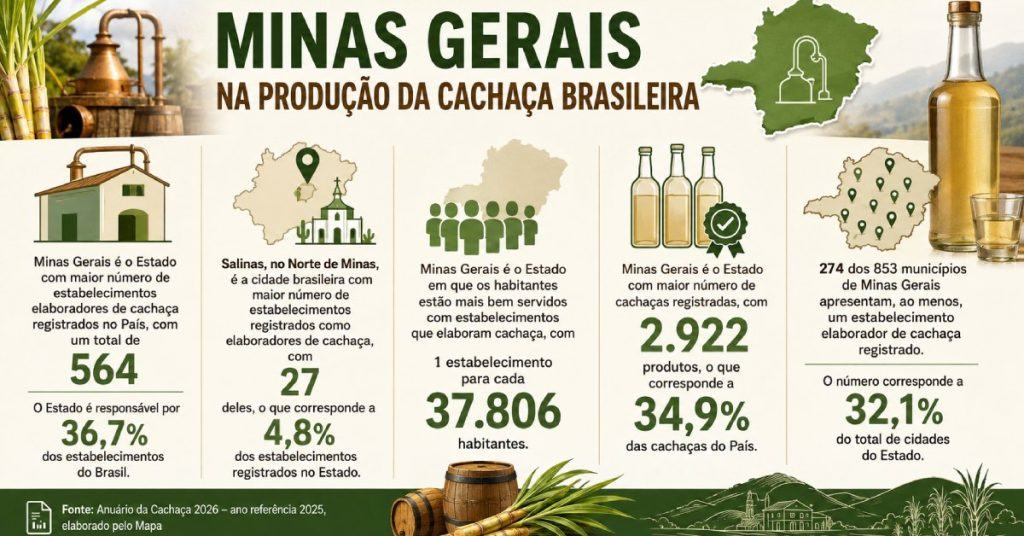
The agreement was signed amid a decline in exports from Minas Gerais state. According to joint data from the Minas Gerais State Economic Development Department (Sede-MG) and the Minas Gerais State Agriculture, Livestock and Supply Department (Seapa-MG), cachaça exports from the state totaled US$1.5 million in 2025, down 23% from 2024, yet still ranked second nationally with 9% of Brazil's total exports, trailing only São Paulo state.
Antônio Sérgio Peixoto Maciel, president of the National Association of Artisanal Cachaça Producers (Anpac), acknowledged the government's efforts to promote the beverage in international markets but believes these measures still fall short of the concrete support the industry needs, and called for stronger organizational coordination within the sector. He said there is still much work to be done before Minas Gerais becomes a potential cachaça exporting hub in Brazil, with the key lying in investment in artisanal cachaça.
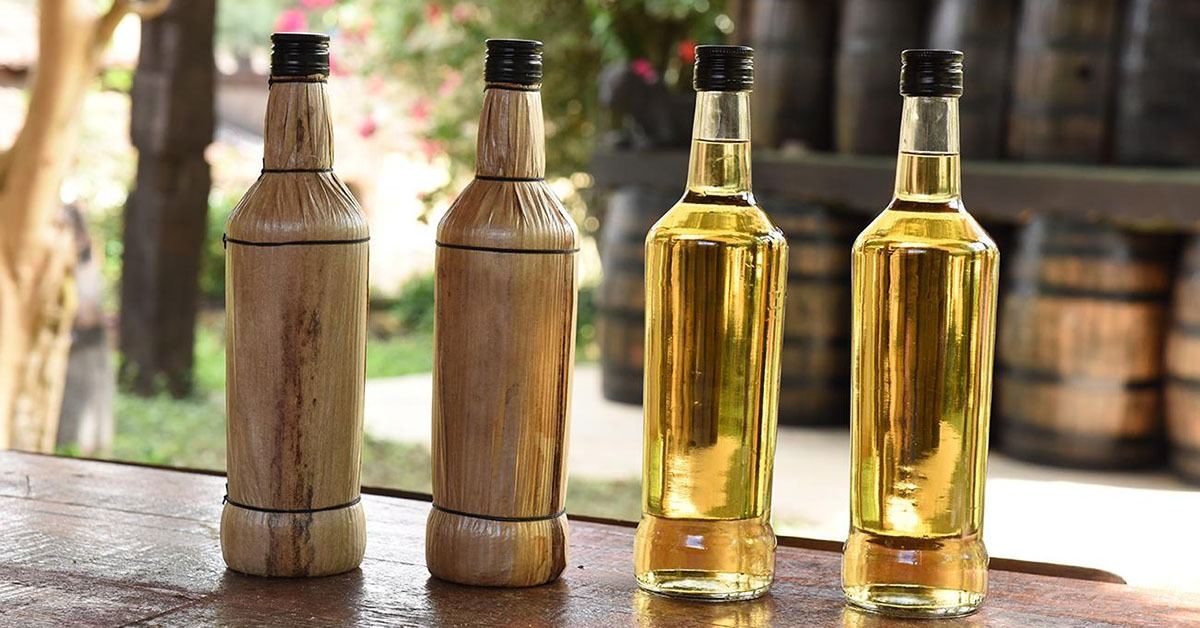
Maciel pointed out that investment in artisanal cachaça exports has not yet become a widespread practice in Minas Gerais or across Brazil. Currently, over 90% of Brazil's exported cachaça consists of industrial products, with premium products accounting for at most 5% of foreign transactions. According to the "2026 Cachaça Yearbook" (reference year 2025) compiled by the Brazilian Ministry of Agriculture and Livestock (Mapa), the average price of exported products in 2025 was US$2.15 per liter, down 1.4% from US$2.18 per liter in 2024. Maciel believes current exports rely mainly on lower-quality industrial products, and it is precisely these products that drive Brazil's export volume. He also noted that Brazil lacks emphasis on artisanal cachaça, and that the public sector needs to carry out more vigorous promotional campaigns to foster the development of non-industrial beverages.
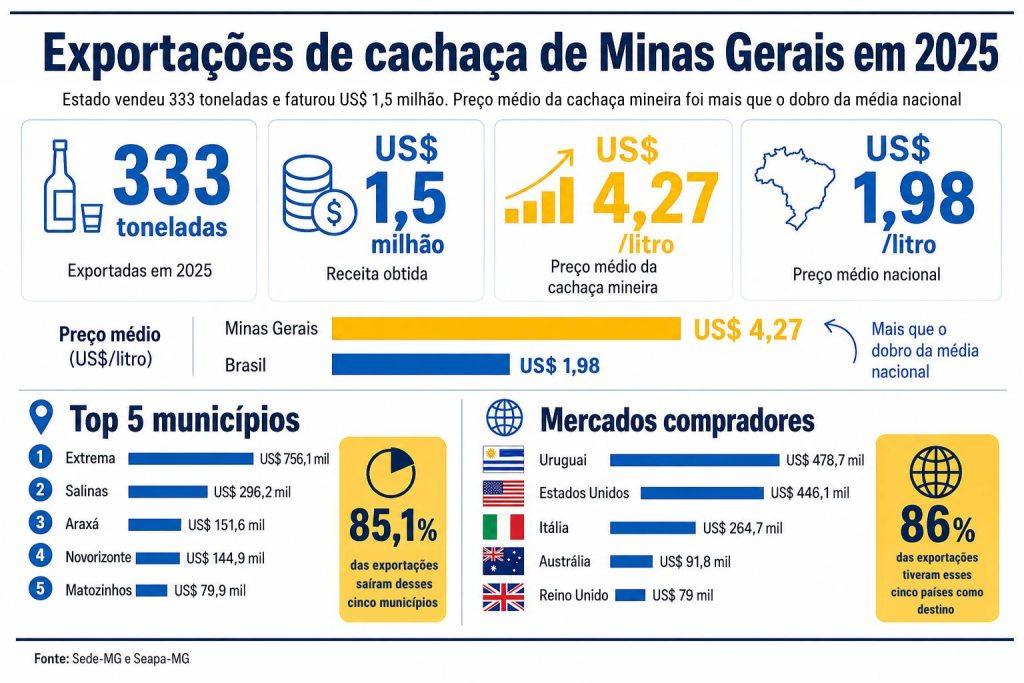
The Anpac president believes that growth in artisanal cachaça exports will drive an exponential increase in the sector's financial revenue by up to tenfold, with average export prices rising from US$2 to US$10 per liter. He advocates achieving this goal by enhancing the value of producers and products, investing in marketing and industry infrastructure, and developing distillery tourism so that buyers can learn about the origins of cachaça. He mentioned that in Minas Gerais alone, the Piranga Valley region is the fastest-growing area in Brazil in terms of registered distilleries, with more than 170 registered.
Jean Henrique de Oliveira, president of the Salinas Artisanal Cachaça Producers Association (Apacs), is optimistic about the export prospects of Brazilian cachaça, especially products from Minas Gerais; however, he shares Maciel's view that global awareness of the product still needs to be built. He said the government is willing to help producers, and they have participated in delegations organized by Seapa-MG and Sede-MG, but foreign markets are still unfamiliar with cachaça — overseas consumers need to first taste and learn about the product before export efforts can truly take off. He added that cachaça from the northern region of Minas Gerais is indeed sold abroad, but on a modest scale.
The agreement signed is part of the fourth phase of the Cachaça Internationalization Sector Project. With an investment of R$2.63 million, the project will carry out commercial promotion actions, organize participation in international trade fairs, connect with foreign buyers, and create business opportunities for Brazilian companies, expected to benefit 70 to 80 companies and expand the beverage's presence in strategic markets. Ibrac president Vicente Bastos stated that the new project is an important step toward consolidating cachaça's presence in overseas markets and elevating its recognition as a premium international product. He said: "This new project allows us to advance the internationalization of cachaça more forcefully, ensuring that this distilled spirit, which represents our cultural symbol, is increasingly regarded as a high-value-added product in the international market."
Related Products



Industrial and Commercial Point-Type Gas Detector
Jinan Benan Technology Development Co., Ltd.
714CD Series C-Band Weather Radar
Chengdu Zhongdian Jinjiang Information Industry Co., Ltd.

4HS-8 High-efficiency Peanut Inverted-laying Harvester
Hebei Yongfa Hongtian Agricultural Machinery Manufacturing Co., Ltd.