BTQ Completes Verification of Post-Quantum Cryptography Architecture at 28nm
en.Wedoany.com Reported - On August 7, Canadian quantum security technology company BTQ Technologies disclosed that it has completed the first technology node of a multi-year collaboration with Taiwan's Industrial Technology Research Institute (ITRI) on Quantum Computing in Memory (QCIM) architecture. The QCIM core IP was verified in TSMC's 28nm process design environment, confirming the functional correctness and feasibility of the architecture, and running cryptographic operations related to three post-quantum cryptography standards from the U.S. National Institute of Standards and Technology (NIST).

QCIM is a soft IP cryptographic accelerator that can be integrated into different chip designs, capable of executing both traditional and post-quantum cryptographic operations within the memory subsystem, reducing data round-trip transfers between memory and processors. BTQ stated that this round of testing covered multiple algorithms and operating conditions, with results showing the architecture's performance advantages and cryptographic algorithm switching capabilities, though specific data on latency, power consumption, chip area, and comparison baselines were not disclosed.
The verification covered three standards: FIPS 203, FIPS 204, and FIPS 205. Among them, FIPS 203 specifies the module-lattice-based key encapsulation mechanism ML-KEM; FIPS 204 specifies the module-lattice-based digital signature algorithm ML-DSA; and FIPS 205 adopts the stateless hash-based digital signature algorithm SLH-DSA. The three standards were officially published by NIST in August 2024.
The R&D roadmap is jointly led by BTQ and Korean security chip company ICTK. BTQ is responsible for the cryptographic architecture, ICTK provides secure semiconductors and Physical Unclonable Function (PUF) technology, and ITRI handles semiconductor design, integration, and verification. The architecture targets application scenarios including secure elements, industrial systems, automotive electronics, IoT, edge devices, and AI terminals.
The collaboration between BTQ and ITRI began in 2022, with both parties having previously completed a proof-of-concept for applying in-memory computing technology to application-specific integrated circuits (ASICs). In 2026, the R&D efforts further shifted toward process environment verification of the QCIM architecture, preparing technical data for subsequent system integration and test chip manufacturing.
The next phase of the project will involve module-level integration, verification, and validation, assessing the functionality, interoperability, and performance of the QCIM core when integrated into larger-scale system architectures. BTQ plans to arrange subsequent manufacturing and demonstrations based on the results of this phase, foundry resources, and customer demand, and expects to provide test chips to key customers and strategic partners by the end of 2026 for performance and functional testing.
Related Products



Automatic Aiming Laser Remote Obstacle Removal Robot
Pinggao Group Weihai High-Voltage Apparatus Co., Ltd.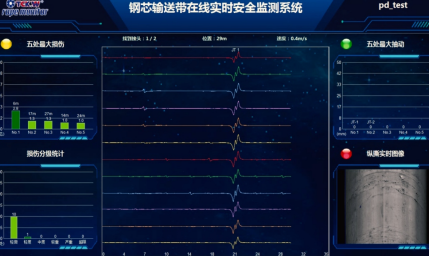
Conveyor Belt Intelligent Monitoring System
LUO YANG WIRE ROPE INSPECTION TECHNOLOGY CO., LTD.

20 Inch 1600*900 Full HD 60Hz TFT LED Monitor with VGA and DP Interfaces for Desktop Computers-Business Use
Guangzhou Zanying Optoelectronics Technology Co., Ltd.
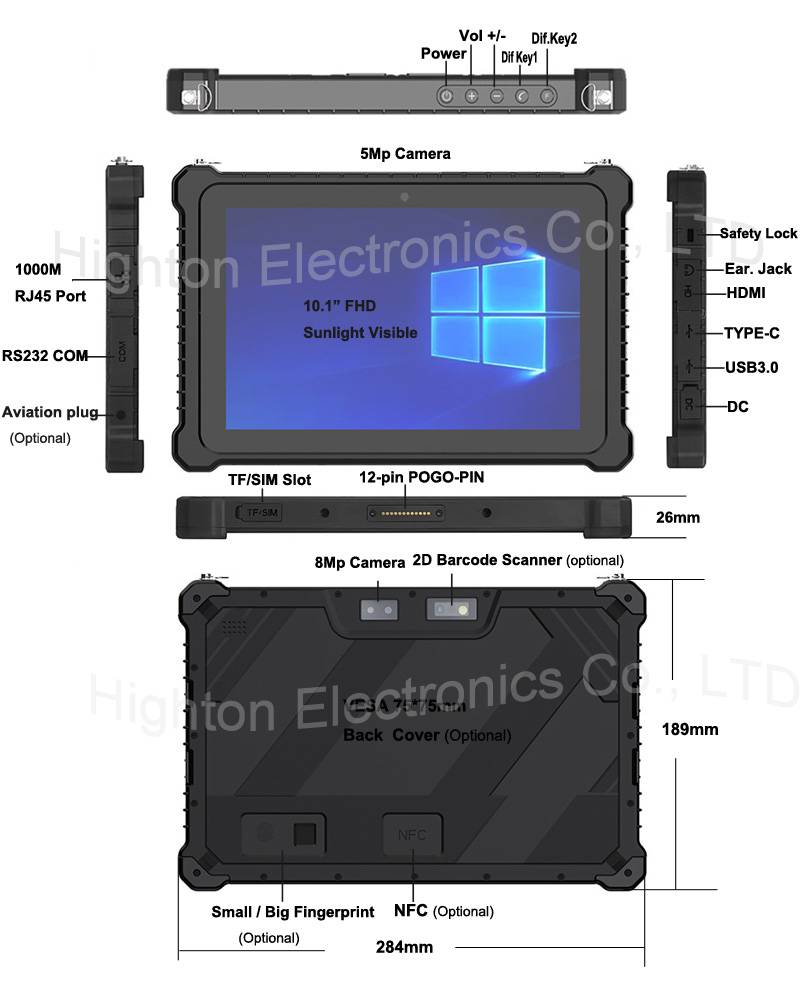
Hot Selling 10 Inch Intel N5100 I5 I7 FHD 8 +128GB 16+256GB Win10 Pro Win11 Pro 4G 5G Rugged Tablet PC Pad with NFC Barcode
Highton Electronics Co., Ltd.


MUX Series Communication Interface Device for Security and Stability Control System
Nanjing NR Electric Co., Ltd.