Falcon 9 Capacity Tightens as Canada Advances Toward Autonomous Launch Capability
en.Wedoany.com Reported - SpaceX's Falcon 9 launch capacity for third-party customers is tightening. Launch data analysis released on August 4 shows that Starlink missions have grown from 54% of the Falcon 9 launch manifest in 2020 to approximately 79% so far in 2026; in recent months, at least seven spacecraft companies have been informed that Falcon 9 missions of various types are booked through 2028 or 2029. SpaceX has not yet made a public statement regarding the relevant capacity arrangements.
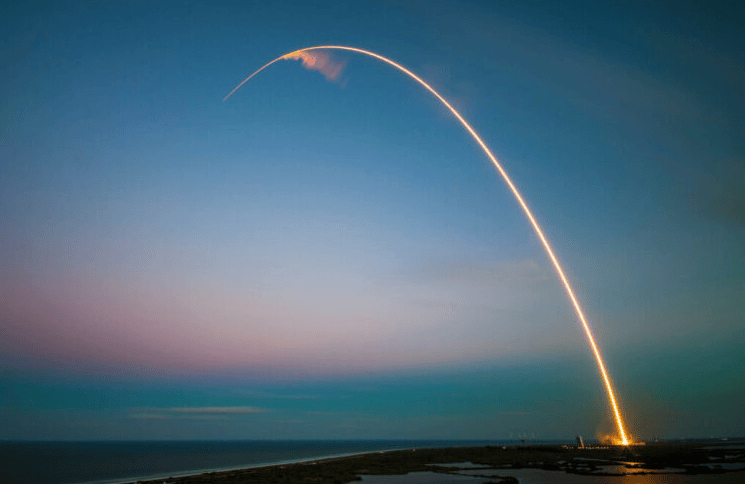
SpaceX is allocating more of its launch capacity to deploying its own Starlink satellites. In its initial public offering filing, the company stated that it may prioritize its own payloads over new U.S. government or third-party customer missions. The price of a single Falcon 9 launch has also risen from approximately $54 million in 2013 to roughly $74 million today. As third-party slots diminish, companies relying on rideshare to deliver small satellites into orbit will need to secure mission windows earlier.
Canada remains the only G7 country without domestic orbital launch capability, relying primarily on U.S. facilities and launch vehicles for most orbital missions. In April, the Canadian government introduced the Canadian Space Launch Act, proposing a regulatory framework covering launch site certification, launch licensing, and spacecraft re-entry activities. The bill is currently in second reading in the House of Commons.
Domestic launch infrastructure investment is simultaneously moving into the commitment phase. In March, the Canadian Department of National Defence signed a 10-year lease agreement valued at C$200 million to build a dedicated launch pad in Canada, with operator Maritime Launch Services required to achieve initial operating capability by the end of 2026. The department has also allocated C$105 million in multi-year funding through the "Launch North" program to bring a light-lift launch vehicle to initial operating capability by 2028. NordSpace, Canadian Rocket Company, and Reaction Dynamics each received C$8.3 million in conditional first-round funding for launch vehicle prototypes and testing work.
Development progress among the three companies varies. NordSpace is advancing the Tundra orbital launch vehicle, targeting an orbital launch in 2028; Reaction Dynamics is developing the Aurora-8 launch vehicle; and Canadian Rocket Company plans to expand its medium-lift launch vehicle design, though it estimates approximately eight years remain before its first launch.
Canadian satellite programs that have already secured Falcon 9 missions will see relatively limited near-term impact. On August 4, the Canadian government awarded Telesat an initial contract worth approximately C$2.3 billion to support the addition of 69 satellites to its low-Earth-orbit constellation, expanding the total from 156 to 225 satellites. Telesat stated that these satellites will be launched using already-booked Falcon 9 rockets, with one rocket still requiring a completed launch services agreement, and the related missions are scheduled to be completed ahead of the global service launch in the first quarter of 2028.
Related Products




Wheel and Track Technology Business
Beijing Research & Design Institute of Rubber Industry Co., Ltd.

CLW5180TXSD6 Dongfeng Tianjin Washing and Sweeping Truck
ChengLi Special Automobile Co., Ltd.
China - Alashankou/Khorgos - Europe Full Range Transportation (Mala/Hamburg/Duisburg/Budapest, etc.)
Shenzhen Neptune Logistics Co., Ltd.
GSR6-27.5kV SF6 Free Gas-insulated Metal-enclosed Switchgear
Zhejiang Juhonkia Intelligent Electric Co., Ltd.