New Generation of U.S. GNOMES Weather Satellites Completes Manufacturing and Testing
en.Wedoany.com Reported - On August 12, PlanetiQ, a U.S. commercial weather satellite operator, disclosed that its new generation of GNOMES satellites has completed manufacturing and testing, entering the final preparation phase before launch. The satellites are expected to be transported to the launch integration site in the coming weeks, with launch planned within 2026.
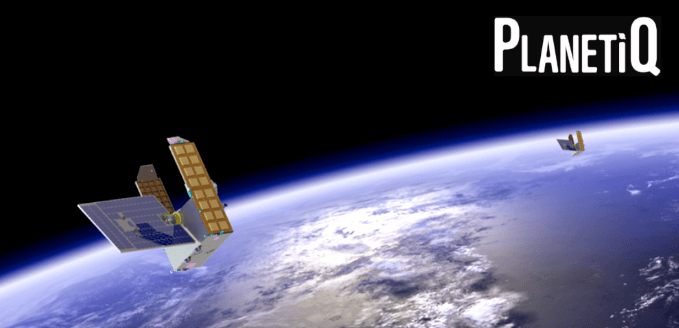
The new-generation satellites will be used to expand PlanetiQ's commercial Global Navigation Satellite System radio occultation observation constellation. After the satellites are deployed and undergo on-orbit commissioning, they will increase the daily collection volume of global atmospheric profiles, providing more observational data for weather forecasting, space weather monitoring, and environmental information services.
GNSS radio occultation technology receives signals from navigation satellites such as GPS, GLONASS, Galileo, and BeiDou, measuring the bending and delay of signals as they pass through Earth's atmosphere, and thereby retrieving vertical profiles of temperature, pressure, water vapor, and the ionosphere. This technology does not rely on ground-based weather stations, can cover oceans and remote areas, and can obtain observational data under cloudy and precipitation conditions.
PlanetiQ's existing GNOMES satellites are equipped with its self-developed Pyxis radio occultation sensor. The GNOMES-4 satellite launched in 2023 uses the fourth-generation Pyxis sensor, capable of acquiring more than 2,200 atmospheric sounding profiles per day per satellite. This sensor can simultaneously receive signals from all four major global navigation satellite systems.
In August 2024, the GNOMES-5 satellite entered orbit via the SpaceX Transporter-11 rideshare mission and began generating radio occultation data within 24 hours of deployment. This satellite added a dual-linear-polarization high-gain GNSS antenna, which can be used for observing environmental information such as heavy precipitation, snowfall, and ocean surface winds.
After the new-generation GNOMES satellites enter orbit, they will still need to complete on-orbit commissioning before officially providing observational data to customers. PlanetiQ did not disclose the number of satellites to be launched, the specific launch date, the launch vehicle, or the launch site this time.
Related Products




WGQY Series Aircraft Tow Tractor-WGQY15, WGQY27
Weihai Guangtai Airport Equipment Co., Ltd.
"Shunyi 1600" Deep-submerging Bottom-sitting Multi-functional Wind Power Engineering Vessel
Zhengli Offshore Engineering Co., Ltd.


ZY(J)7(M) Sealed Type Electro-Hydraulic Turnout Machine
TAIYUAN CR JINGFENG EQUIPMENT TECHNOLOGY CO., LTD.