HKUST Develops Novel Cooling Structure That Passes Over 100 Million Cycle Tests
en.Wedoany.com Reported - On November 6, The Hong Kong University of Science and Technology (HKUST) announced research findings on a novel elastocaloric cooling component. The research team adopted nickel-titanium shape memory alloy thin sheets and manufactured a honeycomb-inspired porous cooling structure through stamping and lamination processes. The component withstood more than 100 million cooling cycles in testing, and the research team estimates, based on the test conditions, that its service life can exceed 10 years. The related research paper has been published in the international academic journal Science, providing a new technical solution for the low-cost manufacturing and long-term operation of solid-state cooling devices.
The research was carried out by the team of Professor Sun Qingping from the Department of Mechanical and Aerospace Engineering at HKUST, focusing on addressing the challenges facing elastocaloric cooling technology in engineering applications, including high manufacturing costs, limited structural fatigue life, and difficulty in simultaneously achieving heat transfer performance. Conventional cooling equipment typically employs vapor compression cycles, transferring heat through refrigerant compression, condensation, expansion, and evaporation. Elastocaloric cooling, by contrast, utilizes reversible phase transformations in shape memory alloys under mechanical stress to release or absorb heat during loading and unloading, thereby achieving solid-state cooling without relying on conventional circulating refrigerants.
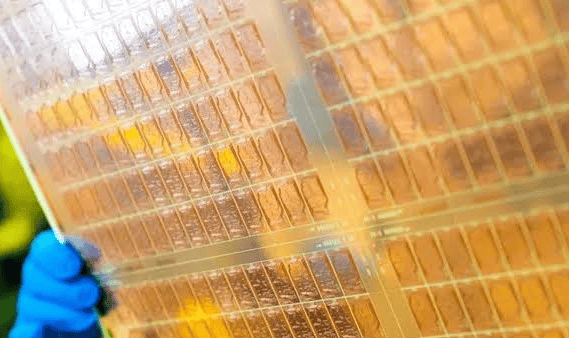
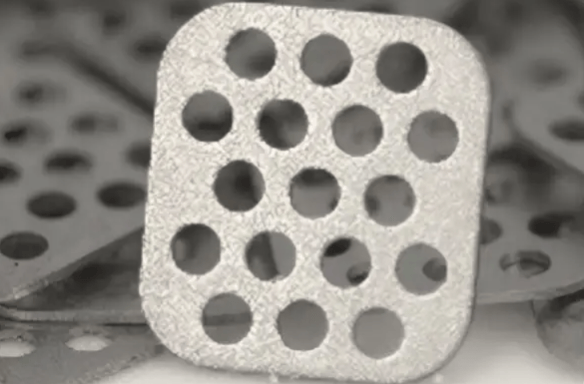
In terms of core structure manufacturing, the research team developed a stamping-and-lamination process. Commercial nickel-titanium shape memory alloy thin sheets are first stamped into individual chips with porous structures, and multiple chips are then stacked in sequence to form a tubular cooling component. The porous structure increases the contact area between the material and the heat transfer medium, while the interlayer connections form relatively independent structural units. Compared with conventional continuous tubular structures, the layered design can limit crack propagation across the entire component, reducing the risk of overall structural failure caused by repeated mechanical loading.
The new process can produce approximately 100 porous alloy chips per minute. Compared with the wire-cut electrical discharge machining method used in the research, the production speed is increased by more than 100 times, and the manufacturing cost is reduced by approximately 95%. The conventional wire-cut process requires step-by-step precision machining of alloy materials, resulting in long production cycles and high costs; the stamping method, by contrast, completes batch forming through dies followed by laminated assembly, reducing per-piece machining steps.
In durability testing, the novel structure withstood more than 100 million cumulative operating cycles, based on which the research team estimates that under the test conditions its service life can exceed 10 years. The structure consists of multiple independent porous chips stacked together, and the interlayer interfaces can impede continuous crack propagation, preventing a single continuous structure from developing large-scale longitudinal cracking after localized fatigue damage. For cooling equipment that requires long-term repeated mechanical loading and unloading, this structural design helps improve the fatigue reliability of the core cooling component.
To verify actual cooling capacity, the team fabricated an elastocaloric cooling prototype device, with a core cooling unit only 30 millimeters in length composed of 200 stacked nickel-titanium porous chips. Testing showed that the device achieved a maximum temperature span of 11.7 Kelvin and a specific cooling power of 3.85 watts per gram. The temperature span represents the maximum temperature difference that can be established between the hot and cold sides of the cooling device, and does not mean that the indoor ambient temperature directly drops by 11.7 degrees Celsius. The specific cooling power reflects the cooling capacity provided per unit mass of cooling material.
Compared with conventional vapor compression cooling systems, elastocaloric cooling has the technical characteristic of not relying on conventional circulating refrigerants; however, its overall energy consumption is also affected by the mechanical drive device, heat exchange system, and equipment control methods.
Related Products


CAP1400 main feedwater flow nozzle flowmeter.
Jiangsu Hongda Instrument Technology Co., Ltd.
QLZNGJ Intelligent Steel Reinforcement Trolley
Luoyang China Railway Qiangli Machinery Co., Ltd.
Pallet Solutions Product Line: HD3000 Double-Column Stacker Crane
Zhongding Intelligent (Wuxi) Technology Co., Ltd.
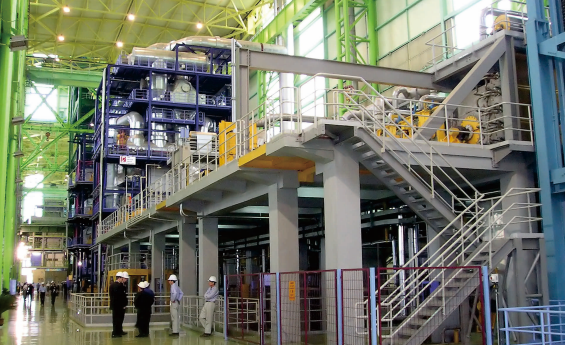
Strip Coating and Plating Production Line Equipment
MCC-SFRE HEAVY INDUSTRY EQUIPMENT CO., LTD.
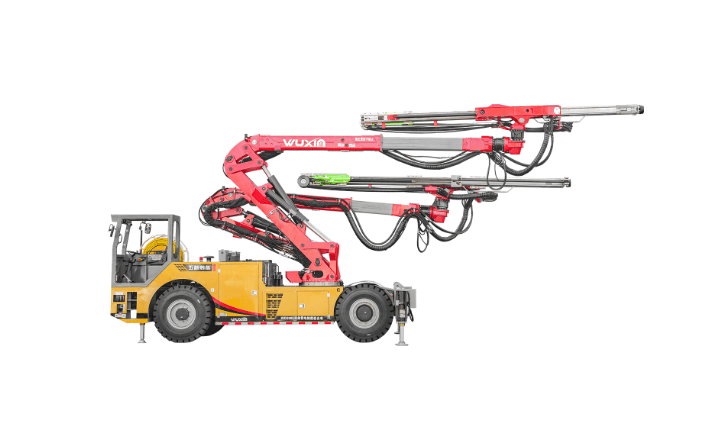
Double-Boom Computerized Rock Drilling Jumbo WD200E
Hunan Wuxin Intelligent Equipment Group Co., Ltd.