China Academy of Aerospace Aerodynamics of CASC Completes Maiden Flight of Its First Commercial-Grade Pure Photovoltaic UAV
en.Wedoany.com Reported - On November 11, the "Light Cavalry" small and medium-sized pure photovoltaic UAV, independently developed by the 11th Research Institute of China Aerospace Science and Technology Corporation (CASC), completed its maiden flight at an airport in northwest China. The aircraft uses solar energy as its sole power source, with a fuselage length of 3.2 meters and a wingspan of 8 meters. Its maximum designed endurance reaches 30 hours. Featuring a modular mission payload design, it can accommodate communication, remote sensing and other mission equipment. It is China's first commercial-grade small and medium-sized pure photovoltaic UAV.
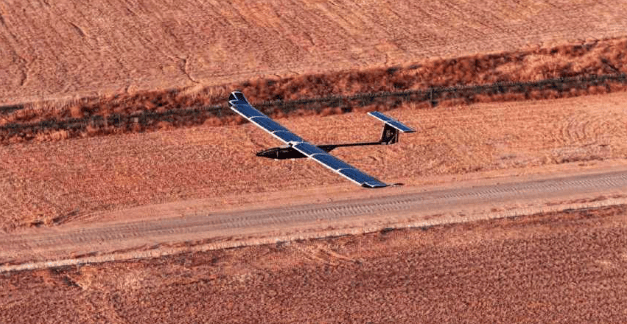
The "Light Cavalry" adopts an energy scheme in which photovoltaic cells are laid on the wings, harvesting solar energy through photovoltaic modules on the wing surface to power the electric propulsion system. Compared with conventional fuel-powered UAVs, the aircraft does not rely on aviation fuel; its primary energy source is solar energy. The product design focuses on long-duration flight, rapid deployment and ease of ground support. The currently announced maximum designed endurance is 30 hours.
The aircraft features a modular payload design, allowing communication and remote sensing equipment to be configured according to different missions. Communication payloads can be used for communication support missions, while remote sensing payloads can be used for ground observation and information collection. The modular configuration enables the same flight platform to adjust equipment combinations according to mission requirements, reducing the need to repeatedly configure aircraft platforms for different missions.
The "Light Cavalry" supports vehicle-mounted takeoff, with a ground preparation time of approximately 20 minutes. This design reduces dependence on fixed airports and traditional runway facilities, allowing the aircraft to be transported by vehicle to the mission area for ground preparation and flight deployment. The short preparation time also facilitates transfer of the equipment between different mission locations, adapting to operational scenarios requiring rapid response, such as temporary communication support and remote sensing observation.
This maiden flight advanced the UAV from the development stage to the flight verification stage. Currently disclosed information mainly includes the airframe dimensions, designed endurance, power method and mission payload configuration. Payload weight, cruise speed, service ceiling and actual mission flight data have not yet been published.