China's MIIT Sets Out Four Directions for 6G Standard Development and Industrial Growth
en.Wedoany.com Reported - On November 24, the 2026 6G Development Conference opened in Songjiang, Shanghai. Zhong Zhihong, Chief Engineer of the Ministry of Industry and Information Technology (MIIT), proposed at the conference to advance 6G R&D and industrial development around four areas: global standard unification, core technology innovation, application ecosystem cultivation, and international open cooperation. Currently, 6G has entered a critical stage of deepening technological breakthroughs and comprehensively launching standard development, and China is carrying out key technology R&D, international standard setting, and industrial cultivation in parallel.

A globally unified standard was one of the key focuses of the conference. Zhong Zhihong called for maintaining inclusiveness, building consensus on 6G standards, and strengthening global cooperation among industry, academia, research, and application stakeholders. On the same day, the IMT-2030 (6G) Promotion Group, together with international organizations, industry alliances, and domestic and foreign enterprises, released the "Global 6G Development Vision Declaration," proposing to promote the formation of a globally unified 6G international standard under the frameworks of international standards organizations such as the International Telecommunication Union (ITU) and the 3rd Generation Partnership Project (3GPP), and to form international consensus on 6G spectrum use.
In terms of technology R&D and industrial cultivation, Zhong Zhihong proposed adhering to innovation-driven development to consolidate the foundation of the 6G industry. China's ongoing second-phase 6G technology trials have entered the system testing stage, with R&D work extending from the verification of individual key technologies to system-level testing. The conference organized technical exchanges on directions including the integration of artificial intelligence and communications, integrated space-air-ground networks, new-type terminals, and key chips and devices, and arranged demonstrations of 6G prototype samples, test instruments, and related trial results.
Application deployment is another priority. Zhong Zhihong proposed adhering to application-driven development to cultivate the 6G industrial ecosystem. The "Global 6G Development Vision Declaration" released at the conference further incorporated application scenarios and business models into the development agenda, proposing innovation in technologies, products, and services around the needs of the real economy and people's livelihoods, and exploring 6G business models that can be scaled up and are commercially sustainable. Regarding network technology directions, the Declaration also proposed requirements for minimalist network design, high cost-effectiveness, and high energy efficiency, promoting the integration of communications network technology innovation with industry digital applications.
In terms of domestic industrial layout, the Ministry of Industry and Information Technology approved on November 17 the launch of 6G innovation and development ministry-province collaborative pilots in Beijing and seven other provinces and municipalities. According to the previously released special action plan, pilot regions select key development directions based on their own industrial foundations and scientific research resources, and participate in 6G technology trials, test environment construction, standard development, and industrial ecosystem cultivation. The conference set up a results exchange session on the 6G innovation and development ministry-province collaborative pilots to promote the alignment of local R&D resources with national-level technology trial work.
In terms of international cooperation, Zhong Zhihong proposed adhering to open cooperation to share the fruits of 6G development. The conference invited international standards organizations and industry representatives from Europe, Japan, South Korea, and other countries and regions to participate in exchanges. According to the development timeline previously published by the China Academy of Information and Communications Technology, the first version of the 6G international standard is expected to be released in the first half of 2029, with commercial availability expected around 2030.
Related Products


20 Inch 1600*900 Full HD 60Hz TFT LED Monitor with VGA and DP Interfaces for Desktop Computers-Business Use
Guangzhou Zanying Optoelectronics Technology Co., Ltd.

D12 Humanoid Robot
Automation Research Institute Co., Ltd. of China South Industries Group Corporation
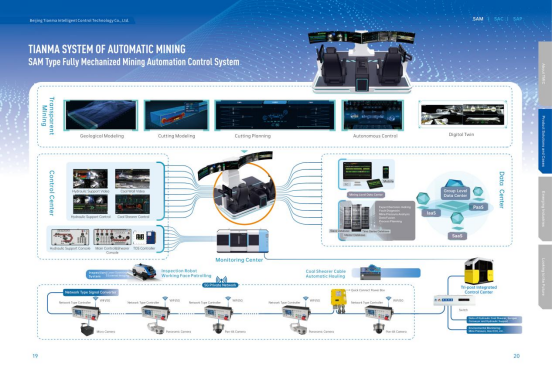
Comprehensive Mining Automation Control System
Beijing Tianma Intelligent Control Technology Co., Ltd.
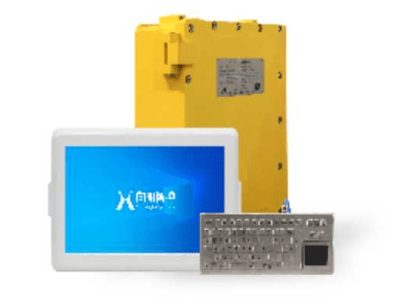
KJD127(A) Mining Explosion-Proof and Intrinsically Safe Computer
Taiyuan Xiangming Intelligent Control Technology Co., Ltd.


MUX Series Communication Interface Device for Security and Stability Control System
Nanjing NR Electric Co., Ltd.