Main Tower Steel Structure of China's 410-Meter Luzhou Tower in Hefei Tops Out
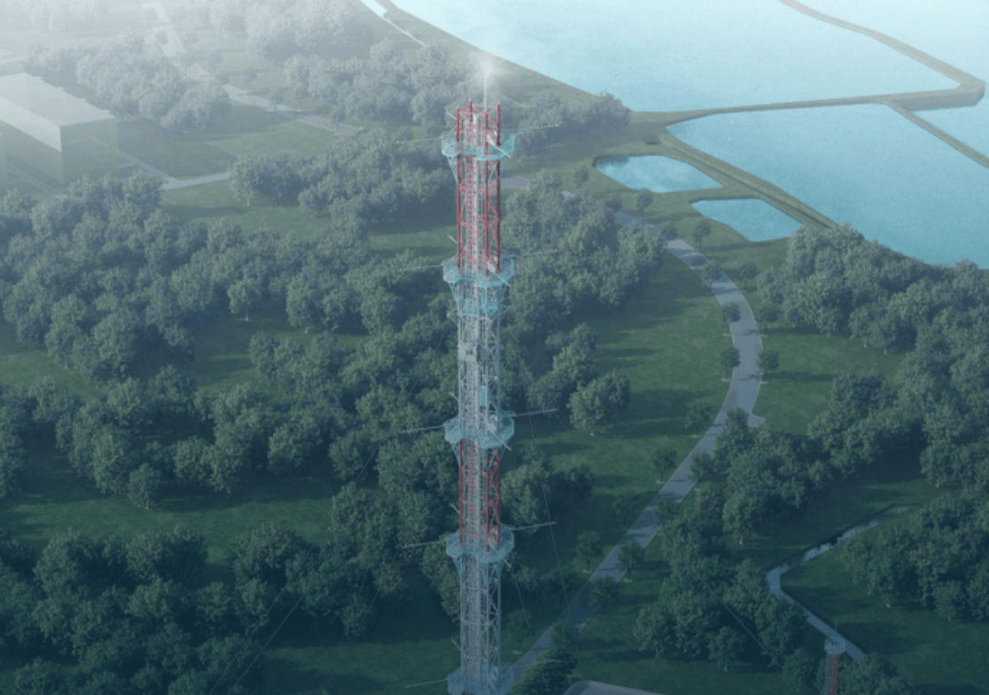
en.Wedoany.com Reported - On November 24, the 400-meter atmospheric environment and meteorological gradient observation tower (Luzhou Tower), located in Hefei Future Science City, Anhui Province, completed the hoisting of the 42nd section of the main tower's steel structure, officially topping out the main structure. On-site measurements showed that the verticality deviation of the main tower was approximately 3 centimeters, better than the design specification limit of three ten-thousandths. With a total height of 410 meters, the project is jointly supported by the Chinese Academy of Sciences and the Hefei Comprehensive National Science Center, and is being constructed by the Hefei Institutes of Physical Science, Chinese Academy of Sciences. It is scheduled for full completion and commissioning in September 2027.
Construction of Luzhou Tower officially began on November 9, 2025. The first steel structure section was hoisted in February 2026, and the 14th steel structure section at a height of 125 meters was installed in May. Subsequent high-altitude construction adopted a self-climbing double-boom hoisting process to raise the main tower height section by section. With the completion of the 42nd steel structure section, the project will move into the installation and commissioning phase for meteorological observation booms, observation platforms, internal and external elevators, electrical and electronic systems, and scientific research instruments and equipment.
In terms of observation facility configuration, Luzhou Tower is planned to include 23 fixed observation platforms and 1 continuously adjustable observation cabin, forming a multi-altitude continuous observation system from ground level to high altitude. The tower will be equipped with monitoring devices for atmospheric pollutants, greenhouse gas fluxes, and meteorological elements, conducting synchronized observations of temperature, humidity, wind fields, and atmospheric composition at different altitudes to obtain data on how the atmospheric environment changes with height.
The project's location in Hefei is directly related to local atmospheric environment and topographical conditions. Hefei lies in China's north-south climate transition zone and the convergence area of monsoon climates, where cold and warm air masses are frequently active. The surrounding area encompasses diverse surface types including urban built-up areas, farmland, lakes, and hills. Once completed, Luzhou Tower will be used to observe atmospheric processes such as the stable boundary layer, temperature inversion layer, low-level jets, and urban heat island circulation, and to study the variation characteristics of local pollution emissions and regional atmospheric transport.
In addition to long-term atmospheric observation, Luzhou Tower will also undertake technical verification tasks for domestically produced atmospheric detection equipment. According to the construction plan, researchers can use the fixed platforms and the adjustable observation cabin to conduct instrument comparisons and observation experiments at different altitudes, and carry out coordinated observations with ground-based, airborne, and spaceborne detection systems. The related facilities will be used for research and development testing and application demonstration of high-end atmospheric detection instruments.
Related Products

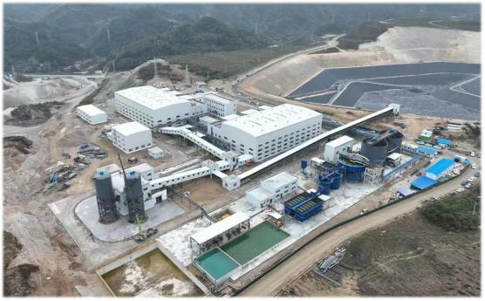
Yingping Mining Section Open-pit Tailings Backfill Treatment of Goaf Ecological Restoration EPC Project
China Bluestar Lehigh Engineering Corporation
Prefabricated Houses and Electrical Energy Boxes
Chengdu Ruilong Machinery Manufacturing Co., Ltd.
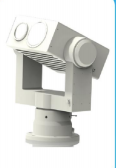
Forest and Grassland Heat Source Infrared Monitor
China Huayun Meteorological Technology Group Co., Ltd.