UK retailer Monsoon optimizes warehouse workflows, raising productive working time to over 90%
en.Wedoany.com Reported - On November 24, Swedish supply chain software company IMI announced that its warehouse labor efficiency management solution has helped UK fashion retailer Monsoon increase productive working time at its distribution center to over 90%. By analyzing staff working time, adjusting warehouse layout, and optimizing operational shifts, Monsoon reduced the proportion of time not allocated to specific productive tasks from 30%–40% to approximately 9%, converting 21 to 31 percentage points into productive working time.
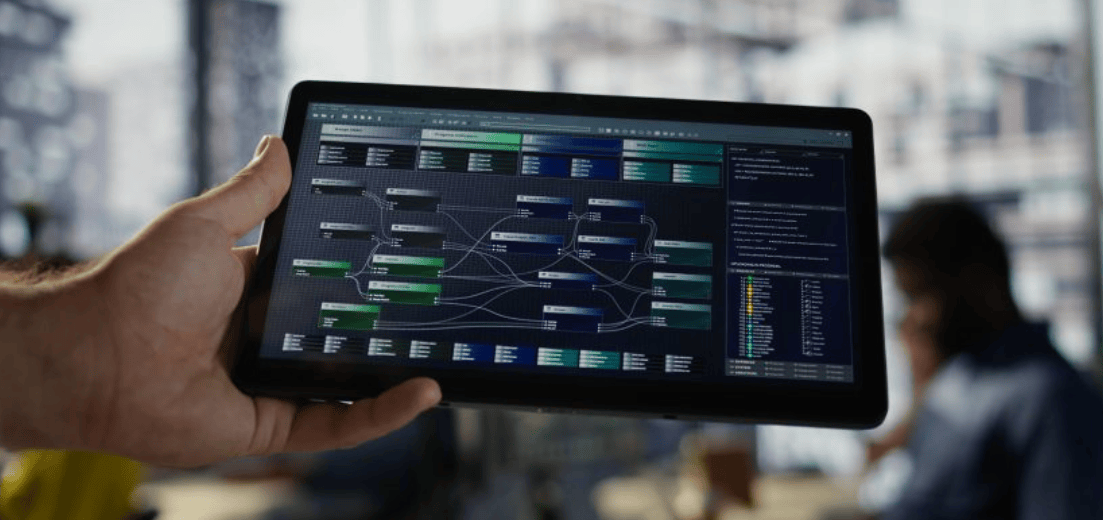
Monsoon Accessorize operates a distribution center of approximately 23,226 square meters (250,000 square feet) in Wellingborough, Northamptonshire, UK, handling over 15 million items annually and serving physical stores, e-commerce platforms, third-party marketplaces, franchise stores, wholesale customers, and international operations. The warehouse simultaneously uses automated sorting systems and manual picking operations, with hanging goods, bulk goods, and flat storage areas, making the logistics processes relatively complex.
Before introducing the IMI solution, Monsoon found it difficult to quickly and accurately understand the actual working time allocation across different areas and roles. Initial data analysis showed that 30%–40% of working time in the warehouse was not clearly allocated to specific productive tasks, leading the management team to focus primarily on identifying time losses and adjusting on-site work processes.
Regarding conveyor equipment layout, Monsoon repositioned some conveyors so that task start and end points were concentrated in the same area, reducing unnecessary movement of personnel and goods within the warehouse. Data analysis also revealed that the original warehouse work was spread across a 24/7 operating model. After rescheduling, the company consolidated the relevant operations to Monday through Friday, reducing resource utilization losses caused by scattered scheduling.
Following these adjustments, the proportion of unallocated working time in the warehouse dropped to approximately 9%, meaning that 21%–31% of total working time was converted into productive activities. Based on current operating results, over 90% of time at the distribution center can now be used for clearly defined productive tasks.
Monsoon initially chose one area within the warehouse for a pilot deployment of the IMI labor efficiency management solution, while simultaneously upgrading its warehouse management system (WMS), and then gradually expanded to the entire distribution center. IMI consultants established data models of warehouse work areas and personnel activity through on-site mapping, and when warehouse layouts changed, conducted on-site measurements again and adjusted system configurations.
Dawn Pine, Supply Chain Director at Monsoon Group, stated that the system has become an important tool for daily management of the distribution center, providing objective operational efficiency data to help managers identify process issues and develop adjustment plans. Martin O'Grady, Commercial Business Head at IMI, noted that improving warehouse efficiency does not rely solely on increasing employee work intensity, but more importantly on using data to identify how time is used and optimizing work processes.
Currently, Monsoon continues to further reduce unallocated working time. As inventory structure, procurement rhythms, and order channels change, the workload distribution at the distribution center will also adjust accordingly. The company plans to continue using the system to monitor efficiency at each stage and promptly optimize staffing and warehouse operations.
This case demonstrates that a warehouse labor efficiency management system can improve resource utilization at existing distribution centers through working time measurement, personnel activity analysis, and layout optimization. Monsoon did not rely on adding large-scale automated equipment to achieve this efficiency improvement, but rather reorganized existing automated sorting systems and manual operation processes to unlock the warehouse's existing operational capacity.
Related Products


China - Alashankou/Khorgos - Europe Full Range Transportation (Mala/Hamburg/Duisburg/Budapest, etc.)
Shenzhen Neptune Logistics Co., Ltd.



3m intelligent buoy combining navigation safety and real-time marine monitoring integrated navigation and marine monitoring system for real-time maritime data
Chengdu Dixin Technology Co., Ltd.
JiuTian OneSky Pilot—Intelligent Management And Service Platform
China Times Prospect Science & Technology Co., Ltd.
NTE150 Electric Drive Mining Dump Truck
Inner Mongolia North Heavy Industries Group Co., Ltd.