Sinopec and Others Expect Global Natural Gas to Shift to Phased Loosening During the 15th Five-Year Plan Period
en.Wedoany.com Reported - On November 24, at the 7th Peking University Energy Forum, the "China Oil, Gas and New Energy Industry Development Report (2026)," jointly compiled by Sinopec Group Economics and Technology Research Institute Co., Ltd., the Peking University Energy Research Institute, and Rystad Energy, was officially released. The report points out that during the 15th Five-Year Plan period, the global natural gas market will enter a new round of structural restructuring: with the concentrated release of new production capacity in the United States and the Middle East, the global market will gradually shift from the tight balance at the end of the 14th Five-Year Plan period to phased loosening. However, this loosening is more reflected in supply improvement at the aggregate level, while deep-seated contradictions and uncertainties such as regional mismatches, periodic tightening, and external disturbances will still exist. At the same time, the center of demand will further shift to Asia, Europe's overall demand will stabilize but its dependence on liquefied natural gas (LNG) will remain at a relatively high level, and the global trade landscape will accelerate toward a stage of multi-hub linkage and strengthened network coordination.
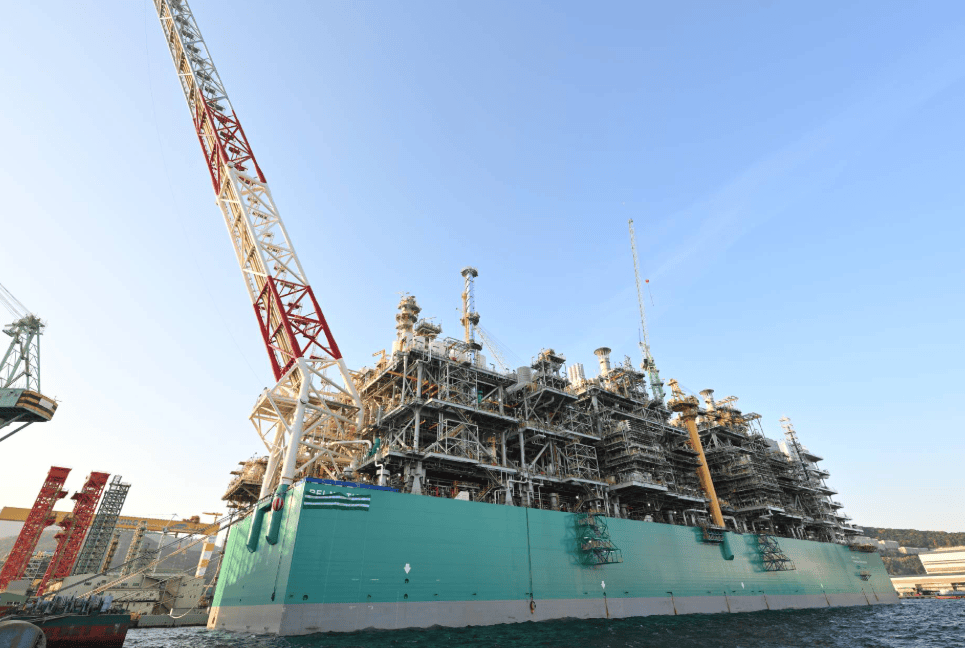
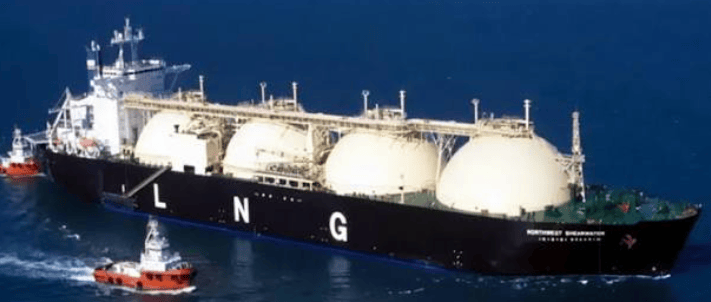
From the perspective of cross-validation on the supply side, the global LNG capacity tracking data updated by the International Energy Agency (IEA) in October 2026 shows that between 2025 and 2030, projects that had reached final investment decision (FID) and were under construction as of early 2025 are expected to add more than 330 billion cubic meters per year of LNG export capacity (excluding the 27 billion cubic meters per year of Russia's sanctioned Arctic LNG 2 and the 22 billion cubic meters per year of Qatar's North Field West, which has not yet formally reached FID). Annual new capacity is expected to climb from about 30 billion cubic meters per year in 2025 to a peak of about 90 billion cubic meters per year in 2028, then decline in 2029 to 2030. Among this, the United States and the Middle East are indeed the absolute main forces: of the more than 430 billion cubic meters per year of global capacity that reached FID between 2019 and October 2026, the United States accounted for nearly 55% and Qatar about 15%; from January to October 2026, North America again advanced four projects to FID—U.S. CP2 LNG Phase 2, Commonwealth LNG, Delfin LNG, and Canada's LNG Canada Phase 2—adding a total of nearly 46 billion cubic meters per year of new capacity, while capacity under construction in the Middle East is concentrated in Qatar's North Field East expansion (43.5 billion cubic meters per year), North Field South expansion (21.8 billion cubic meters per year), and the UAE's Ruwais LNG (13 billion cubic meters per year).
However, geopolitical shocks since 2026 have confirmed the report's judgment that "aggregate loosening coexists with external disturbances and periodic tightening." In its "Q2 2026 Gas Market Report" and October capacity tracking, the IEA pointed out that the Middle East conflict that broke out in March 2026 and the disruption of the Strait of Hormuz, combined with the attack on the Ras Laffan facility that delayed the commissioning of the first production line of Qatar's North Field East expansion project from the end of 2026 to at least the first half of 2027, are expected to cause a cumulative loss of about 120 billion cubic meters of LNG supply globally from 2026 to 2030, delaying the market-loosening effect brought by the new wave of supply by at least two years. The IEA's "Q3 2026 Gas Market Report" further shows that from March to June 2026, LNG loadings from Qatar and the UAE decreased by 35 billion cubic meters year on year, while LNG production outside the Gulf region increased by nearly 18% year on year (about 27 billion cubic meters), offsetting about three-quarters of the Gulf shortfall; global LNG supply is expected to be roughly flat for the full year of 2026, and global natural gas demand is expected to edge down by about 0.5% year on year (about 20 billion cubic meters) amid tight supply.
In terms of demand structure, statistics from the International Gas Union (IGU) "2026 World LNG Report" show that global LNG trade volume reached 436.98 million tonnes in 2025,up 6.3% year on year, covering 24 export markets and 50 import markets; the Asia-Pacific region, with 168.7 million tonnes (up 3.6 million tonnes year on year), remained the world's largest LNG importing region,while China retained its position as the world's largest LNG importing country with 69.77 million tonnes (down 8.9 million tonnes year on year due to the impact of a warm winter,higher domestic production, and increased pipeline gas).During the same period, in order to replace reduced Russian pipeline gas and replenish inventories, Europe's LNG imports surged by 26.1 million tonnes year on year in 2025 to 126.2 million tonnes,confirming the report's description of a pattern in which Europe's overall gas use is stabilizing but remains highly dependent on LNG.On a medium- to long-term dimension,as one of the joint compilers of the report, Rystad Energy, under the "pragmatic scenario" of its "Global Energy Scenarios 2026" (GES 2026) released on October 15, 2026, estimates that by 2050, the natural gas import dependence of Europe and Asia will still remain at about 76% and 49%, respectively.At the level of the Chinese market, Wang Pei, deputy general manager of Sinopec Economics and Technology Research Institute, introduced at the November 24 press conference that natural gas currently accounts for about 8%–9% of China's primary energy consumption; during the 15th Five-Year Plan period, non-fossil energy will account for 88% of the increment in energy consumption, and as total energy use gradually enters a plateau period, the stock substitution of coal and oil by electricity, gas, and hydrogen will be further advanced.
Against the backdrop of intertwined supply-demand geography and geopolitical risks, the operating mechanism of global natural gas trade is accelerating toward flexible allocation and multi-hub linkage. Monitoring by the IGU "2026 World LNG Report" shows that although on March 3, 2026, under the impact of the Gulf situation,Asian spot LNG prices once reached 25.39 USD per million British thermal units (a new high since December 2022),overall price volatility was more contained than during the 2022 energy crisis, reflecting deeper liquidity linked to benchmarks and an improved ability to deploy flexible resources; in the first quarter of 2026, Platts MOC spot trading volume in Asia surged 77% year on year to 62 trades, while derivatives trading volume surged 251% year on year to 1,744 lots. As flexible cargoes without destination restrictions from the Atlantic Basin, such as those from the United States, continue to be released in larger volumes, cross-regional arbitrage, optimization of multi-node resource pools, and linkage with financial hedging tools will become key buffer mechanisms during the 15th Five-Year Plan period for hedging against geopolitical supply disruptions and regional supply-demand mismatches.