Wedoany.com Report-Sept. 9, On September 8, Uber and Momenta announced at the IAA MOBILITY 2025 in Munich that the city will be the first to host their jointly developed Robotaxi service, with commercial operations scheduled for 2026. The project represents a milestone in their strategic partnership and is expected to pave the way for broader deployment of autonomous ride-hailing services across Europe.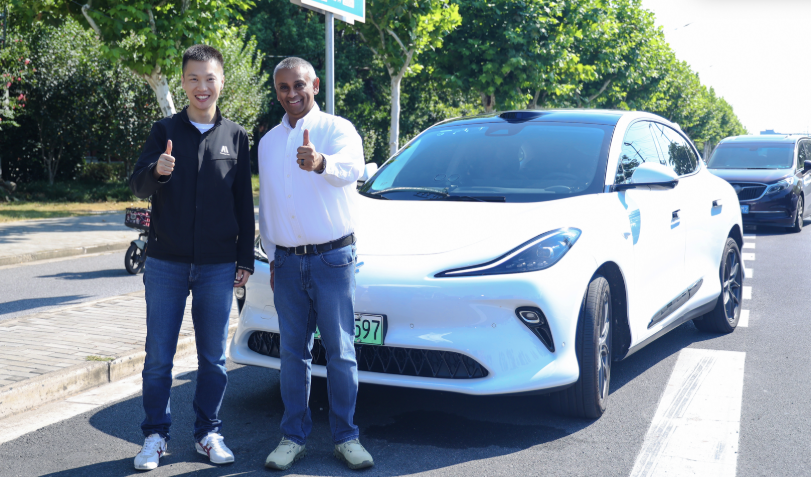
Left: Momenta CEO Cao Xudong, right: Uber CFO Prashanth Mahendra-Rajah
Munich, recognized as Germany’s automotive hub and a global center of innovation, has built a strong mobility ecosystem and continues to welcome new transport solutions. Momenta has already established close connections with leading German automakers such as Mercedes-Benz and BMW, strengthening its presence in the region and providing a favorable environment for the launch.
For Uber, introducing autonomous services in Munich aligns with its ambition to expand self-driving technologies within its global mobility network. CEO Dara Khosrowshahi said: “Germany has shaped the world’s automotive industry for more than a century, and Munich is now positioned to help shape the future of self-driving mobility.”
Momenta, under the leadership of CEO Cao Xudong, regards the launch as a chance to showcase how its AI-powered Level 4 autonomous technology can reshape urban travel. Since its founding, the company has pursued what it calls a “flywheel and two legs” strategy, connecting large-scale Level 2 driver-assistance systems with Level 4 Robotaxi operations through a unified software and sensor architecture. This approach enables Momenta to use production-ready vehicle platforms, helping accelerate commercialization and scaling of its Robotaxi services. Currently, more than 400,000 vehicles equipped with Momenta’s assisted-driving systems are already in operation.
The collaboration between Uber and Momenta was first revealed in May, highlighting their shared plan to bring autonomous vehicles to markets beyond the United States and China. The Munich initiative will be the first step in this international expansion. Once the service begins, passengers in the city will be able to request Robotaxis powered by Momenta’s technology directly through the Uber app.
According to both companies, the service will provide safe, efficient, and seamless driverless travel for local users. The deployment in Munich is expected to demonstrate the viability of integrating advanced autonomous systems into established ride-hailing networks, creating opportunities for further adoption across Europe.
The Munich rollout is regarded as an important stage for Uber’s long-term strategy of embedding autonomous driving within its platform, while also offering Momenta the opportunity to validate its Level 4 solutions in a major European city. Both companies view the project as a step toward developing sustainable, innovative, and accessible mobility services for the future.