Wedoany.com Report-Oct. 10, The Royal Swedish Academy of Sciences has announced that the 2025 Nobel Prize in Chemistry has been awarded to Susumu Kitagawa from Kyoto University, Japan; Richard Robson from the University of Melbourne, Australia; and Omar M. Yaghi from the University of California, Berkeley, USA. The three scientists were honored for their pioneering work in the development of metal–organic frameworks (MOFs), a breakthrough that has significantly advanced the field of chemistry.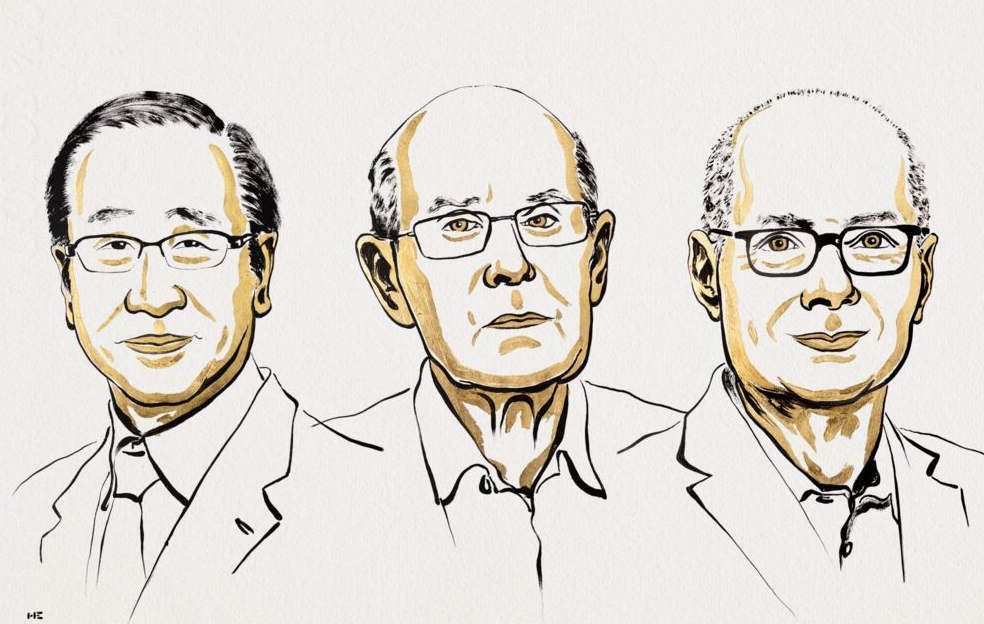
The Royal Swedish Academy of Sciences has awarded the Noble Prize in Chemistry 2025 to Susumu Kitagawa, Richard Robson and Omar M Yaghi for their work in the development of metal-organic frameworks.
According to the Nobel Prize press release, the laureates have designed molecular structures featuring extensive internal spaces that allow gases and other chemical substances to pass through. These metal–organic frameworks have a wide range of potential applications, including harvesting water from desert air, capturing carbon dioxide, storing hazardous gases, and catalyzing chemical reactions.
In these molecular constructions, metal ions serve as structural cornerstones, while long organic (carbon-based) molecules act as connectors. Together, these components form crystalline frameworks containing large cavities. Such porous materials, known as metal–organic frameworks, can be tailored to interact with specific substances by modifying their chemical building blocks. Through this approach, chemists can design MOFs to perform specialized tasks such as selective adsorption, controlled storage, or catalytic transformation of compounds.
Beyond their role in storage and separation processes, MOFs can also facilitate chemical reactions and conduct electricity, demonstrating their versatility and potential in various scientific and industrial applications. The ability to fine-tune their structure and composition gives MOFs a distinct advantage in developing new materials with customizable properties.
Heiner Linke, Chair of the Nobel Committee for Chemistry, stated: “Metal–organic frameworks have enormous potential, bringing previously unforeseen opportunities for custom-made materials with new functions.” His remarks underscore the scientific and technological impact of the laureates’ work, which has opened new possibilities for material design and resource utilization.
The discovery and development of MOFs have transformed how chemists think about molecular architecture and material functionality. By combining metal ions with organic linkers in highly ordered ways, the laureates have demonstrated how precise molecular engineering can lead to structures with remarkable porosity and adaptability. These frameworks are now being investigated for applications in environmental protection, renewable energy, and sustainable chemical production.
The 2025 Nobel Prize in Chemistry recognizes not only the ingenuity of Kitagawa, Robson, and Yaghi but also the profound influence their research has had on both academic science and industrial innovation. Their collective achievements represent a milestone in modern chemistry, highlighting the growing importance of molecular design in addressing global scientific and environmental challenges.