Wedoany.com Report on Feb 24th, A study on the application of silane modifiers in poly(vinyl acetate-co-2-ethylhexyl acrylate) copolymer emulsions has revealed their optimizing effect on coating performance. The research focused on two silane promoters, vinyltrimethoxysilane (VTMS) and 3-(trimethoxysilyl)propyl methacrylate (3-TMSPMA), exploring how they influence the structure and functionality of VAc–2EHA copolymers. Silane modifiers were introduced via different methods, including addition during polymerization and post-addition, to evaluate their effects on polymer network formation and film durability.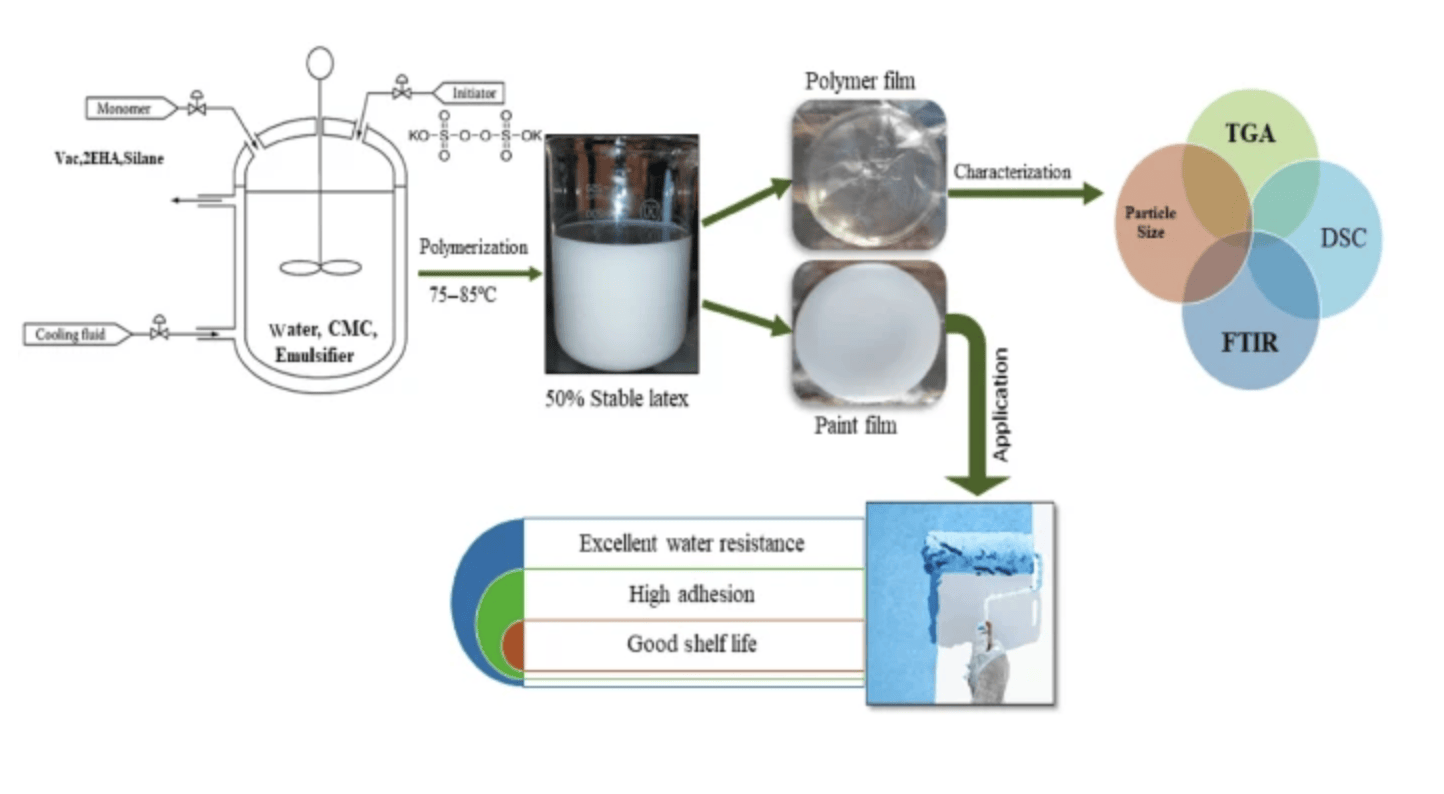
The prepared latex had a solid content of approximately 50 wt.%, calculated based on non-volatile monomers, and maintained good colloidal stability. Spectroscopic analysis confirmed the successful integration of silane functional groups into the polymer chains. Thermal evaluation showed that VTMS modification produced the most thermally stable and well-crosslinked structure, while differential scanning calorimetry and dynamic mechanical analysis indicated the formation of a denser polymer network that retained a certain degree of flexibility. Surface and stability studies suggested that adding silane modifiers during polymerization generated smaller, smoother, and more hydrophobic particles, thereby imparting excellent water resistance and a more uniform coating effect to the films.
In contrast, the post-addition method of silane showed limited bonding efficiency and reduced network density. The findings emphasize that in-situ introduction of VTMS is the most effective strategy for achieving durable, water-resistant, and thermally stable films required for high-performance waterborne coatings. This research on silane-modified copolymer emulsions provides important insights for tailoring coating adhesion and is expected to drive technological advancements in related fields.