

PRODUCT STRUCTURE DESIGN
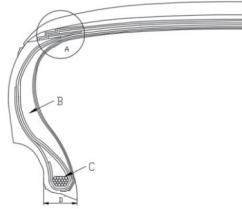
BELT (A) DESIGN
Tire ground impression analysis under the condition of air shortage, tire stress is highly concentrated on the shoulder, so the shoulder is strengthened by widening the width of the belt and crown layer to improve the durability of the tire.
SIDEWALL SUPPORTING RUBBER (B) DESIGN
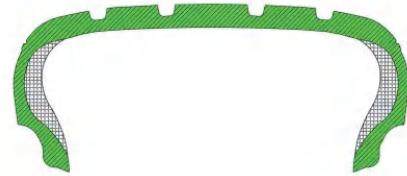
Add supporting rubber beneath the inner liner on the sidewall.
Supporting rubber has the characteristics of high modulus and low heat generation.
BEAD DESIGN
To improve the strength of the bead, the bead toe (D) should be widened, and the width should be increased by 1-2mm on the basis of ordinary tires. At the same time, the strength of the bead wire (C) increases by 25% with the increase of the number of strands; ensure that the tire is tightly attached to the rim when the tire is short of air.
RUN-FLAT TIRE INTRODUCTION
RUN-FLAT TIRE
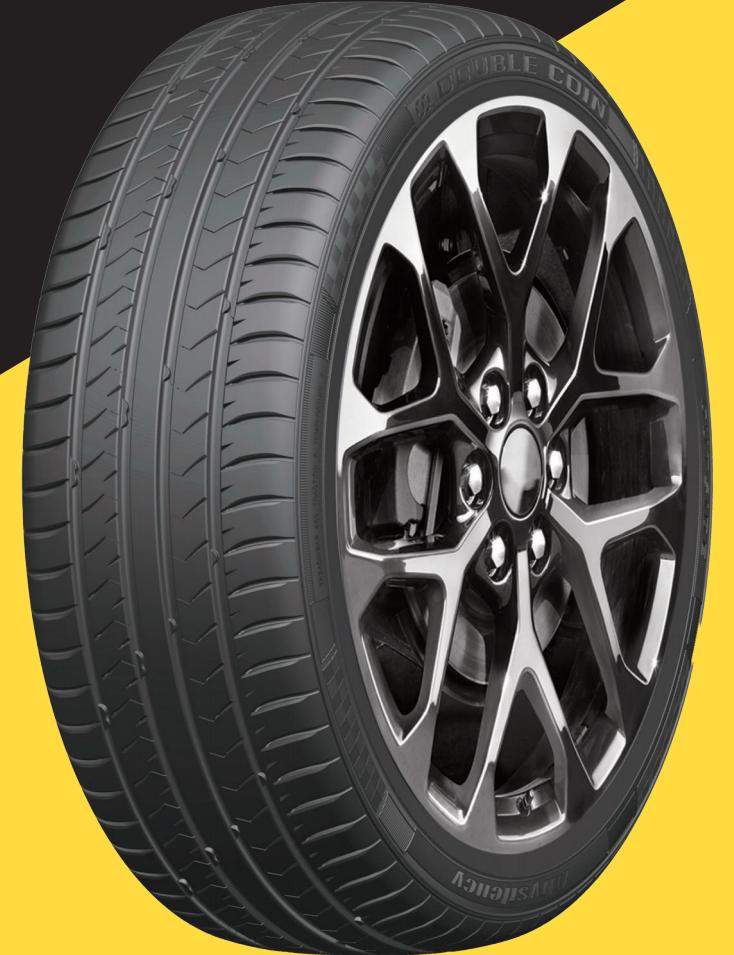
Also known as Zero Pressure Continuation Tire. It incorporates a special supporting rubber with certain load-bearing capacity. This allows the vehicle to travel at a speed of approximately 60-80 km/h for a distance of about 60-80 kilometers in the event of tire deflation or complete loss of air pressure. Subsequently, the vehicle owner should locate a nearby tire shop to address the tire issue. Conversely, an ordinary tire, when deflated to a critical level, will sustain damage after traveling just a short distance of tens of meters.
ADVANTAGES OF RUN-FLAT TIRES
Enhanced Safety: In the event of sudden tire pressure loss, the thicker tire sidewall ensures that the tire remains attached to the wheel hub and provides sufficient support to the vehicle.
Improved Convenience: The tire can travel a certain distance even when completely deflated, eliminating the immediate need to stop and change the tire.
Reduced Weight and Space: By eliminating the need for a spare tire, space is saved, and vehicle weight is reduced.