
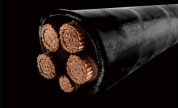


Low smoke zero (low) halogen wires and cables produce very little smoke and release gases containing no (or low) halogen elements and are non-toxic (low toxicity) in case of flame burning. When a fire occurs, they can greatly reduce harm to instruments, equipment, and human body, and are therefore widely used in high-rise buildings, hospitals, large libraries, gymnasiums, disaster prevention command and dispatch buildings, stations and civil airports, passenger waiting rooms, key cultural relics protection sites, as well as subways, underground shopping malls, or crowded public places.
The plastic insulated cables and wires with rated voltage 35kV and below developed and produced by our company not only meet the requirements of GB/T12706-2020, GB/T5023-2008, GB/T9330-2020 and JB/T 10491-2022, but also form a series, i.e., flame-retardant type, fire-resistant type, especially low smoke zero halogen (low halogen) performance complies with national standards GB/T17650.1~2-2021 and GB/T17651.1~2-2021. After national first-class scientific and technological novelty search, this type of product reaches the domestic advanced level of similar products.
Classification and Selection of Product Use Places
1. Low smoke zero (low) halogen use places should be classified into special, first, second, and third grades according to the nature of use of the building, fire hazard level, evacuation and firefighting difficulty level.
2. When low smoke zero (low) halogen wires and cables are laid in bundles, flame-retardant wires and cables should be used, and the flame-retardant class should comply with ZA, ZB, ZC or B1, B2 class. In places where circuit integrity needs to be maintained and power supply continued under external fire, fire-resistant wires and cables should be used for the lines.
