NASA Adjusts Artemis Moon Program, Adds Test Mission to Address Technical Delays
Wedoany.com Report on Mar 2nd, The National Aeronautics and Space Administration (NASA) recently announced a comprehensive adjustment to its Artemis Moon program to address multiple technical delays in recent years. This move aims to ensure the United States achieves its goal of returning to the Moon by 2028, enhancing proficiency in launch operations through the addition of a test mission.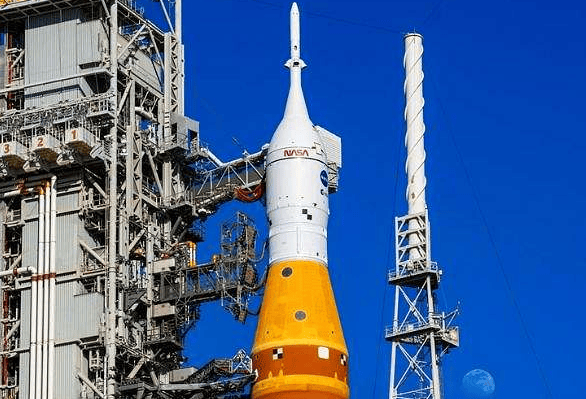
NASA Administrator Jared Isaacman stated that the goal of returning to the Moon remains unchanged, but the agency is modifying the flight sequence by adding a test mission before the final lunar landing to enhance the "muscle memory" of launches. This strategic adjustment comes against the backdrop of repeated delays in the Artemis 2 mission, which was originally planned for launch as early as February but has now been postponed to after April. The mission aims to achieve the first crewed circumlunar flight in over half a century.
Earlier this week, the Artemis 2 mission faced another challenge, prompting NASA to roll back its SLS rocket and Orion spacecraft from the launch pad to investigate issues and perform repairs. The announced changes mean that the Artemis 3 mission, which was originally planned to land astronauts on the lunar surface, will now be repurposed to test the lunar lander for a "low Earth orbit rendezvous" objective. In the next phase, the Artemis 4 mission aims to achieve a lunar landing by early 2028. Isaacman said during a briefing, "We are not necessarily committing to launching two missions in 2028, but we want the opportunity to be able to do that."
This announcement came just two days after NASA's independent Aerospace Safety Advisory Panel pointed out "significant risks" in the Artemis 3 lunar landing plan. Isaacman indicated that accelerating the launch frequency of Artemis missions would help accumulate more institutional knowledge, similar to the pattern seen in the Apollo program. He said, "From Mercury, Gemini, Apollo to the Space Shuttle program—I don't think anyone here would be surprised that the average launch frequency for those programs was closer to three months, not three years. We need to start getting back to basics and moving in that direction." "Launching once every three years, your skills atrophy, you lose muscle memory."
Scott Pace, Director of the Space Policy Institute, told AFP that Isaacman appears to have "made some realistic and necessary decisions." However, Clayton Swope from the Center for Strategic and International Studies said this left him "full of question marks," particularly regarding whether the SLS rocket or SpaceX's landing system could be ready according to NASA's timeline. Nevertheless, with the revised architecture, "if we had gone directly to the Moon as originally planned, we might have taken all the risks to the Moon, but now you might mitigate some of those risks."
As China advances its own efforts, NASA aims to return humans to the Moon. China's goal is to conduct its first crewed mission by 2030 at the latest. When asked about the so-called "space race," Isaacman stated, "I think competition is good." "What we're discussing here is a common-sense approach to achieving our goals, whether we have a strong competitor or not." Delays in space travel are not uncommon and can also stem from the progress of NASA's private partners. SpaceX and Blue Origin are contracted to develop lunar landers for the Artemis program, and both companies praised NASA's plan on social media on Friday. Blue Origin wrote on X, "We are fully supportive!" while SpaceX stated it "shares NASA's goal of returning to the Moon as soon and as safely as possible and establishing a permanent presence." SpaceX said, "Frequent human exploration flights help establish a sustainable human presence in space."
Related Products
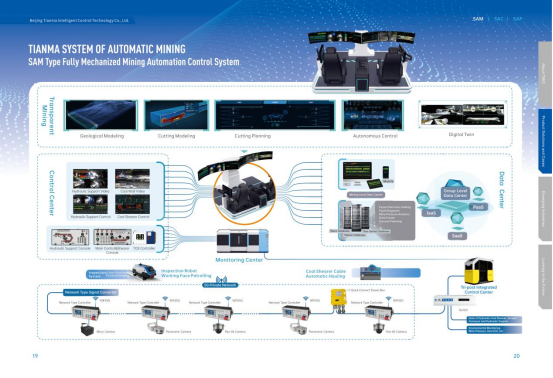

Comprehensive Mining Automation Control System
Beijing Tianma Intelligent Control Technology Co., Ltd.




GYTA Type Non-Self-Supporting Aerial/Duct Optical Cable
TONGDING INTERCONNECTION INFORMATION CO., LTD.
Mine Explosion-proof and Intrinsically Safe Industrial Ethernet Ring Network (10 Gigabit/Gigabit)
Chongqing Mas Sci&Tech Co., Ltd.

Multi-function Marine Monitoring Low-altitude Detection Radar Sea-air Boundary Ocean Dynamic Environment Measurement
Chengdu Dixin Technology Co., Ltd.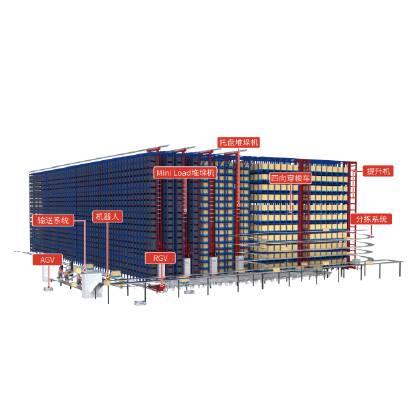

Hot Selling 10 Inch Intel N5100 I5 I7 FHD 8 +128GB 16+256GB Win10 Pro Win11 Pro 4G 5G Rugged Tablet PC Pad with NFC Barcode
Highton Electronics Co., Ltd.