Wedoany.com Report on Mar 2nd, Researchers at Ohio State University have confirmed that laser 3D printing technology can transform lunar dust into viable building structures. This method, based on In-Situ Resource Utilization (ISRU), avoids the need to transport building materials from Earth, thereby reducing costs and enhancing sustainability. The resulting lunar dust ceramic material possesses high strength, heat resistance, and durability, making it suitable for constructing key components such as habitats, tools, and radiation shielding.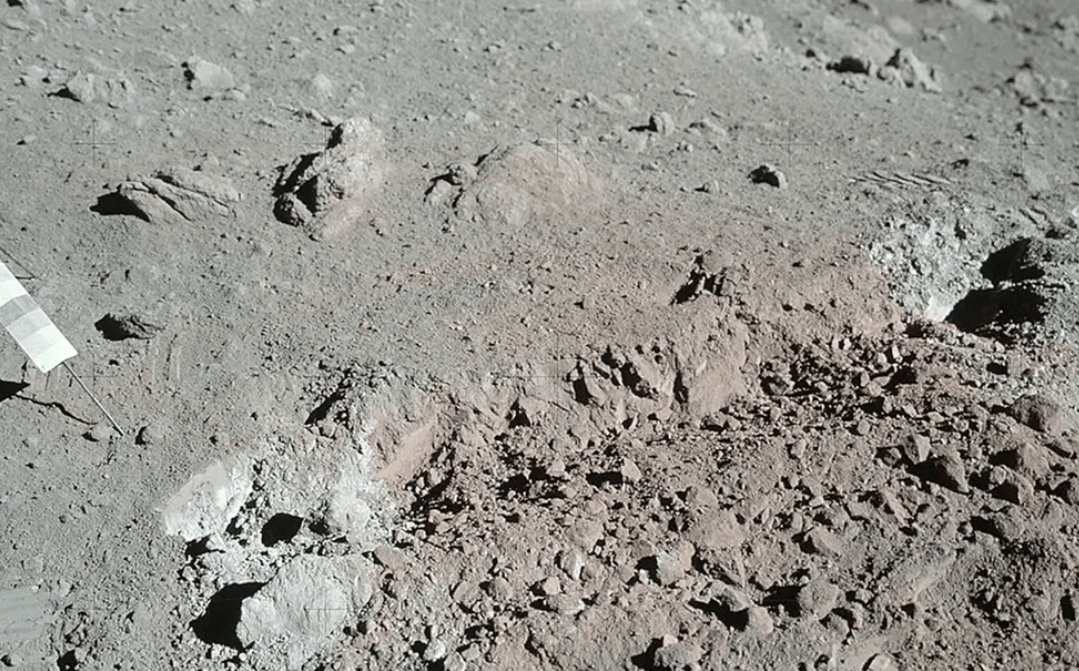
Lunar dust, or regolith, consists of fine particles rich in basalt, which is relatively scarce on Earth. The team conducted experiments using the simulant material LHS-1. By spreading thin layers and irradiating them with a high-energy laser, the particles melted and fused together, cooling to form a ceramic-like substance. This process can be achieved on various substrates such as stainless steel, glass, or aluminosilicate ceramics, with the aluminosilicate substrate enhancing the material's mechanical strength and thermal shock resistance.
The lead author of the study, Sizhe Xu, stated, "By combining different raw materials during the printing process, such as metals and ceramics, we found that the final material is very sensitive to the environment." He added, "Different environments lead to different properties, directly affecting the mechanical strength and thermal shock resistance of certain components." Due to the Moon's lack of an atmosphere, temperature fluctuations are extreme (approximately +120°C to -170°C), making environmental adaptability crucial for technological applications.
Another author, Sarah Wolff, noted, "Some conditions that occur in space are difficult to replicate in simulations. It might work in the lab, but in resource-scarce environments, you have to try every method to maximize the machine's flexibility across different scenarios." This technology holds promise for supporting future lunar missions, such as the Artemis program, helping to establish long-term infrastructure while reducing transportation costs, which exceed $1 million per kilogram of material delivered to the lunar surface.
Wolff further explained, "If we can successfully manufacture things in space using minimal resources, it means we can also achieve better sustainability on Earth. To that end, increasing the machine's flexibility in different scenarios is a goal we are actively working towards." The related research findings have been published in the journal Acta Astronautica.