As sustainable aviation fuel (SAF) gradually shifts from planning to actual construction, the issue of feedstock supply is becoming increasingly prominent. Early SAF development primarily relied on HEFA (Hydroprocessed Esters and Fatty Acids) technology, as it can directly produce molecules suitable for refineries. However, HEFA is highly dependent on lipid-based feedstocks like used cooking oil, which are limited in supply, unevenly distributed, and face increasing competition as countries set blending targets. For example, most of the EU's HEFA feedstock needs to be imported, and tightening regulations bring cost and supply chain risks.
Therefore, the next phase of SAF scale-up will focus more on feedstock diversity rather than a single pathway. Successful projects need to be designed to operate using local resources, including waste, residues, captured carbon dioxide (CO2), and renewable electricity, rather than being limited to constrained inputs.
Fischer-Tropsch (FT) technology, a mature method for converting syngas (a mixture of hydrogen and carbon monoxide) into long-chain hydrocarbons, provides a key pathway for producing aviation fuel blending components. Its strategic advantage lies in the fact that FT liquids can be manufactured as long as clean, suitable-condition syngas is produced, thereby overcoming the limitations of lipid-based feedstocks and scaling up SAF. FT-derived SAF has been approved by ASTM and can be blended with conventional aviation fuel without altering aircraft or airport infrastructure, making it a reliable scale-up option.
Since syngas is an intermediate product, FT technology can be combined with a wider range of carbon sources, such as municipal solid waste (MSW), forestry residues, agricultural waste, as well as captured CO2 paired with green hydrogen. This not only increases production but also supports energy security and resilience, helping regions develop SAF strategies based on domestic raw materials and reduce import dependence.
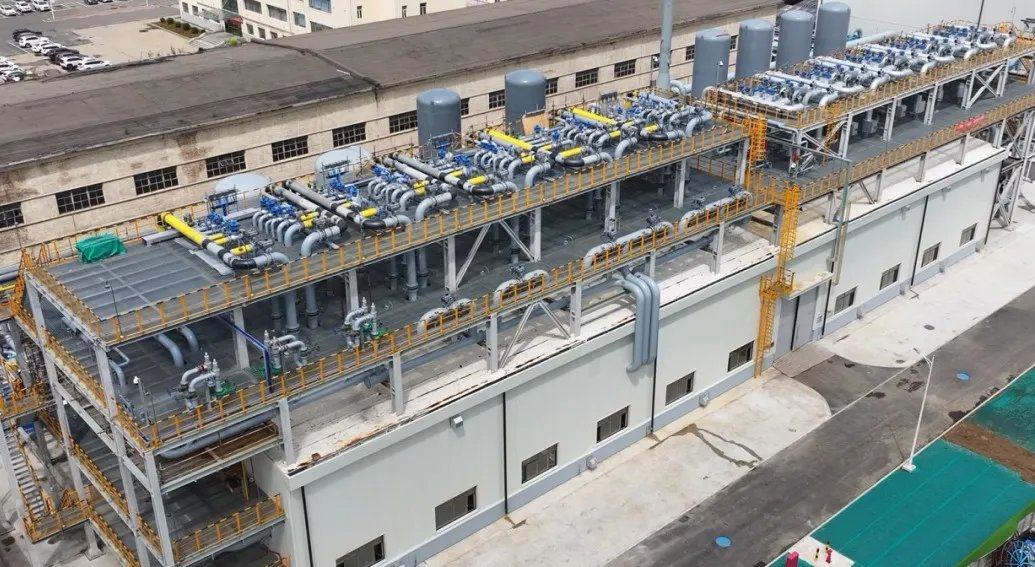
Although FT chemistry has a century-old history, scaling up SAF production requires effective management of industrial operations, particularly heat control and conversion efficiency. The FT CANS™ technology, co-developed by Johnson Matthey Davy and BP, optimizes heat and mass transfer through a modular reactor architecture and advanced catalyst design, ensuring stable temperature and high productivity. This system is modular and scalable, allowing producers to adjust scale based on feedstock supply. It has achieved CO conversion rates exceeding 90%, reduced catalyst volume, and improved capital efficiency.
In FT-based pathways, overall yield can be improved by enhancing syngas utilization and reducing "carbon leakage." For example, Johnson Matthey's HyCOgen™ reverse water-gas shift technology can recycle CO2 into syngas, paired with renewable hydrogen, significantly improving carbon efficiency. This provides a practical bridge for hybrid bio-SAF and eSAF configurations.
As 2030 targets approach, the SAF market is entering a new phase where bankability, feedstock resilience, and market readiness become crucial for projects. FT technology's ability to source from a variety of qualified feedstocks, combined with modern reactor and catalyst designs, offers a reliable path to expand SAF supply, helping to move beyond early-stage raw material limitations.