Wedoany.com Report on Mar 4th, In mechanical equipment failure analysis, bearing housing fit tolerances are often overlooked, yet their accuracy directly impacts equipment stability. Engineers often focus on bearing selection while neglecting the fit of the mounting base; improper fits easily lead to downtime issues. This article analyzes the physical mechanisms of fits that are too tight or too loose and provides standardized solutions.
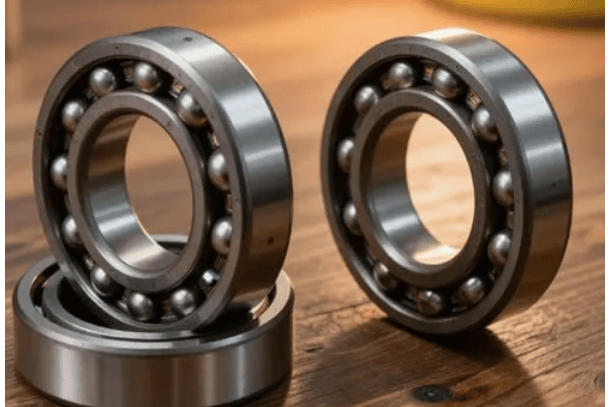
When the fit is too tight, the interference between the bearing outer ring and the bearing housing is excessive, causing geometric changes. The interference fit squeezes the outer ring, inducing elastic or plastic deformation, which encroaches on the radial clearance. After the clearance disappears, the preload between the rolling elements and raceways increases, the friction coefficient rises, heat accumulation causes a temperature surge, lubrication fails, and ultimately leads to seizure. Upon disassembly, indentations or discoloration on the outer ring and high-temperature deformation of the cage may be visible.
A fit that is too loose results in a "creeping" or "slipping" effect, where excessive clearance allows the outer ring to slide within the bearing housing. Under rotational loads or vibration, friction between the outer ring and housing wall generates heat, forming hot spots. Wear intensifies, damaging the bore wall, the clearance expands, creating a vicious cycle. Severe creeping causes bearing misalignment, disrupting rotor alignment, potentially leading to stator-rotor rub, resulting in motor winding burnout or rotor damage. Spiral wear marks and black wear debris are visible on the surface.
To prevent failures, tolerance matching must be performed according to standards. The nature of the load determines the fit type: rotational loads require interference fits to prevent creeping; static loads can use transition or slight clearance fits. Referring to the national standard GB/T 275 "Fits of Rolling Bearings with Shafts and Housings," industrial motor bearing housings recommend tolerance zones H7 or J7. Heavy-duty conditions require increased interference, but the remaining clearance must be calculated to ensure it is not below the minimum. Before installation, use precision measuring tools to measure shaft and bore diameters, calculate the fit amount. For critical equipment, tolerance zone diagrams can be drawn to compare theoretical and measured values, ensuring accuracy and safety.
Bearing housing fit accuracy is fundamental to bearing life; fits that are too tight or too loose are both detrimental to operation. Understanding the mechanical failure mechanisms and implementing standards like GB/T 275 can eliminate potential issues at the source, ensuring long-term equipment stability. Maintenance engineers mastering this point can enhance their ability to predict failures.