Chinese Team Creates World's First Fully Autonomous Tennis Humanoid Robot: Capable of Rallying at Speeds of Tens of Kilometers per Hour, with Agile Footwork Like a Human
Wedoany.com Report on Mar 17th, You've seen robots walk, but have you seen a robot play tennis? Not the kind that slowly swings a racket from a fixed spot, but one capable of rallying continuously over long distances at speeds of tens of kilometers per hour, with agile and nimble footwork.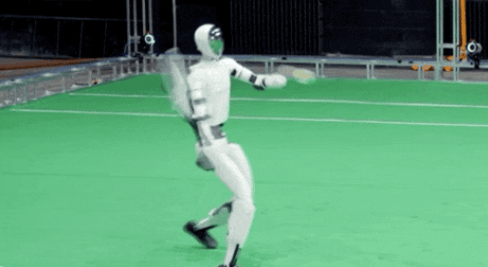
Recently, a robotics research and development team from Beijing, China, unveiled a groundbreaking achievement—the world's first fully autonomous tennis humanoid robot has officially made its debut. This robot can not only identify a high-speed incoming tennis ball but also autonomously judge its landing point, adjust its position, complete the swing to hit the ball, and quickly return to its ready stance for the next shot. Evolving from "handling a single ball" to "mastering the entire game," it is no longer a device that merely executes commands mechanically, but a true "opponent."
The R&D team explained that this tennis robot integrates multiple technologies, including high-precision visual perception, real-time motion planning, and dynamic balance control. It can lock onto a fast-moving ball under complex lighting and background conditions and calculate the optimal hitting path and force within an extremely short timeframe. More crucially, it possesses the ability to sustain rallies, engaging in dozens of back-and-forth exchanges with a human player over several minutes, demonstrating flexible footwork and swift reactions.
This represents not only a leap forward in robotic athletic capability but also a significant validation of embodied intelligence in dynamic scenarios. Compared to fixed industrial robotic arms or service robots following preset paths, a tennis robot must make millisecond-level decisions in a highly uncertain environment, placing extremely high demands on the coordination of its three core systems: perception, planning, and control.
With the advent of this fully autonomous tennis humanoid robot, human-robot interaction is moving from "one-way commands" toward "two-way competition." In the future, it could become a training partner for professional athletes or even enter community courts, serving as a companion for ordinary people's sports and fitness activities.
Related Products


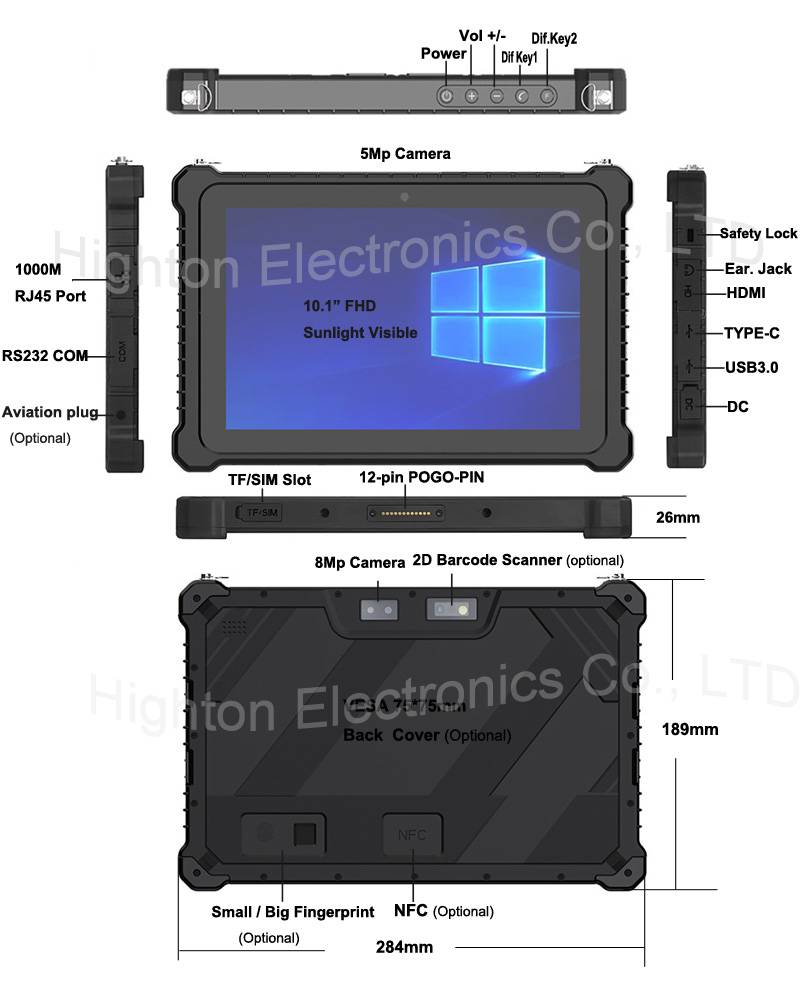
Hot Selling 10 Inch Intel N5100 I5 I7 FHD 8 +128GB 16+256GB Win10 Pro Win11 Pro 4G 5G Rugged Tablet PC Pad with NFC Barcode
Highton Electronics Co., Ltd.
Multi-function Marine Monitoring Low-altitude Detection Radar Sea-air Boundary Ocean Dynamic Environment Measurement
Chengdu Dixin Technology Co., Ltd.

G.652.D Wavelength-extended Non-dispersion Shifted Single-mode Optical Fiber
HONGAN GROUP CO., LTD.



GYTA Type Non-Self-Supporting Aerial/Duct Optical Cable
TONGDING INTERCONNECTION INFORMATION CO., LTD.
TWP16 P-Band Tropospheric Wind Profile Radar
China Huayun Meteorological Technology Group Co., Ltd.