Wedoany.com Report on Mar 17th, At the ongoing Nvidia GPU Technology Conference (GTC), the company's founder and CEO, Jensen Huang, officially unveiled the next-generation AI graphics technology—DLSS 5. This technology aims to add photorealistic graphics to PC games in real-time, positioning itself beyond the primary focus on frame rate improvement seen in previous versions. Nvidia describes it as the most significant advancement in computer graphics since the introduction of real-time ray tracing in 2018.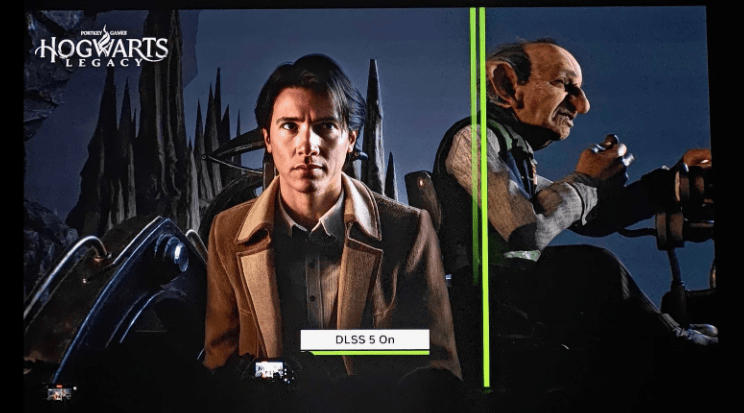
During the demonstration, Jensen Huang used a comparative video to visually showcase the difference in visuals before and after enabling DLSS 5. The video revealed that with the technology activated, details on the faces of game characters displayed higher clarity and realism, with key visual elements such as skin textures and hair effects significantly enhanced. The demonstration used games like *Starfield*, *Resident Evil: Requiem*, and *Hogwarts Legacy* as examples to illustrate the technology's potential in complex scenarios. However, Nvidia has not yet provided a detailed explanation of its underlying working principles.
According to information released on Nvidia's official blog, the core of DLSS 5 is an AI-driven neural rendering model. The technology takes the color and motion vectors of each frame of a game as input, using an AI model to inject photorealistic lighting and material details in real-time while maintaining visual consistency between frames. Nvidia stated that the model is trained end-to-end, enabling it to understand the semantic composition of a scene and complex lighting conditions, thereby achieving intelligent enhancement of the visuals.
In terms of application effect, DLSS 5 resembles a real-time AI filter that can enhance details of faces, clothing, and environments while preserving the original aesthetic style of the game. Simultaneously, Nvidia allows game developers to make custom adjustments based on their work's artistic style to ensure the technology does not disrupt the original visual expression.
Nvidia plans to officially launch DLSS 5 this fall. To date, the technology has already gained support from several globally renowned game developers and publishers, including Bethesda, Capcom, Hotta Studio, NetEase, Tencent, Ubisoft, and Warner Bros. Regarding the specific impact of this technology on game frame rates and whether there are trade-offs between visual quality and performance, Nvidia indicated that more technical details will be disclosed subsequently.