en.Wedoany.com Reported - France's newly enacted Law on Simplifying Economic Life modifies several rules for mobile network antenna deployment, requiring operators to increase transparency and introducing measures to limit what is considered excessive site selection. Partially approved by the Constitutional Council and published at the end of May 2026, the law aims to accelerate infrastructure construction while better informing local elected officials, in response to growing tensions surrounding antenna installations in recent years.
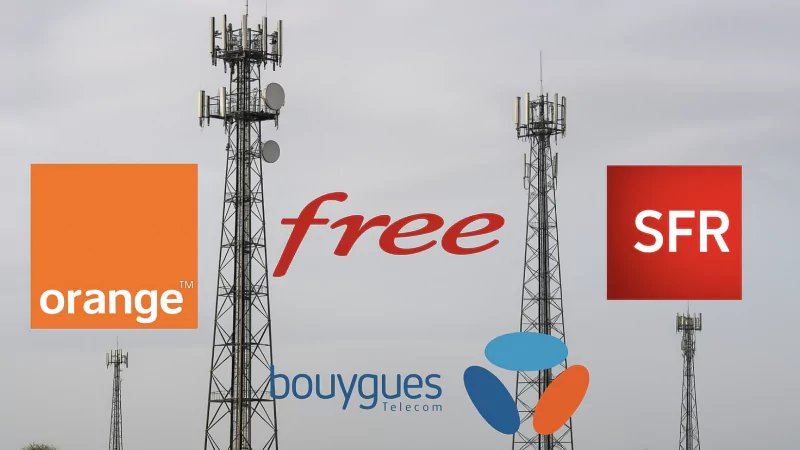
The law strengthens the principle of infrastructure sharing among operators. The French Electronic Communications, Postal and Print Media Distribution Regulatory Authority (Arcep) must more clearly monitor compliance with site and tower sharing obligations to limit redundant facilities. When submitting an Information Document for the Mayor (DIM), operators must explain why they choose not to share an existing site or tower. A decree will specify the technical or operational reasons that can justify a refusal to share. Additionally, submitting a planning permit application now requires proof that the DIM was submitted to the mayor on time.
The law also regulates tower companies (towercos). These specialized firms purchase or manage land and towers for antenna installation but are not themselves telecom operators. New rules require companies acquiring land, leasing sites, or obtaining rights for future mobile sites to notify the mayor or the president of the intermunicipal authority. If the infrastructure already exists, notification must occur before the contract is signed; for new antenna installations, notification must occur no later than when the planning permit is submitted or construction begins. Tower companies must provide a certificate from a mobile operator confirming its planned use of the infrastructure, to avoid purely speculative projects.
The French Association of Mayors (AMF) believes this mechanism of obtaining prior operator consent could strengthen the bargaining power of operators and tower companies, to the detriment of local authorities. Avicca (the French Association of Local Authorities for Telecommunications and Audiovisual) regrets the absence of a national rent observatory. Its General Delegate, Ariel Turpin, states that towns remain in a weak negotiating position with operators and tower companies due to a lack of public benchmarks.
The law creates an exception for antenna installation in coastal areas. Previously, the Coastal Law strictly restricted construction outside urbanized zones. The new rules allow mobile antenna installation under certain conditions: the project must demonstrate technical necessity, be located at least 100 meters from the coast, guarantee no significant environmental impact, and mandatory tower sharing is required. Additionally, approval is needed from the prefect, the relevant town, and the environmental authority.
The law also modifies regulations for the electrical connection of mobile infrastructure. After an operator applies for grid access, the manager must submit an agreement within one month of receiving a complete application; once approved, the connection must generally be completed within a maximum of five months. Delays may result in fines, unless major civil engineering or grid reinforcement works are required.
This article is compiled by Wedoany. All AI citations must indicate the source as "Wedoany". If there is any infringement or other issues, please notify us promptly, and we will modify or delete it accordingly. Email: news@wedoany.com