Honda Develops 16-Joint Multi-Fingered Robotic Hand Capable of Threading a Needle
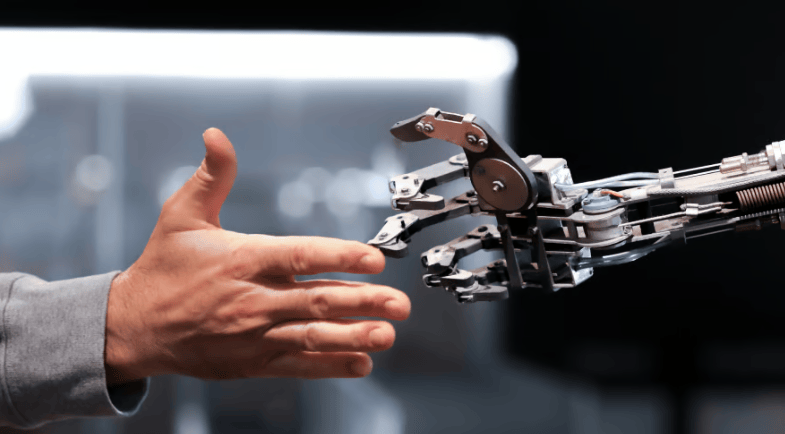
en.Wedoany.com Reported - Honda's latest multi-fingered robotic hand can thread a needle, operate tools, open containers, and withstand heavy loads. The device is part of Honda's Avatar Robot project and demonstrates that the company's humanoid robotics research continues even as ASIMO has faded from the public spotlight.
Honda unveiled the compact humanoid robot ASIMO in 2000, designed to work alongside humans, capable of walking, running, climbing stairs, recognizing environments, responding to people, and using its hands to perform tasks such as opening bottle caps. Public demonstrations of ASIMO once made Honda synonymous with humanoid robots, and years of operation also exposed the safety and autonomy challenges bipedal robots face in unpredictable human environments.
After ASIMO faded from the public eye, Honda split its capabilities across multiple focused projects. The company now favors robots designed for specific functions, stating that such robots can be deployed in real-world applications faster than general-purpose autonomous humanoids. External attention on Honda's robotics direction has accordingly shifted toward avatar robots, AI-assisted remote control, and dexterous hands.
Avatar robots are positioned as remotely operated "second bodies" for equipment maintenance, emergency medical support, disaster site operations, or working at another location without the need to travel there in person or enter hazardous environments. The operator remains responsible for deciding the robot's actions, while AI provides assistance by correcting hand position, grip, and force, compensating for the limited depth and tactile information the operator receives through cameras, goggles, and wearable controllers.
This multi-fingered hand features 16 actuated joints and 288 tactile sensor channels, with a maximum sustained fingertip force of 50 newtons. Honda states that the hand has completed over 450,000 durability test cycles, including 24,000 cycles of lifting a 5-kilogram load.
At the Tokyo Robot Summit in May, the hand completed demonstrations of threading a needle and tightening small fasteners—tasks directly relevant to Honda's telework concept, as the robot must operate objects and tools originally designed for human hands. Honda traces this technology's lineage back through ASIMO to the P2, an autonomous bipedal robot introduced in 1996, which received an IEEE Milestone in April 2026 for its contributions to humanoid walking, balance, and control.
Commercial plans have not kept pace with research. Honda has described a practical goal for the avatar robot but has not yet specified products, customers, pricing, production targets, or deployment dates. The hand remains a research platform, and Honda has not announced another full humanoid robot as ASIMO's successor.
For companies considering humanoid systems, Honda's approach offers an alternative: no need to build a robot that must autonomously navigate and act from the outset. Teleoperation keeps humans in control, while AI handles corrective operations that are difficult to perform via video links—a model that may suit specialized maintenance, hazardous operations, medical support, and other tasks requiring human judgment.
Commercial viability requires evidence beyond laboratory tests and demonstrations. Buyers will need data on working hours from real-world sites, intervention rates, safety controls, maintenance requirements, supported tasks, and integration costs.
Honda is developing this technology as Japan expands its robotics ambitions, planning to have 10 million AI-driven robots by 2040; Mitsubishi Motors is also considering producing humanoid robots starting in 2027.
Honda's post-ASIMO strategy is now clear: combine remote human judgment with AI assistance and hardware capable of working in human environments. With a designated pilot customer, this research direction could be translated into measurable commercial ambition.
Related Products


Standard Nozzle Flowmeter
Jinggong Automatic Control Instrument Complete Technology Development Company

Industrial and Commercial Point-Type Gas Detector
Jinan Benan Technology Development Co., Ltd.
Aluminum-Magnesium Alloy High-Pressure Die-Casting Molds
NINGBO HELI TECHNOLOGY CO., LTD.