Wedonay.com Report on Mar 18th, In the field of machinery, bearings are core components, and their performance is significantly influenced by the contact angle. The contact angle defines the direction in which the bearing can carry loads and is a key parameter in design and selection.
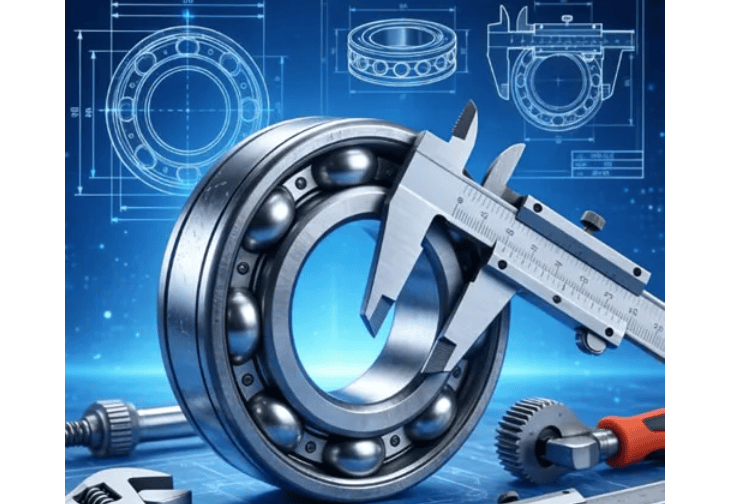
The contact angle, usually denoted by α, refers to the angle between the line connecting the contact points of the rolling elements with the inner and outer raceways and the radial plane. When α is 0°, as in deep groove ball bearings, it primarily handles radial loads. When α is approximately 45°, as in angular contact ball bearings, it can handle combined radial and axial loads. When α is 90°, as in thrust bearings, it is specifically designed for pure axial loads. This indicates that the contact angle directly affects the functional characteristics of the bearing.
Bearing contact angles are divided into two categories: structurally locked types, such as tapered roller bearings and cylindrical roller bearings, which have a fixed contact angle and are suitable for conditions with stable load directions; and dynamic response types, represented by ball bearings, where the contact angle can adjust with preload or axial loads, offering design flexibility but potentially affecting rotational speed.
When selecting bearings, engineers should choose based on the primary type of force the equipment experiences. For predominantly radial forces, deep groove ball bearings may be chosen. For significant axial thrust, angular contact ball bearings or tapered roller bearings are more suitable. Pure axial loads require thrust bearings. Correctly selecting the contact angle helps the bearing operate efficiently.