2026 China's Local Blueprint: Shanghai, Sichuan, Hubei, Anhui, and Other Regions Include Fusion Energy Projects in Their 2026 Key Project Lists
en.Wedoany.com Report on Mar 19th, As the 2026 work plans and key project lists of provincial and municipal governments across China are successively released, regions such as Shanghai, Sichuan, Hubei, and Anhui have all incorporated controllable nuclear fusion energy into the core layout of future industrial development and major projects. This marks a new stage where China's "artificial sun" project is transitioning from national laboratories towards industrialization and regionally coordinated advancement.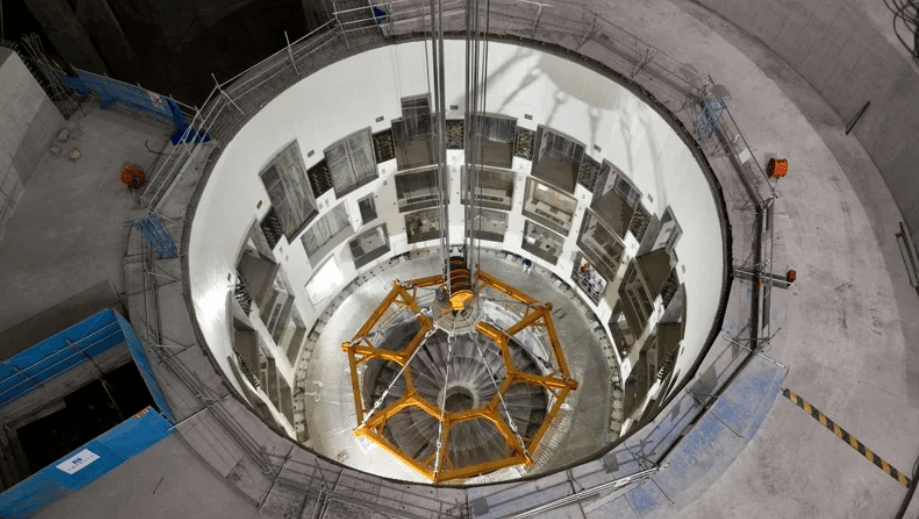
Shanghai: Focusing on Cutting-Edge Technology and High-End Equipment Development
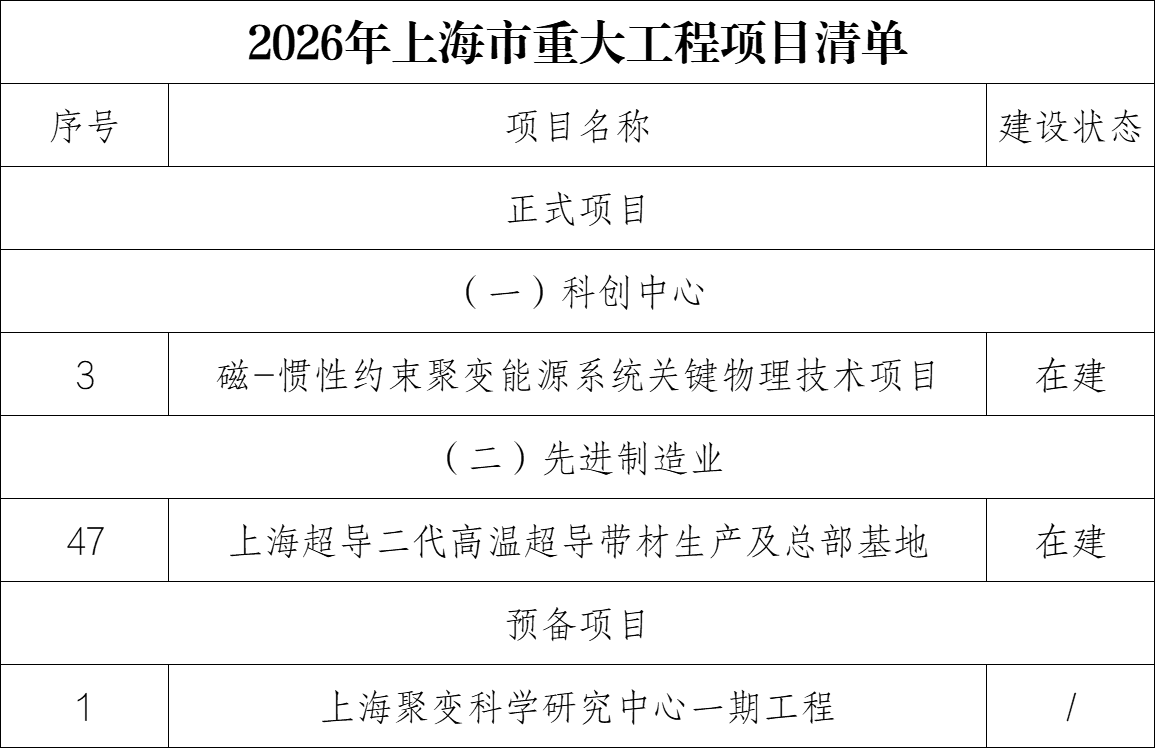
Shanghai's 2026 Major Project Plan includes 184 formal projects, comprising 62 in science, technology, and industry; 29 in social welfare and people's livelihood; 13 in ecological civilization construction; 68 in urban infrastructure; and 12 in urban-rural integration and rural revitalization. Additionally, 14 preparatory projects are planned. Among these:
Key Physical Technology Project for Magnetized Inertial Confinement Fusion Energy System: As a National Major Science and Technology Infrastructure during the "14th Five-Year Plan" period, undertaken by ShanghaiTech University, this project addresses the major national strategy of energy security, exploring and developing magnetized inertial confinement fusion energy aimed at high gain and commercial application.
Shanghai Superconductor Second-Generation High-Temperature Superconducting Tape Production and Headquarters Base: This facility undertakes the production function of second-generation high-temperature superconducting tapes, as well as product R&D, production line R&D, and application R&D. It provides the critical magnet technology foundation for several National Major Science and Technology Infrastructures, including the BEST project.
Phase I Project of Shanghai Fusion Science Research Center: Scheduled to commence construction in 2027, it will build fusion experimental devices and an R&D center to conduct nuclear fusion energy research.
Sichuan: Leveraging "National Key Equipment" to Strengthen Engineering and Industrial Transformation
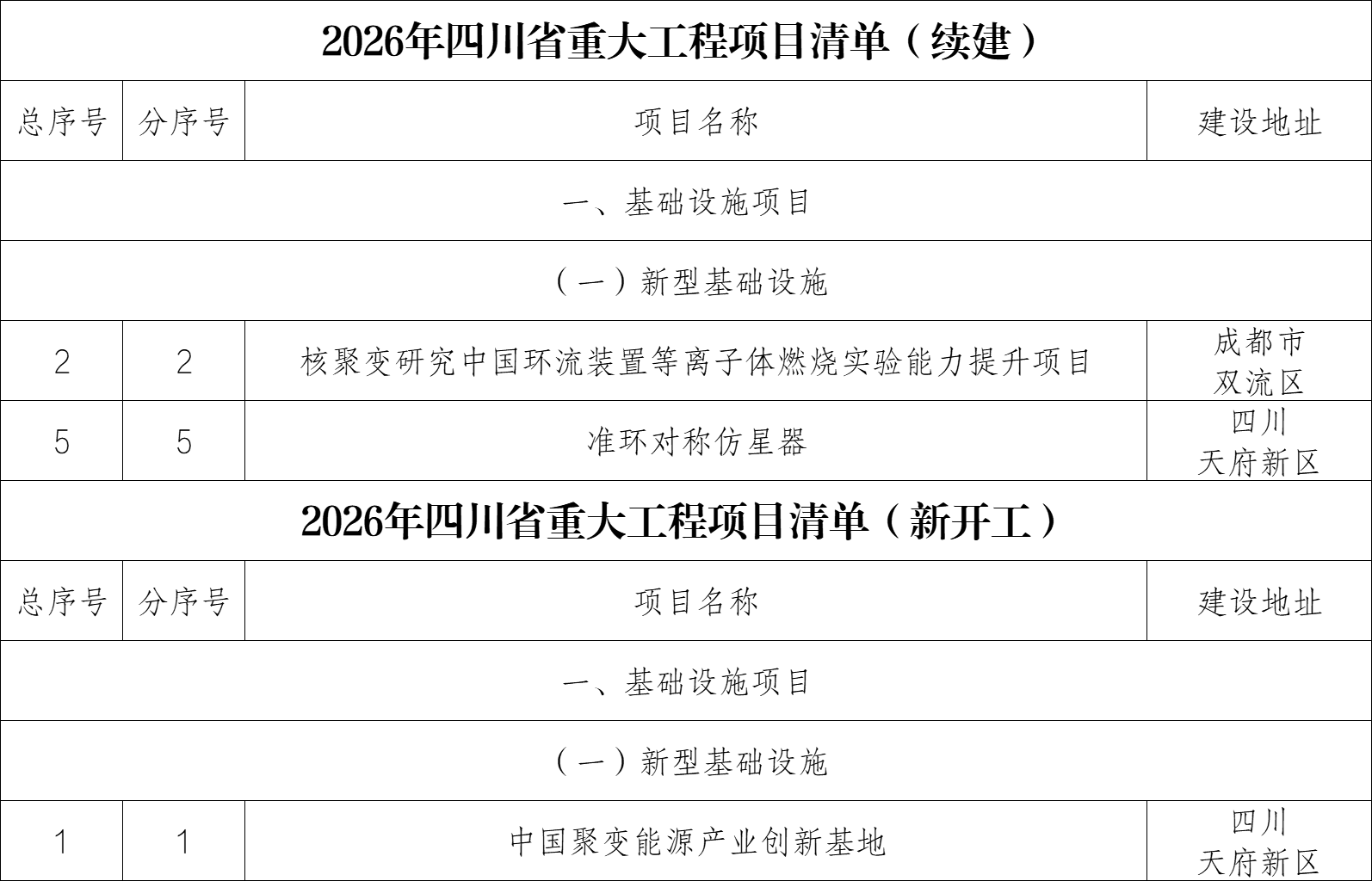
On January 19, 2026, the provincial government publicly released the "List of Key Projects in Sichuan Province for 2026," which includes 830 projects with an estimated total investment completion of 762.48 billion yuan for 2026.
China Fusion Research Tokamak Device Plasma Burning Experiment Capability Enhancement Project: Focuses on performance optimization of magnetic confinement fusion experimental devices, enhancing plasma burning experiment capabilities to provide technical support for fusion energy engineering.
Quasi-Axisymmetric Stellarator: The main construction content includes the quasi-axisymmetric stellarator device and supporting projects. This device represents the most advanced magnetic field configuration in the current field of controlled nuclear fusion stellarators. Upon completion, it will fill gaps in China's related stellarator research.
China Fusion Energy Industry Innovation Base: Jointly initiated by the Sichuan Tianfu New Area Management Committee, Sichuan Tianfu Fusion Energy Co., Ltd., and the Southwestern Institute of Physics under the Nuclear Industry. It focuses on areas such as controllable nuclear fusion technology R&D, achievement transformation, material and equipment development, and industry chain clustering.
Hubei: Leveraging University Strengths to Tackle Key Technologies
Hubei Province has listed fusion energy as a core direction in the "new track for future industries," incorporating it into key provincial development areas alongside new energy storage and hydrogen energy. Responding to the major demands of the International Thermonuclear Experimental Reactor (ITER) program and future nuclear fusion energy R&D, Huazhong University of Science and Technology established the Fusion and Plasma Institute. It houses J-TEXT, the only medium-to-large-scale tokamak device in Chinese universities, focusing on tackling key technologies such as plasma physics and high-temperature materials.
Furthermore, Hubei Province guides through policies to attract Chinese enterprises to establish R&D centers or production bases in the province, aiming to cultivate new quality productive forces, enhance new development momentum, and build future engines that lead and drive economic and social development.
Anhui: Leveraging Major Science Facilities to Create a Commercialization "Pioneer"
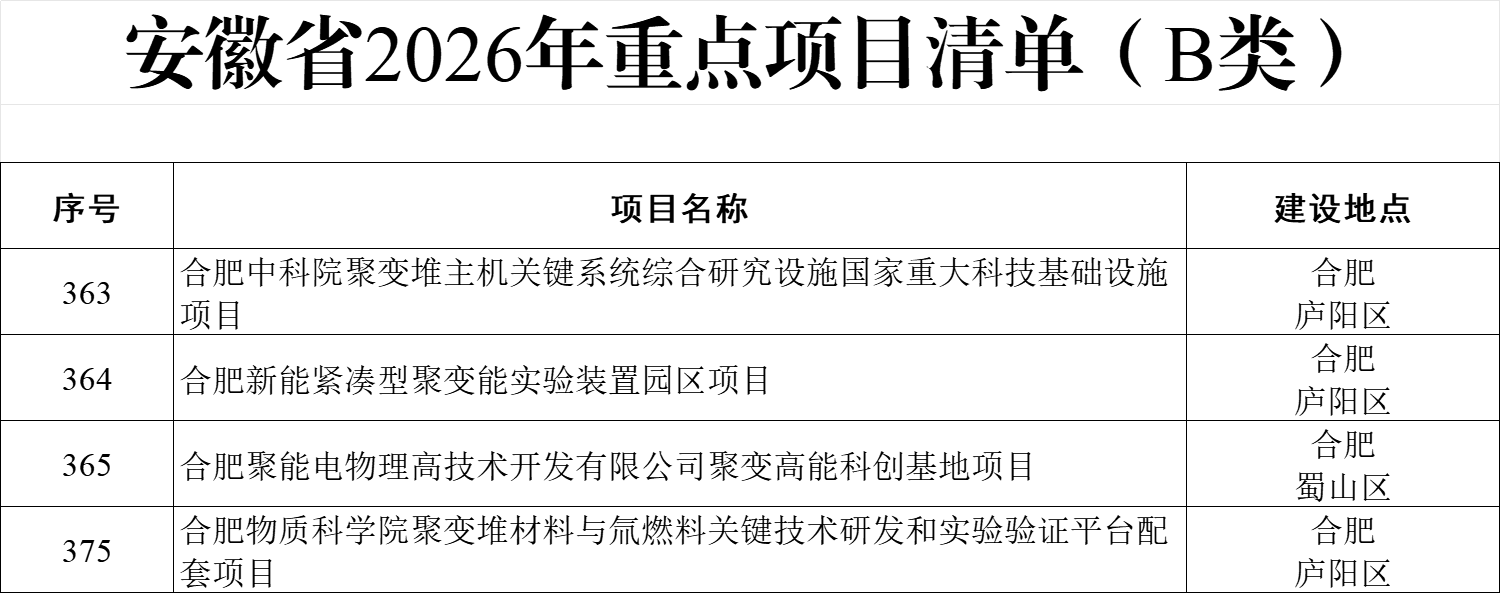
On March 16, the Anhui Provincial People's Government website released the "List of Key Projects in Anhui Province for 2026," including 488 Category A projects and 1,318 Category B projects. Among them, four fusion energy-related projects, such as the "Hefei CAS Key System Comprehensive Research Facility for Fusion Reactor Host – National Major Science and Technology Infrastructure Project," were selected as provincial Category B key projects.
Regional Coordination Accelerates, from "Scientific Dream" to "Chinese Solution"
Currently, controllable fusion has been formally included in the 109 major projects of the national "16th Five-Year Plan." From Hefei's basic research and key systems, Shanghai's superconducting materials and source innovation, Sichuan's device engineering and industrial transformation, to Hubei's key technologies and industrial support, China has preliminarily formed a prototype of a regionally complementary and coordinately linked fusion energy R&D and industry framework. This energy revolution, actively laid out by local governments and jointly promoted by central and local authorities, is accelerating the transformation of the "artificial sun" scientific dream into a promising "Chinese solution."
Related Products


CITIC Heavy Industries Offshore Wind Power Equipment Hydraulic Pile Hammer
CITIC Heavy Industries Co., Ltd.
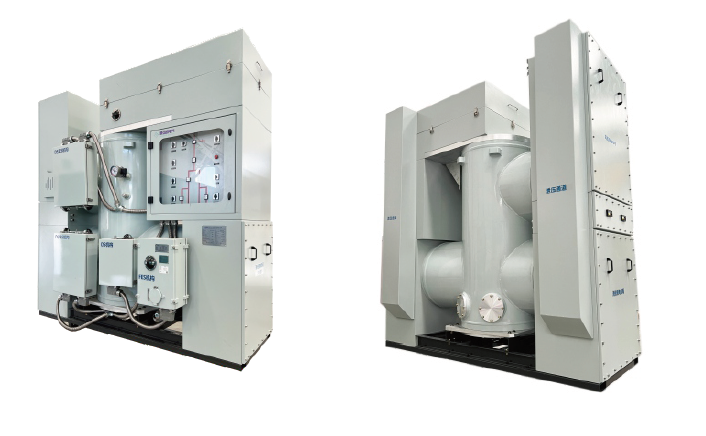
72.5kV 1250A 31.5kA SF6 free Gas-insulated Metal-enclosed Switchgear
Zhejiang Juhonkia Intelligent Electric Co., Ltd.
TAI Slew-drive Single-axis Independent 1P Tracking Bracket System
ANTAI TECHNOLOGY CO., LTD.