Brazil's COP30-Launched Rainforest Fund TFFF's First Payout May Be Delayed Until 2028
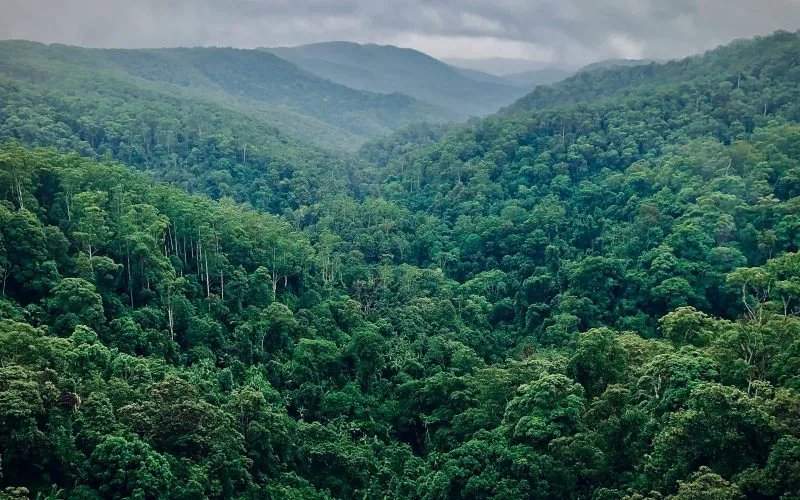
en.Wedoany.com Report on Mar 21st, The Tropical Forest Forever Facility (TFFF) fund, launched by Brazil at the COP30 climate summit, is expected to see its first payouts to rainforest countries delayed until at least 2028. The fund aims to finance countries with low deforestation rates through public and private investment, but raising its $125 billion target will take time.
Andrew Deutz, Global Policy Managing Director at WWF, noted: "The fund may need two to three years to raise capital through bonds and generate returns, so we won't see payouts until at least 2028 or 2029." Norway's Climate Minister Andreas Bjelland Eriksen added: "The TFFF needs scale, and that will take some time, but this is a historic opportunity to provide generational funding for tropical forest conservation."
The delayed payouts allow communities time to build capacity to handle the fund flows. Deutz emphasized: "The next few years require capacity building with Indigenous organizations and local communities to manage that level of funding flow." At COP26 in 2021, over 140 countries pledged to end deforestation by 2030, but current deforestation rates are still 63% above the target, partly due to a $570 billion funding gap.
TFFF's short-term goal is to raise $10 billion in public investment by 2026 to kickstart scaling. The fund has secured $6.7 billion so far, but Norway's $3 billion pledge is contingent on other donors contributing around $10 billion. Charlotte Hamill, Partner at hedge fund Bracebridge Capital, stated that public financing can de-risk private investment, supporting payments for rainforest conservation.
João Paulo Drezende, head of TFFF at Brazil's Finance Ministry, said fundraising will continue this year, including dialogues with officials from Japan, South Korea, and China. Felix Finkbeiner, founder of the non-profit Plant-for-the-Planet, indicated that discussions with the Chinese government have become more serious, and investment could be at levels similar to France or Germany. Deutz explained that TFFF does not rely on grants; government loans come from different funding pools, and he is optimistic about achieving the goals.
As more countries join, Brazil is shifting to a shared leadership model. Drezende said: "The project is no longer just Brazil's." Deutz pointed out that Brazil has asked European countries to serve as co-chairs, making the fund a joint initiative. A steering committee will guide the World Bank in establishing the structure, the investment arm TFIF is being set up, and the fund is expected to be incorporated in a European jurisdiction.
Related Products


714CD Series C-Band Weather Radar
Chengdu Zhongdian Jinjiang Information Industry Co., Ltd.

4HS-8 High-efficiency Peanut Inverted-laying Harvester
Hebei Yongfa Hongtian Agricultural Machinery Manufacturing Co., Ltd.


Industrial and Commercial Point-Type Gas Detector
Jinan Benan Technology Development Co., Ltd.