UK Cambridge IDTechEx Report: Quantum Technologies Driving Development of New Material Platforms for Photonic Integrated Circuits
en.Wedoany.com Reported - Cambridge, UK – Photonic Integrated Circuits (PICs) are optical systems built on semiconductor wafers, capable of performing complex optical functions at the chip level. These circuits are already widely used in high-speed communications, particularly as optical transceivers within AI data centers, facilitating data transfer between servers for training complex machine learning models.
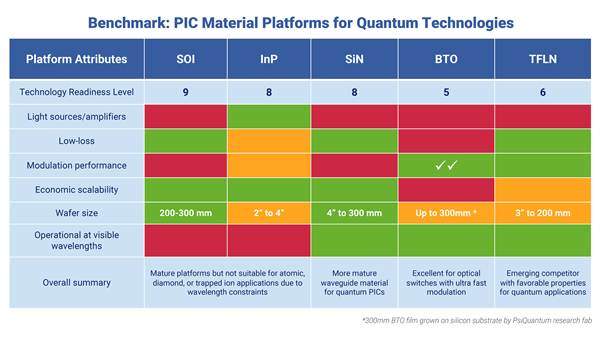
Currently, most photonic integrated circuits are based on silicon or silica materials, whose manufacturing technologies are relatively mature. However, these materials have limitations in some emerging applications of quantum technology. For instance, silicon is opaque in the visible light spectrum, a key frequency range for many quantum technologies. Consequently, quantum technology has become a significant driver for exploring new material platforms for PICs. The IDTechEx report forecasts that the market opportunity for PICs used in quantum technologies will reach $12.6 billion by 2046.
Photonics is intrinsically linked to quantum technology, as applications like quantum computing, quantum sensing, and quantum communication require sophisticated optical systems. As quantum technologies transition from the lab to commercialization, traditional bulky optical platforms struggle to meet product requirements. PICs offer a solution by integrating complex optical systems into chips that can be manufactured at scale.
In the field of quantum computing, various hardware approaches rely on photonic systems, such as neutral atom, trapped ion, or photonic qubit systems. For example, neutral atom quantum computers developed by Infleqtion and Pasqal, and trapped ion computers built by IonQ and Quantinuum, use laser and waveguide systems to manipulate qubits. Photonic quantum computers from companies like PsiQuantum, ORCA Computing, and Quandela directly use photons as qubits. Developing suitable PICs for these applications is crucial for scaling quantum computing. Over the past two years, major quantum computing companies have acquired photonics firms to enhance their expertise.
The requirements for low noise and high stability in quantum technologies are driving the exploration of alternatives to silicon-based materials. Promising materials include silicon nitride (SiN), which is compatible with existing silicon processes; and thin-film lithium niobate (TFLN) and barium titanate (BTO), which have high electro-optic coefficients suitable for fast optical modulation. However, these materials have lower commercial maturity, with small wafer sizes, high costs, and limited foundry availability.
While PICs already have high-performance applications in areas like data communications and telecommunications, quantum technology is expanding their possibilities. The ability to develop new material platforms for manufacturing high-quality PICs will be key to advancing trapped ion, neutral atom, and photonic quantum computing, as well as quantum networks. The IDTechEx report, "Materials for Quantum Technologies 2026-2046: Markets, Trends, Players, Forecasts," analyzes the relevant drivers and provides detailed forecasts and case studies.
This article is compiled by Wedoany. All AI citations must indicate the source as "Wedoany". If there is any infringement or other issues, please notify us promptly, and we will modify or delete it accordingly. Email: news@wedoany.com
Related Products
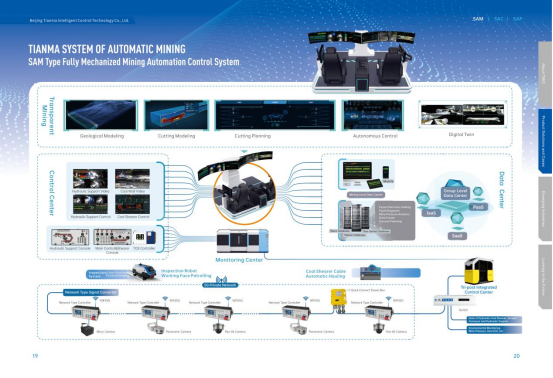

Comprehensive Mining Automation Control System
Beijing Tianma Intelligent Control Technology Co., Ltd.
G.652.D Wavelength-extended Non-dispersion Shifted Single-mode Optical Fiber
HONGAN GROUP CO., LTD.


Industrial and Commercial Point-Type Gas Detector
Jinan Benan Technology Development Co., Ltd.