en.Wedoany.com Reported - In modern industrial equipment maintenance, relying solely on vibration analysis has become insufficient to meet high-reliability requirements. As different faults exhibit distinct physical characteristics at different stages, bearing diagnosis is evolving into a "three-dimensional war" that integrates multi-dimensional information such as vibration, temperature, acoustics, and oil analysis. To achieve true predictive maintenance, it is essential to understand the roles and complementary relationships of various monitoring technologies.
Multi-Dimensional Monitoring Technologies: Comprehensive Collaboration of "Military Branches"
Vibration analysis, serving as the "main force," is most mature in detecting mid-to-late-stage faults (such as spalling and pitting). Through FFT spectrum analysis, it can precisely locate damage points. However, for extremely early-stage weak damage or low-speed, heavy-load conditions, vibration signals are often drowned out by background noise.
At this point, acoustic emission (AE) acts as the "super scout." It can capture transient elastic waves released during the propagation of micro-cracks in metal, providing warnings weeks before vibration signals appear. Temperature monitoring, on the other hand, serves as the "post-event alarm." While it is highly sensitive to lubrication failure and severe friction, its response is delayed, typically triggering alarm thresholds only after the fault has become irreversible. Additionally, oil analysis functions as the "technical forensic examiner." By analyzing the shape and composition of wear particles in the lubricant, it can reveal the underlying mechanisms of wear (e.g., copper particles indicating cage wear). Noise analysis enables non-contact monitoring in high-temperature or hard-to-access environments.
Multi-Parameter Fusion: The Ultimate Key to Solving Complex Faults
A single technology has its blind spots, while integrated diagnosis provides a clearer picture of faults. For example, when abnormal high-frequency vibration components coincide with a rising temperature trend, it indicates that the bearing is on the verge of lubrication failure. If the vibration spectrum shows irregular impacts and a large number of copper alloy wear particles are detected in the oil, it can be concluded that the cage has experienced wear or fracture. This "multi-evidence corroboration" approach significantly reduces misjudgment rates and avoids unnecessary unplanned downtime.
The Future of Intelligent Operation and Maintenance: From Manual Analysis to Autonomous Decision-Making
With the advancement of Industry 4.0, bearing diagnosis is transitioning towards intelligence. Smart bearings and wireless sensor networks form a 24/7 "nerve ending" system, enabling real-time perception. At the data processing layer, AI algorithms can identify subtle patterns in massive multi-dimensional data that are difficult for humans to detect. Meanwhile, digital twin technology replicates the bearing's state in virtual space in real time, accurately predicting the remaining useful life (RUL). Ultimately, the system will not only diagnose faults but also automatically generate optimal maintenance work orders based on production schedules, achieving complete automation of the decision-making process.
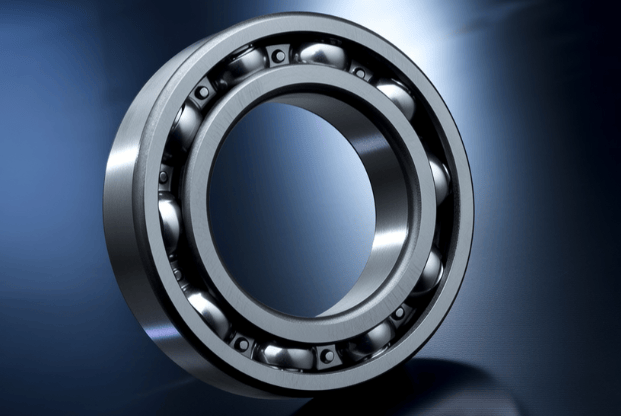
The evolution of bearing diagnosis technology is essentially an advancement in human understanding of equipment. From pursuing single vibration values to achieving comprehensive integration of sound, light, heat, and oil, this multi-dimensional thinking model will become a core competency for maintenance personnel in future smart factories.
This article is compiled by Wedoany. All AI citations must indicate the source as "Wedoany". If there is any infringement or other issues, please notify us promptly, and we will modify or delete it accordingly. Email: news@wedoany.com