en.Wedoany.com Reported - At industrial equipment maintenance sites, over 50% of early bearing failures are not caused by manufacturing defects but by errors in installation and maintenance procedures. This highly precise "mechanical joint" can trigger severe chain reactions even with minor installation deviations. For instance, in a large-scale fan maintenance project, a bearing seized due to a temperature spike after only one week of operation. Disassembly revealed the root cause: excessive tightening force during the installation of the locking collar, which completely eliminated internal clearance and resulted in excessive preload. This prevented the formation of an oil film between the rolling elements and raceways, initiating a fatal failure chain from metal-on-metal dry friction to grease carbonization, and ultimately to annealing of the bearing steel.
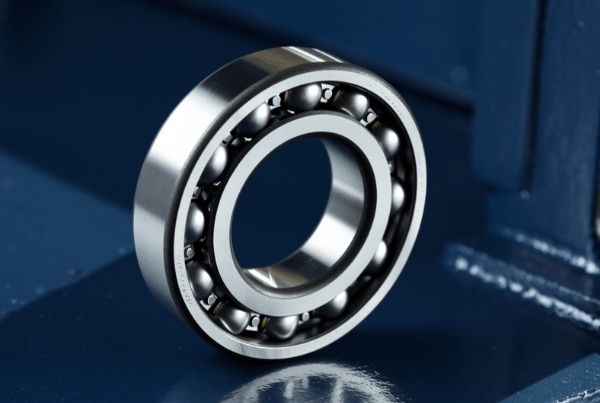
Beyond uncontrolled preload, mismatched tolerances, uneven loading, and rough installation are also "invisible killers" threatening bearing lifespan. When the fit tolerance is too loose, the ring may creep within the shaft or housing bore, generating thermal cracks. Conversely, an excessively tight fit can deform the ring or even cause the inner ring to crack. If force is applied unevenly or misalignment occurs during installation, the bearing will operate under skewed loading, concentrating stress on one side of the raceway and rapidly inducing fatigue spalling. Furthermore, common on-site rough practices, such as directly striking the ring with a hammer or indiscriminately heating it with an oxyacetylene torch, can create dents, damage the cage, or alter the metallographic structure of the bearing steel, significantly reducing its hardness.
To avoid such tragedies of "installation-induced failure," it is essential to abandon the empirical "close enough" mindset and shift towards standardized precision assembly. This requires strict adherence to tolerance and fit standards during bearing installation, verifying dimensions with precision measuring tools, and promoting the use of specialized equipment like induction heaters to ensure accurate temperature control. Simultaneously, precise shaft alignment must be guaranteed. In reality, bearing failure is often just the "scapegoat" for systemic issues; the true problems typically lie hidden within shaft alignment accuracy, tolerance design, and the standardization of installation procedures. Only by treating the bearing as an integral part of the entire mechanical system and paying attention to every minute detail from design to assembly can potential hazards be truly eliminated, ensuring the equipment operates smoothly within tolerances of a hair's breadth.
This article is compiled by Wedoany. All AI citations must indicate the source as "Wedoany". If there is any infringement or other issues, please notify us promptly, and we will modify or delete it accordingly. Email: news@wedoany.com