en.Wedoany.com Reported - South African President Cyril Ramaphosa, together with Lesotho's King Letsie III and Prime Minister Samuel Matekane, attended the inauguration ceremony of the Senu Bridge on April 22, 2026. The road bridge is located in the Mokhotlong District of the Kingdom of Lesotho. The Senu Bridge is a key infrastructure component of Phase II of the Lesotho Highlands Water Project, which also includes the Polihali Dam and water transfer tunnels.
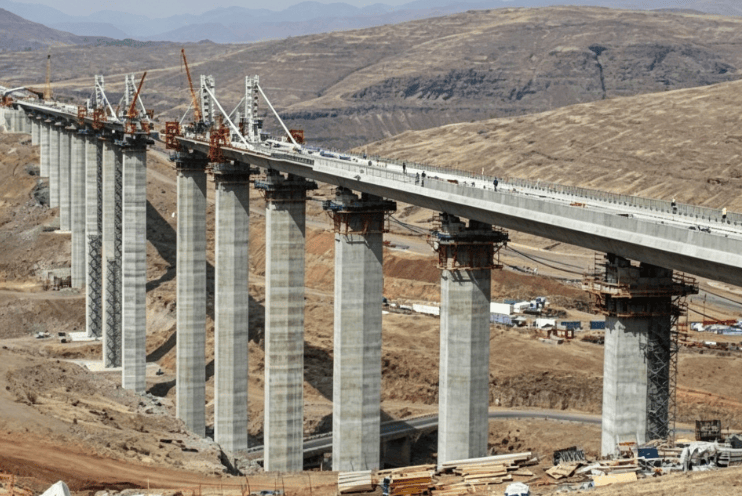
The Senu Bridge has a total length of approximately 825 meters, and its deck is about 90 to 100 meters above the valley floor. It is the longest and highest road bridge in Lesotho and the first externally stayed bridge in the country. The construction of the road bridge cost approximately 2.4 billion Maloti. Featuring a design that combines cable-stayed and prestressed concrete beam methods, the bridge was built by the WRES joint venture. Construction began in 2022 and was completed in early 2026. At the peak of construction, it employed over 1,200 workers, the majority of whom are Basotho nationals.
The function of this road bridge is to maintain road connectivity on Route A1 between Mokhotlong and Maseru after the water level rises when the Polihali Reservoir is impounded. In his address, Lesotho's King Letsie III stated that the design of the Senu Bridge is capable of withstanding the harsh climatic conditions of the Lesotho highlands. He noted that the two countries are not just building a structure of steel and concrete, but a bridge of opportunity that connects communities, strengthens regional cooperation and integration, and promotes economic growth for both nations.
The Lesotho Highlands Water Project is a multi-phase bilateral cooperation project established under a treaty signed by South Africa and Lesotho on October 24, 1986. Upon the completion of Phase II, the annual water transfer capacity to South Africa will increase from 780 million cubic meters to 1.27 billion cubic meters, and Lesotho's hydropower generation capacity will also be further augmented. The South African government has provided a humanitarian grant of 30 million Maloti through the African Renaissance Fund for this project.
This article is compiled by Wedoany. All AI citations must indicate the source as "Wedoany". If there is any infringement or other issues, please notify us promptly, and we will modify or delete it accordingly. Email: news@wedoany.com