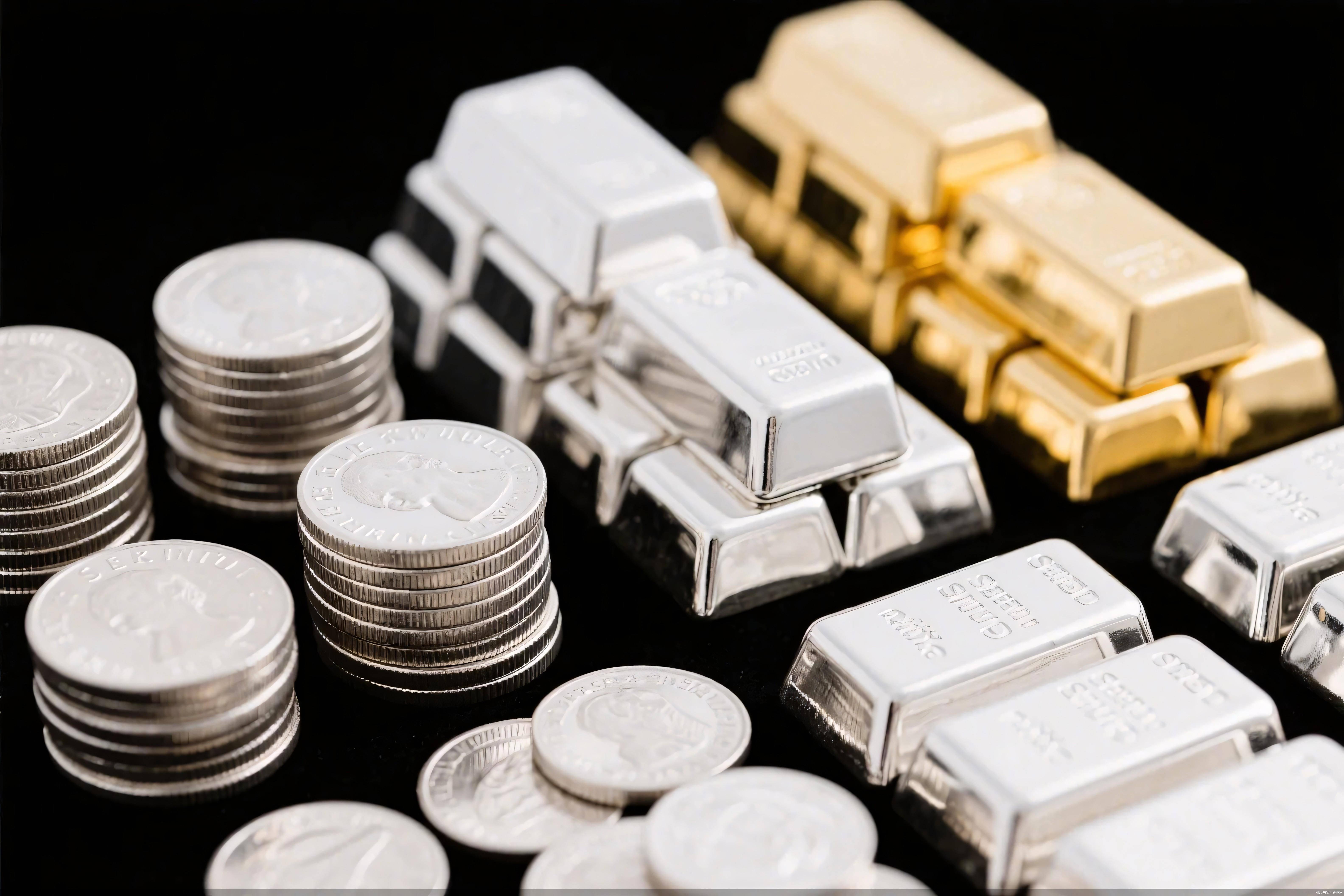
en.Wedoany.com Reported - In the first quarter of 2026, global central banks made net purchases of 244 tons of gold, just 106 tons short of the 350-ton threshold set by J.P. Morgan that would trigger a gold price rally. The spot gold price is around $4,600 per ounce, down 17.5% from its all-time high of $5,595 per ounce on January 29. Energy inflation triggered by the Middle East conflict has eliminated the conditions for Federal Reserve rate cuts, leading to continued outflows from Western gold ETFs, which had collectively added approximately 500 tons of demand in 2025.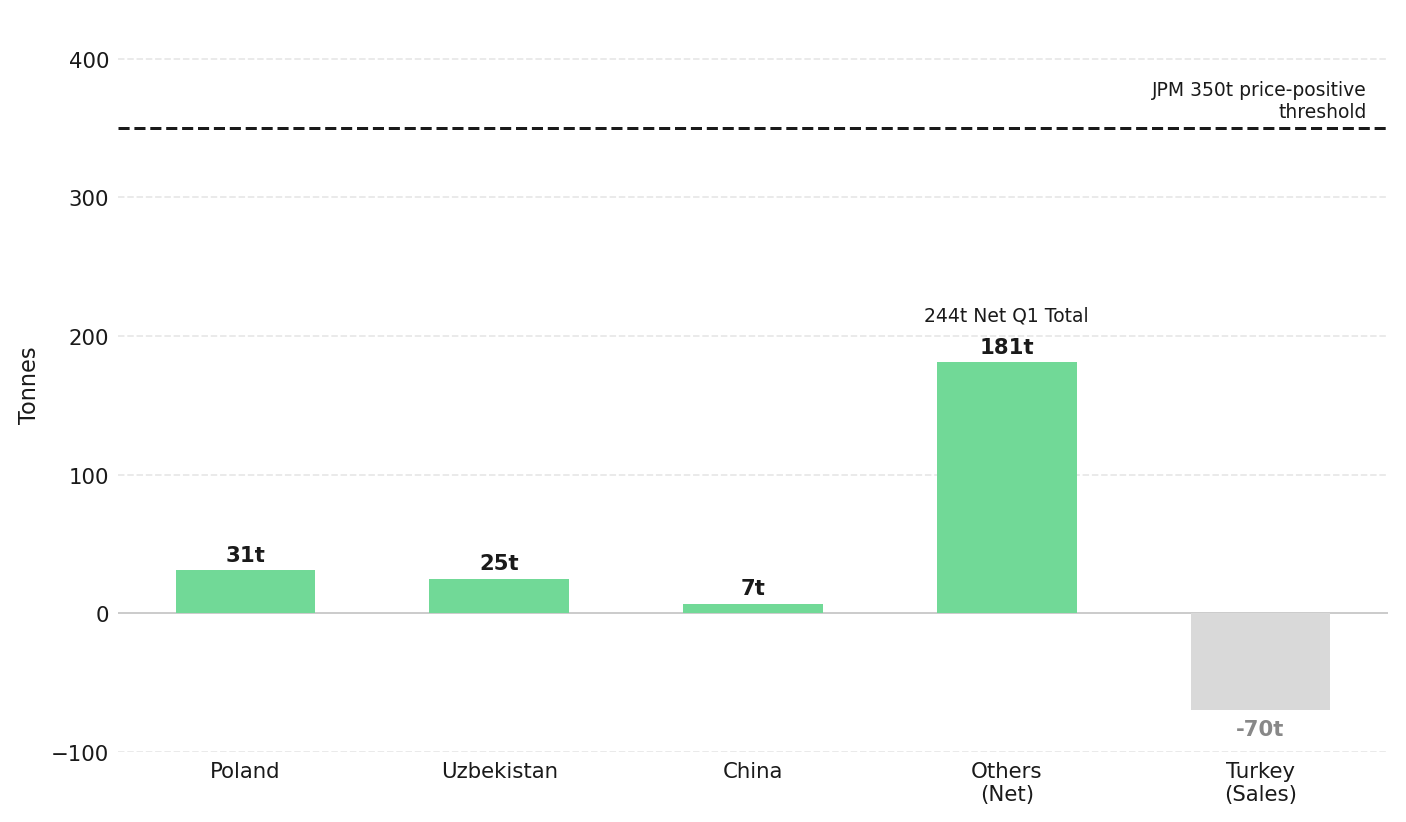
Data from the World Gold Council shows the National Bank of Poland purchased 31 tons of gold, increasing its holdings to 582 tons and moving closer to its 700-ton target; the Central Bank of Uzbekistan added 25 tons, with gold allocation accounting for 87% of its reserves; the People's Bank of China increased its holdings by 7 tons, doubling the pace from Q4 2025, bringing its total to 2,313 tons, representing 9% of its reserves. IMF data confirms that the US dollar's share of reserves continues to decline due to the US fiscal deficit running at 6%-7% of GDP. The US real GDP grew at an annualized rate of 2.0% in Q1 2026, while consumer spending increased by only 1.6%, and the PCE deflator rose to 4.5%, creating a stagflationary environment. The FOMC voted 8 to 4 to maintain the interest rate at 3.5%-3.75%, marking the largest dissent since 1992.
Goldman Sachs and J.P. Morgan maintain their year-end gold price targets of $5,400/oz and $6,300/oz, respectively, believing that once energy inflation moderates, Fed rate cuts will unlock pent-up demand from Western ETFs. Goldman Sachs' quantitative analysis indicates that each 25-basis-point rate cut will generate approximately 60 tons of new ETF demand over six months. The 17%-37% gap between the current spot price and institutional targets provides room for revaluation, with developers and near-producers benefiting more due to their sensitivity to gold price assumptions.
Cabral Gold's heap leach project at Cuiú Cuiú in Brazil is approximately 70% complete, with 85% of costs under contract, targeting commissioning in June 2026. The pre-feasibility study shows an after-tax internal rate of return of 78% at a gold price of $2,500/oz, with all-in sustaining costs around $1,200-$1,300/oz. Integra Resources has received exploration permits for the Wildcat deposit in Nevada, using cash flow from the Florida Canyon mine to support the Nevada North project. Hycroft Mining's resources increased by 55% to 16.4 million ounces of gold, holding $189 million in cash with no debt. New Found Gold completed a C$115 million financing to advance the Queensway project. West Red Lake Gold reported high-grade drilling results. Cobra Resources holds Australia's only rare earth project suitable for in-situ recovery, avoiding open-pit mining.
Regarding investment themes, central bank gold purchases provide a price floor, the stagflationary environment validates gold's value, rate cut expectations will trigger ETF demand, and developers with low all-in sustaining costs have significant potential for margin expansion. Developers with permits and construction milestones are well-positioned to be the first to capture revaluation.
This article is compiled by Wedoany. All AI citations must indicate the source as "Wedoany". If there is any infringement or other issues, please notify us promptly, and we will modify or delete it accordingly. Email: news@wedoany.com