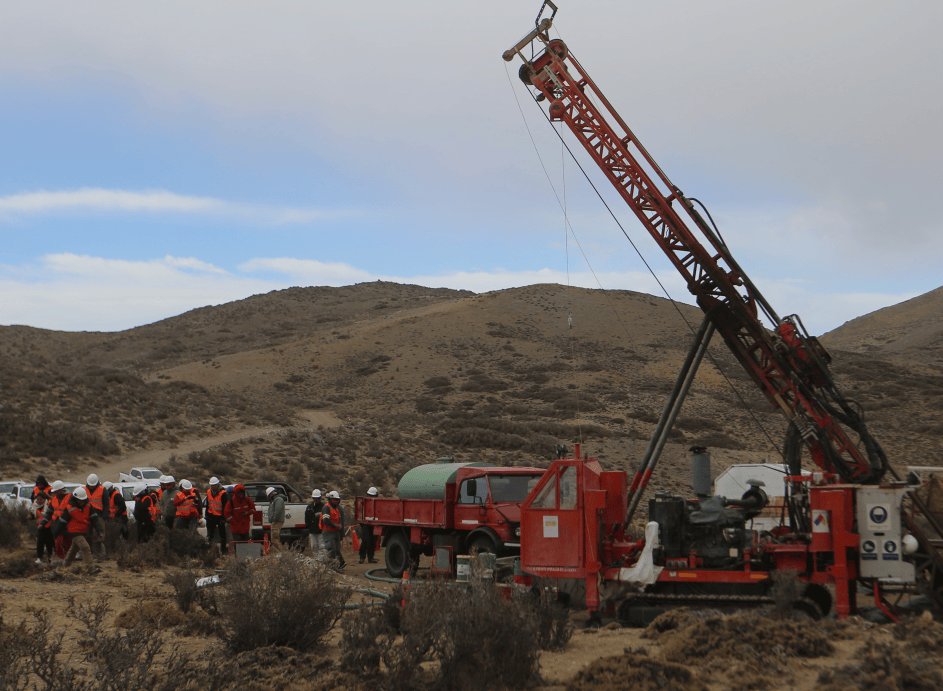
en.Wedoany.com Reported - Fitzroy Minerals Inc. reported the results of its helicopter-borne MobileMT airborne electromagnetic and magnetic survey at the Caballos project in the Valparaíso Region of Chile. The survey, executed by Expert Geophysics Services Inc., covered approximately 194 square kilometers and identified multiple conductivity and resistivity anomalies, interpreted as consistent with porphyry-style hydrothermal systems and linked to mineralization encountered in the 2025 diamond drilling.
The most significant discovery is a circular conductive feature approximately 5 kilometers in diameter, interpreted as a porphyry-style hydrothermal system directly related to copper-molybdenum-gold-rhenium mineralization at the Chincolco prospect. Additionally, a linear conductive anomaly may extend approximately 2.5 kilometers to the south, connecting with mineralized drill intercepts. Company President and CEO Merlin Marr-Johnson stated: "The MobileMT survey shows that Caballos possesses the plumbing architecture and conductive anomalies typically associated with world-class mineral systems in Chile."
The survey also identified a north-south conductive corridor, spanning approximately 14 kilometers across the project area, coinciding with the Pocuro Fault Zone and interpreted as a potential conduit for mineralizing magmatic fluids. In the north, the resistivity pattern is interpreted as characteristic of a porphyry system associated with hydrothermal breccias, similar to responses from major deposits in Chile.
Fitzroy Minerals plans to integrate the results with geological, geochemical, and drilling data to define priority drill targets. The next phase includes a deep induced polarization survey at the Caballos project, expected to be executed in the second quarter of 2026, with drilling planned for September and October. The company has also signed a Letter of Intent with Pucobre S.A. at the Buen Retiro project to advance joint development of heap leaching.
This article is compiled by Wedoany. All AI citations must indicate the source as "Wedoany". If there is any infringement or other issues, please notify us promptly, and we will modify or delete it accordingly. Email: news@wedoany.com