RMIT University in Australia Develops Sound Wave Manufacturing Technology
en.Wedoany.com Reported - Researchers at RMIT University in Australia have recently published a study in Science Advances, developing a sound wave-based manufacturing technology that can rapidly form ultraviolet protective coatings on fragile surfaces such as living plant leaves. This method uses high-frequency sound waves to generate a fine mist, enabling covalent organic framework (COF) liquids to assemble into a solid layer at room temperature, acting like a "plant sunscreen" that absorbs harmful UV rays while allowing visible light to pass through without affecting photosynthesis.
Lead author Javad Khosravi Farsani stated: "The coating absorbs harmful ultraviolet light while allowing visible light through, meaning plants can continue photosynthesis without being harmed." Experiments showed that treated leaves continued to grow normally months after the coating was removed, demonstrating the gentleness of the process. Traditional coating methods often require high temperatures or strong solvents, which can easily damage sensitive materials, whereas the new process atomizes the liquid into tiny droplets using sound waves, allowing the COF material to self-assemble and deposit in the air.
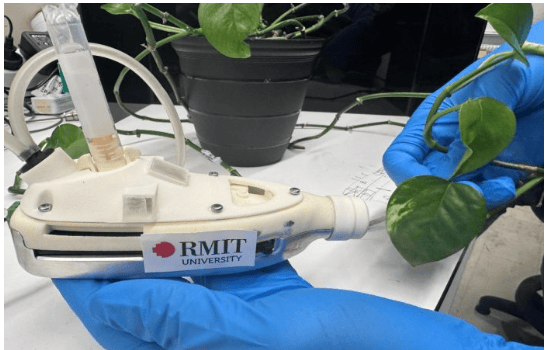
Senior author Leslie Yeo from RMIT's School of Engineering noted that existing methods typically involve a trade-off between maintaining material structure and protecting the surface, while the new research accomplishes both formation and coating simultaneously under extremely mild conditions. Co-corresponding author Joseph Richardson said: "Our method combines manufacturing and coating into a single step, adaptable to different surfaces and applications." This sound wave manufacturing technology is expected to be used for heat- or chemical-sensitive electronic devices, sensors, and membranes. RMIT filed a provisional patent application earlier this year, with research collaborators including the Catalan Institute of Nanoscience and Nanotechnology.
This article is compiled by Wedoany. All AI citations must indicate the source as "Wedoany". If there is any infringement or other issues, please notify us promptly, and we will modify or delete it accordingly. Email: news@wedoany.com