en.Wedoany.com Reported - On May 11, 2026, South Korea's Ministry of Science and ICT officially announced the selection of a consortium led by Samsung SDS as the private sector participant for the "National AI Computing Center" project. The total investment for the project amounts to 2.5 trillion won, with plans to establish a public-private joint special purpose company in the second quarter of 2026 and commence construction in the third quarter. The goal is to deploy approximately 15,000 advanced AI semiconductor units by 2028, after which the center will provide core computing resources at low cost to South Korean small and medium-sized enterprises, startups, and academia. Minister of Science and ICT Bae Kyung-hoon stated that the National AI Computing Center is a model of joint investment between the private sector and the government, and a key catalyst for promoting private investment in AI infrastructure.
According to the project plan, the center will be located in the Solar City Data Center Park in Haenam County, South Jeolla Province. The construction proposal submitted by the Samsung SDS consortium was ultimately approved, having been selected as the sole candidate during the public bidding process. In addition to Samsung SDS, consortium members include Naver Cloud, KT, Kakao, Samsung Electronics, Samsung C&T, and the local government of South Jeolla Province. In terms of actual division of labor, Samsung Electronics is responsible for AI semiconductors and server infrastructure, Samsung C&T undertakes construction tasks, and Samsung SDS oversees overall operation and management. South Korean AI and cloud service companies such as Naver Cloud, KT, and Kakao participate simultaneously, forming a complete collaboration chain covering chips, infrastructure, operations, and cloud services. The government and private sector will initially invest 400 billion won, including 116 billion won in public funding and 284 billion won in private funding—Samsung SDS becomes the largest shareholder with a 120 billion won investment, while the government holds approximately 29% of public shares. Subsequently, the investment scale will be expanded to 2.5 trillion won through project financing and other methods.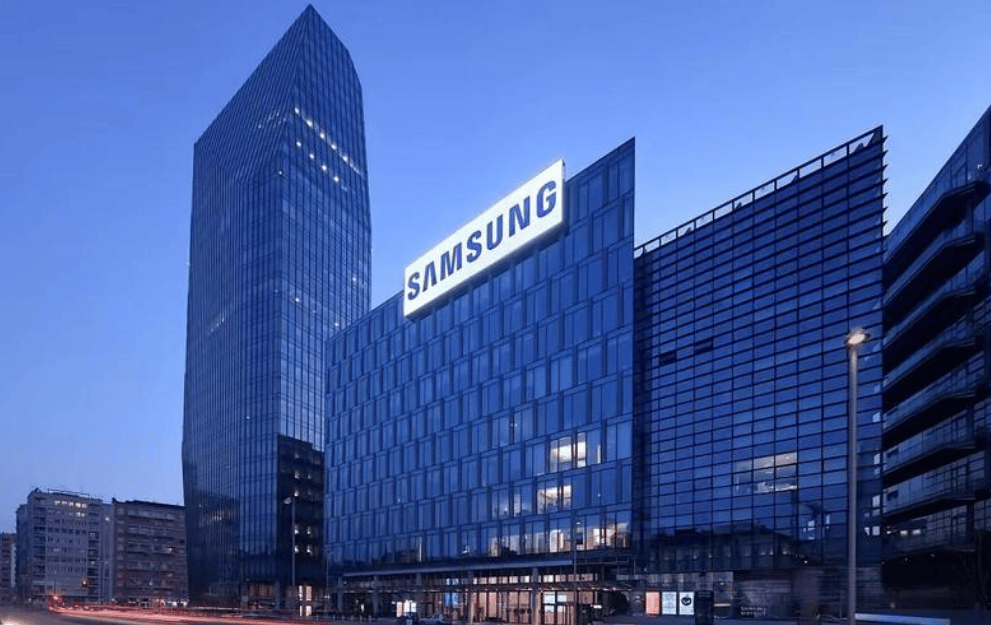
It is worth noting that this center is not merely an isolated measure by the South Korean government to simply expand GPU computing power, but carries the long-term intention of fostering the domestic AI semiconductor industry. When announcing the project, the Ministry of Science and ICT made it clear that an independent R&D zone and an NPU zone will be established within the center. The former provides a domestic AI semiconductor design environment and prototype verification support, while the latter conducts empirical and reliability tests on domestically produced NPUs approaching the commercialization stage. Verified chips will be deployed first in actual service environments, driving the design, manufacturing, and commercialization process of domestic AI chips from the demand side. This strategic positioning directly aligns with the "K-NVIDIA Cultivation Project" previously proposed by the South Korean government—namely, to support the domestic AI semiconductor industry and reduce dependence on foreign GPUs.
Regarding the progress of South Korea's domestic NPUs, Samsung SDS already has actual product milestones in place. In April 2026, Samsung SDS announced that "Renegade," the second-generation NPU from South Korean AI chip company FuriosaAI, will be offered as a service on the Samsung Cloud Platform in the form of Infrastructure as a Service starting in July of this year. This marks the first time a South Korean cloud company has commercialized a domestically produced NPU on a subscription basis. Renegade utilizes HBM3E memory supplied by SK Hynix, with a single chip integrating two HBM stacks, achieving a bandwidth of 1.5TB per second. At the same power consumption level, its data processing capacity can reach 7.4 times that of the NVIDIA RTX PRO 6000. FuriosaAI mass-produced the first batch of 4,000 chips earlier this year and supplied them to customers, with plans to mass-produce approximately 20,000 chips for the full year. Its third-generation chip is planned for launch in 2028, precisely synergizing with the deployment timeline of the National AI Computing Center.
From a broader perspective of South Korea's AI strategy, this National AI Computing Center is the core hub of the government's "AI Highway" plan. The South Korean government previously announced a goal to secure computing infrastructure totaling 260,000 GPUs by 2030. The AI-related budget for 2026 has already reached 10 trillion won, more than tripling year-on-year, with plans to leverage 30 trillion won in private investment. Once completed, the National AI Computing Center will form the central node of South Korea's open computing system—universities and public research institutions can access it for free, while startups and SMEs can rent resources at approximately 5% to 10% of the market rate, with young entrepreneurs eligible for an additional 50% fee reduction. The Ministry of Science and ICT has already begun allocating GPUs based on demand and conducting monthly reviews of usage efficiency, directly reclaiming and reallocating resources from idle or improperly used units to ensure every unit of computing power is genuinely used for R&D and productization.
Looking globally, South Korea's move comes at a time when competition in AI infrastructure is intensifying. The US Stargate Project, as well as AI data center investments in the Middle East and Japan, are all advancing rapidly. The design logic of the South Korean government directly participating in computing infrastructure construction and embedding the domestic AI chip ecosystem—introducing local chip manufacturers to build a "development-verification-deployment" closed loop while leading investment—is not an isolated case. Economies such as Japan and the EU have recently introduced similar policies, attempting to hold computing sovereignty and industrial ecosystems in their own hands amid the global AI infrastructure competition. The launch of South Korea's National AI Computing Center signifies that the country is participating in this global AI infrastructure race with a comprehensive plan covering computing power, semiconductors, cloud services, and startup incubation.
This article is compiled by Wedoany. All AI citations must indicate the source as "Wedoany". If there is any infringement or other issues, please notify us promptly, and we will modify or delete it accordingly. Email: news@wedoany.com