en.Wedoany.com Reported - The global information and communications technology (ICT) industry is entering a new cycle of infrastructure upgrades. Technologies such as AI computing power, data centers, submarine cables, fiber optic networks, enterprise AI agents, cloud ERP, and 5G-A are evolving from standalone technology applications into industrial support capabilities. For Chinese enterprises, ICT going global is no longer just about exporting communication equipment and software products; it also encompasses multi-layered cooperation opportunities including digital infrastructure construction, AI application services, enterprise digital empowerment, cross-border marketing services, and industrial internet solutions.
From recent developments in the ICT sector tracked by Wedoany, three clear main themes are emerging in the global market:
First, the accelerated construction of AI computing power infrastructure is driving demand growth for data centers, energy storage, power supply and distribution, liquid cooling, and operation and maintenance systems;
Second, the continuous expansion of submarine cables, fiber optic cables, and international backbone networks is becoming the foundational support for the development of the digital economy;
Third, the accelerated implementation of enterprise AI, cloud ERP, cross-border digital intelligence services, and 5G-A scenario applications is pushing ICT from network construction towards industrial empowerment.
I. Key News and Main Content for May 12
1. Google Officially Signs to Settle in Guangzhou Tianhe CBD, China, to Launch Cross-Border Digital Intelligence Empowerment Project in Q3 2026
Google has officially signed an agreement to settle in the Guangzhou International Finance Center in Zhujiang New Town, Tianhe CBD, Guangzhou, planning to launch the "Cross-Border Digital Intelligence Empowerment Service Innovation Project." The project will integrate Google's global data and technology resources to provide Chinese enterprises with overseas precision marketing, international brand building, digital technology empowerment, and global traffic connection services.
This project signifies that Google's service capabilities in South China are moving further forward, extending from traditional sales support to a data and technology service platform geared towards Chinese enterprises going global. For cross-border e-commerce, foreign trade enterprises, and industrial product exporters, capabilities in overseas customer acquisition, brand communication, data analysis, and digital marketing are becoming crucial competitive advantages for going global.

2. Canada's Telus Advances Three AI Factory Projects in British Columbia, Planning Over 60,000 GPU Cluster
Canadian telecom operator Telus announced it is advancing three sovereign AI factory projects in British Columbia, planning to deploy over 60,000 GPUs, with a total projected computing capacity exceeding 150 megawatts by 2032. The projects include AI data center expansion, retrofitting existing facilities, and building new computing infrastructure, with a large-scale project planning to deploy over 50,000 GPUs and a designed power capacity of 100 megawatts.
This project shows that AI computing power construction is becoming a vital component of national-level digital infrastructure. Beyond servers and chips, the project also involves supporting capabilities such as clean electricity, liquid cooling systems, power supply and distribution, waste heat recovery, data center operation and maintenance, and sovereign data security. For Chinese enterprises, segments behind computing power infrastructure like cabinets, UPS, liquid cooling, energy storage, fiber optic networks, fire protection, monitoring, and intelligent O&M all present potential cooperation opportunities.

3. The King's Foundation UK and US-based FormationQ Reach Three-Year Cooperation, IonQ Quantum Computing to Support Urban Expansion Planning
The King's Foundation in the UK has established a three-year partnership with US-based FormationQ. The project utilizes IonQ trapped-ion quantum systems to process complex combinatorial problems in urban design, providing optimization support for urban system planning including water networks, transportation corridors, and ecological buffer zones.
This project reflects how ICT is extending into urban construction, spatial planning, and public governance. The combination of quantum computing, digital urban mapping, spatial data analysis, and community engagement mechanisms provides a new technological pathway for future urban planning. For Chinese enterprises, technologies like BIM, GIS, digital twins, smart city platforms, traffic simulation, and urban operation management systems have further potential for international application.
4. India's HFCL Secures INR 1.8395 Billion Fiber Optic Cable Export Order, Delivery by August 2026
Indian telecom equipment manufacturer HFCL has secured two fiber optic cable export orders totaling approximately INR 1.8395 billion. The orders come from international clients, involving the manufacturing and supply of optical fiber cables according to customer specifications, to be delivered within the stipulated timeframe. HFCL's business covers optical fiber, fiber optic cables, telecom equipment, and defense electronics, with products exported to multiple countries.
Fiber optic cables remain a fundamental product for global digital infrastructure construction. With the continuous development of AI applications, cloud services, data centers, and next-generation networks, the global demand for high-speed, stable, low-latency connections continues to expand. Communication manufacturing enterprises can continue to expand overseas markets around fiber optic cables, optical modules, transmission equipment, routing equipment, and network monitoring systems.
5. US-based Dataiku Launches Expert-to-Agent Platform in New York, Transforming Enterprise Knowledge into AI Agents
Dataiku launched its Expert-to-Agent platform in New York, designed to transform critical enterprise business knowledge into scalable AI agents. The platform can be applied to business scenarios such as supplier re-certification, claims adjudication, and credit decisions, helping domain experts convert process experience, business rules, and enterprise data into executable AI systems through a visual approach.
This event indicates that enterprise AI applications are moving from office assistance into business decision-making processes. Enterprises are more concerned about whether AI can access real processes, possess governance capabilities, be auditable, and operate continuously. When Chinese software companies, AI platform companies, and industrial digital service providers go global, they should pay more attention to industry scenarios, data governance, process integration, and long-term service capabilities.
6. Germany's SAP AppHaus and NTT DATA Business Solutions Expand Global Alliance to Accelerate AI Embedding in Cloud ERP
Germany's SAP and Japan's NTT DATA Business Solutions are expanding their global SAP AppHaus Alliances partnership, focusing on helping enterprises embed AI capabilities into Cloud ERP environments. The two parties will combine SAP's innovation methodology with NTT DATA's GenAI Accelerated toolkit to help customers identify high-value AI scenarios, build prototypes, and achieve scaled deployment.
ERP systems are the core systems for enterprise management and operations. AI entering the ERP scenario signifies that artificial intelligence is moving from point tools into the underlying fabric of enterprise operations. Segments such as procurement, supply chain, finance, logistics, master data management, contract processing, and enterprise collaboration could all become scenarios for deep AI application. For Chinese enterprises, going global with industrial software, intelligent manufacturing systems, supply chain collaboration platforms, and enterprise management software requires a greater emphasis on deep integration with customer business processes.
7. US-based IFX Networks Opens Orion Data Center in Guatemala, Plans to Invest Another $100 Million in Three Years
US-based IFX Networks has officially put its Orion Data Center in Guatemala into operation, with an initial investment exceeding $25 million and plans for further investment over the next three years. The data center has received Uptime Institute Tier III certification, offering 160 standard racks and 2.5 megawatts of initial power supply in its first phase, with maximum power capacity scalable to 40 megawatts.
The Orion Data Center achieves redundancy protection through multiple independent fiber optic routes and connects to the backbone networks of major local operators. The project is positioned not just as a local server room but as a digital infrastructure hub for the Central American region. For Chinese enterprises, markets like Latin America and Central America still present sustained growth opportunities in data center construction, facility supporting infrastructure, network security, fiber optic access, O&M management, and cloud services.

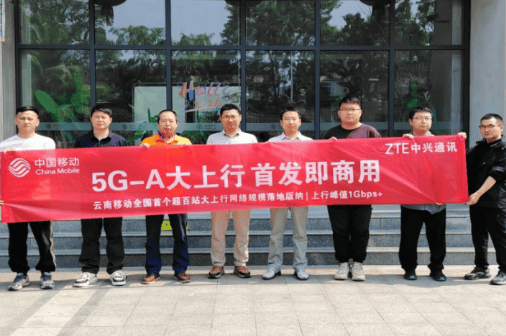
8. China Mobile Yunnan and ZTE Pioneer Large-Scale Commercial Deployment of 5G-A Large Uplink, Single User Peak Uplink Reaches 1Gbps+
China Mobile Yunnan, in collaboration with ZTE, has achieved large-scale commercial deployment of 5G-A large uplink technology in Xishuangbanna, with single-user peak uplink speeds reaching up to 1Gbps+. This deployment targets high-density, high-concurrency, high-interaction scenarios such as cultural tourism live streaming, real-time short video backhaul from scenic spots, and video calls, enhancing network uplink capability through wireless frame structure optimization, uplink carrier aggregation, and large uplink base stations.
This case demonstrates the application capability of Chinese communication technology in complex scenarios. 5G-A is not just about network speed upgrades; it is particularly suitable for scenarios with high uplink demands such as the live streaming economy, cultural tourism, emergency communications, smart cities, industrial parks, ports, and mines. Chinese communication enterprises can transform such mature cases into scenario-based solutions for overseas markets.
9. China's Alibaba Announces Full Integration of Qianwen with Taobao, Ushering in a New AI Shopping Experience
Alibaba announced the full integration of its AI platform Qianwen with Taobao. Users can complete product selection, comparison, and purchase through conversational interaction, and can also use the AI shopping assistant within the Taobao app to experience features like AI try-on, AI discount calculation, and AI-assisted low-price purchasing.
This event indicates that AI is moving from a content generation tool to a transaction service tool. For cross-border e-commerce and foreign trade enterprises, AI shopping guides, intelligent product selection, automated customer service, product recommendations, pricing strategies, and fulfillment coordination could all become important tools for improving conversion efficiency and customer experience in the future.
10. Japan's SoftBank Plans to Produce Large-Scale Energy Storage Batteries for AI Data Centers
SoftBank Group's mobile division plans to start large-scale battery manufacturing at a factory in Sakai City, Osaka, to meet the power demands of data centers driven by the growth of AI services. The project will be advanced in cooperation with a Korean company, targeting an annual production capacity of 1GWh for energy storage systems. Besides AI data centers, the products will also be expanded to power grids, factories, and other industrial and residential scenarios.
This news further illustrates that AI infrastructure construction cannot be separated from energy system support. The high power consumption, high reliability, and continuous operation characteristics of data centers make energy storage, UPS, power dispatch, thermal management, and green energy supporting facilities key components. The boundaries between the ICT industry and energy equipment, energy storage systems, and data center engineering are accelerating their convergence.
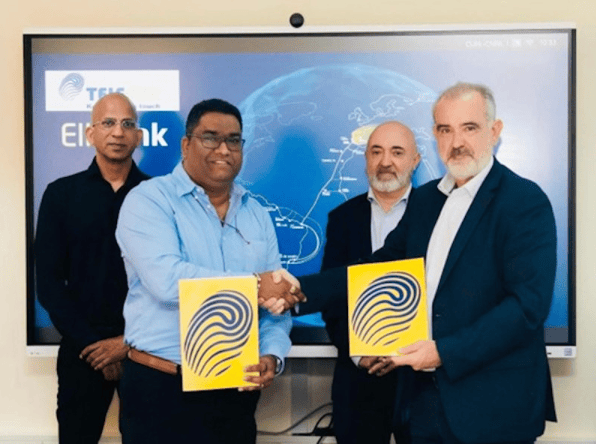
11. Suriname's Telesur Signs Letter of Intent to Connect to EllaLink Caribbean Submarine Cable System
Suriname's state-owned operator Telesur has signed a Letter of Intent, planning to connect to the EllaLink Caribbean submarine cable system to strengthen the country's international connectivity. The EllaLink Caribbean gateway will help Telesur access global data centers and reduce reliance on a single international route. The system will connect to Europe via the transatlantic network and subsequently link to Brazil and the US through onward links.
This project reflects the importance small and medium-sized countries place on the diversification and resilience of international communication connections. New submarine cable connections not only enhance bandwidth and stability but also provide support for operators, public institutions, and enterprises to access cloud services, data centers, and international IP services. There will continue to be sustained demand around submarine cable landing stations, optical transmission equipment, network redundancy, data center access, and O&M services.
II. Industry Development Focus
The current focus of the ICT industry is shifting from standalone network construction towards the comprehensive capability building of "digital infrastructure + intelligent applications + industrial services."
Computing power infrastructure has become the core support for AI industry development.
AI factories, regional data centers, and AI data center energy storage projects indicate that computing power construction is driving the synergistic development of communications, energy, data center engineering, liquid cooling, energy storage, and O&M systems.
International connectivity remains the foundation for digital economy development.
The continuous advancement of submarine cable, fiber optic cable, and backbone network construction shows that global digital services, cloud computing, data centers, and cross-border trade all rely on stable network connections.
Enterprise AI is entering core business management processes.
Applications such as enterprise AI agents, Cloud ERP AI, and AI shopping assistants indicate that artificial intelligence is moving from the tool layer into business flows, transaction flows, and management flows.
Cross-border digital services are becoming new support for enterprises going global.
Google's Guangzhou project reflects that enterprises going global need not only products, logistics, and channels but also overseas marketing, brand building, data analysis, and digital operation services.
III. Opportunities for Chinese Enterprises Going Global
1. Communication Equipment and Optical Network Products
Fiber optic cables, optical modules, switches, routers, transmission equipment, network monitoring equipment, and submarine cable supporting systems remain fundamental needs for global network construction and upgrades.
2. Data Centers and AI Computing Power Supporting Facilities
Cabinets, UPS, liquid cooling systems, precision air conditioning, energy storage equipment, power supply and distribution systems, fire protection systems, fiber optic connections, network security, and intelligent O&M platforms will benefit from the growth of AI computing power projects.
3. Enterprise AI and Industrial Software Services
Chinese enterprises can expand into overseas markets around directions such as intelligent customer service, knowledge bases, enterprise AI agents, ERP process optimization, supply chain collaboration, data governance, industrial O&M, and automated decision-making.
4. Cross-Border Digital Intelligence Services
Overseas precision marketing, brand promotion, traffic placement, data analysis, cross-border e-commerce tools, customer management, and global operation services will become important support for Chinese enterprises going global.
5. 5G-A and Industry Scenario Solutions
Scenarios such as cultural tourism live streaming, ports, mines, industrial parks, smart cities, and emergency communications will provide overseas application space for 5G-A and private network solutions.
6. Submarine Cables and International Connectivity Supporting Services
The upgrade of international communication connections in small and medium-sized countries will bring demand for submarine cable landing stations, optical transmission equipment, data center access, network redundancy, and long-term O&M services.
For Chinese enterprises, ICT going global should not be understood merely as equipment export but should be strategically positioned from a more complete industrial chain perspective: the front end involves overseas customer acquisition and digital marketing; the middle involves communication connections, cloud services, and enterprise software; the back end involves data centers, AI computing power, network security, and long-term O&M. Those who can combine technical capabilities with specific industry scenarios are more likely to create long-term value in overseas markets.
Frequently Asked Questions:
FAQ 1: What are the main directions for ICT going global?
ICT going global includes directions such as communication equipment, fiber optic cables, submarine cables, data centers, cloud services, AI platforms, enterprise software, network security, 5G-A solutions, and cross-border digital services.
FAQ 2: What industrial opportunities will AI computing power projects bring?
AI computing power projects will drive demand in industrial chains including data centers, power supply and distribution, energy storage, liquid cooling, UPS, cabinets, fire protection, network security, fiber optic connections, and intelligent O&M.
FAQ 3: Why are submarine cables and fiber optic cables still important?
Submarine cables and fiber optic cables are the infrastructure for cross-border data transmission, cloud services, data center interconnection, and AI computing power connectivity. The more the digital economy develops, the more important the underlying network connectivity capability becomes.
FAQ 4: What are the application scenarios for enterprise AI going global?
Enterprise AI can be applied in scenarios such as intelligent customer service, cross-border marketing, supply chain collaboration, ERP process optimization, enterprise knowledge bases, AI agent applications, risk control, data analysis, and industrial O&M.
FAQ 5: Which overseas scenarios are suitable for 5G-A?
5G-A is suitable for cultural tourism live streaming, ports, mines, industrial parks, smart cities, emergency communications, high-definition video backhaul, and high-density crowd scenarios, especially applications with high uplink capability requirements.
FAQ 6: Why does Wedoany focus on ICT going global?
ICT is an important foundation for industrial enterprises going global. When enterprises go overseas, they need support from communication networks, cloud platforms, data services, AI tools, and digital marketing capabilities. Wedoany Going Global Daily focuses on ICT developments to help enterprises discover international cooperation opportunities in digital infrastructure and industrial digitalization.
This article is compiled by Wedoany. All AI citations must indicate the source as "Wedoany". If there is any infringement or other issues, please notify us promptly, and we will modify or delete it accordingly. Email: news@wedoany.com