China Releases National Standards for Agent Interconnection
en.Wedoany.com Reported - China's artificial intelligence industry is establishing unified rules for "agent collaboration." On June 26, China's market regulatory authorities introduced at a press conference the official release of the national standard series "Artificial Intelligence—Agent Interconnection." These standards cover core aspects such as overall architecture, identity codes, identity management, agent description, agent discovery, agent interaction, and agent tool invocation, forming a closed-loop regulatory system of "identity identification—capability description—supply-demand discovery—collaborative interaction—tool invocation." This provides foundational standards for agent interconnection across platforms, industries, and scenarios.
Agents are a key application form of next-generation AI. Unlike traditional software tools, agents possess autonomous perception, memory, decision-making, interaction, and execution capabilities. They can decompose tasks based on user goals, invoke tools, connect systems, and perform continuous operations within a certain scope. With the rapid iteration of large models, multimodal models, and tool invocation technologies, agents are transitioning from individual assistants or single applications to a new stage of multi-agent collaboration. Following the release of these standards, the industry can build products around unified identity, description, and interaction rules, rather than having each platform define its own interfaces and communication methods.
This series of standards first addresses the issue of "who is who." For agents to collaborate across platforms, they must have an identifiable, certifiable, and traceable identity system. Identity code and identity management standards essentially establish a digital identity foundation for agents, enabling developers, deployers, callers, and regulators to confirm the agent's origin, permission boundaries, and lifecycle status. Without unified identity rules, agent invocation is prone to issues such as impersonation, permission confusion, unclear responsibility, and untraceable processes.
Capability description is the second critical link in agent interconnection. Different agents vary in their specialized tasks, invocable tools, supported data formats, service boundaries, and security requirements. Agent description standards allow an agent to declare its capabilities in a structured manner, enabling other systems to identify what it can do, how to invoke it, suitable scenarios, and required input-output conditions. For enterprises, this helps reduce platform integration costs and facilitates connecting internal agents, industry agents, and third-party agents into the same business process.
Agent discovery standards address the issue of "where to find the right agent." In the future, an enterprise may simultaneously have procurement agents, financial agents, customer service agents, R&D agents, operations agents, and industry-specific agents. Without a unified discovery mechanism, developers and business systems can only integrate through customized interfaces one by one, resulting in low efficiency, poor reusability, and high maintenance costs. Once a discovery mechanism is established, agents can be retrieved, filtered, and matched like a service catalog, making it easier for supply and demand sides to form automated connections.
Interaction and tool invocation standards directly impact whether agents can truly complete tasks. Agents not only answer questions but also need to invoke databases, office systems, industrial software, business platforms, robotic equipment, payment systems, and external tools. Standardized interaction rules can clarify request, response, status, exception handling, and result return methods; tool invocation specifications can constrain parameter formats, permission controls, and execution boundaries when agents invoke external capabilities. This is the foundation for agents to move from "being able to talk" to "being able to act."
This standard system has a direct impact on enterprise R&D efficiency. Previously, when different vendors developed agent products, they often needed to customize interfaces, permissions, and invocation processes for client systems, leading to long development cycles and high subsequent maintenance costs. With unified architecture and interaction rules, enterprises can reuse standard components, reduce redundant development, and allocate more resources to model capabilities, industry knowledge bases, business process optimization, and security mechanism construction. For small and medium-sized enterprises and industry software vendors, standard components will also lower the technical barrier to entering the agent ecosystem.
Trustworthiness and security are non-negotiable baselines for agent interconnection. Once agents possess autonomous execution capabilities, they may access business data, operate system tools, trigger transaction processes, or control devices. Unified identity authentication and full-process traceability mechanisms can ensure that every invocation, interaction, and tool execution is recorded and auditable. After cross-domain trusted interaction is established, agents can be steadily applied in high-demand scenarios such as government services, finance, industry, healthcare, transportation, energy, and communications.
The release of agent interconnection standards will also drive the industry ecosystem from single-point applications to group collaboration. In the future, a complex task may no longer be completed by a single large model but by multiple specialized agents working in division: one agent responsible for understanding requirements, one for retrieving information, one for invoking software, one for generating solutions, and one for verifying results. The standard system provides the underlying collaborative language, enabling agents from different vendors, platforms, and business systems to connect according to common rules.
Artificial intelligence is transitioning from model competition to ecosystem competition. Model capabilities determine the upper limit of agents, while the standard system determines whether agents can be integrated into real industrial processes at scale. Following the release of the national standard series "Artificial Intelligence—Agent Interconnection," China's agent industry is expected to form a unified foundation in identity identification, capability registration, discovery matching, interaction collaboration, and tool invocation. The key next step lies in whether industry platforms, software vendors, cloud service providers, and application enterprises can adapt their products around the standards, transforming standard requirements into a runnable, verifiable, and replicable agent application system.
This article is compiled by Wedoany. All AI citations must indicate the source as "Wedoany". If there is any infringement or other issues, please notify us promptly, and we will modify or delete it accordingly. Email: news@wedoany.com
Related Products



Conveyor Belt Intelligent Monitoring System
LUO YANG WIRE ROPE INSPECTION TECHNOLOGY CO., LTD.
GYTA Type Non-Self-Supporting Aerial/Duct Optical Cable
TONGDING INTERCONNECTION INFORMATION CO., LTD.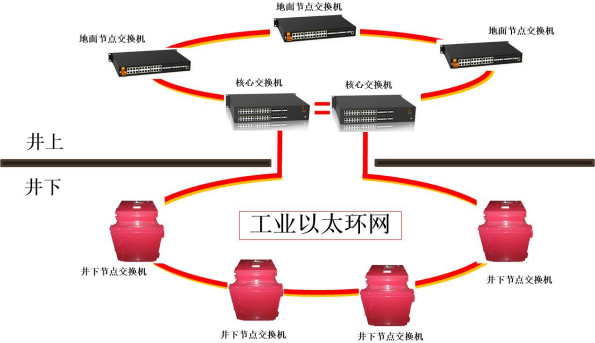
Mine Explosion-proof and Intrinsically Safe Industrial Ethernet Ring Network (10 Gigabit/Gigabit)
Chongqing Mas Sci&Tech Co., Ltd.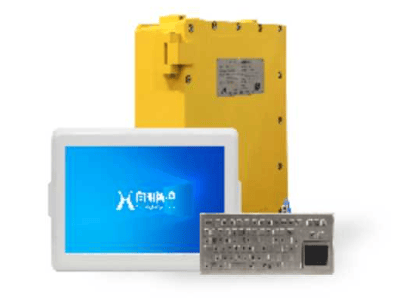
KJD127(A) Mining Explosion-Proof and Intrinsically Safe Computer
Taiyuan Xiangming Intelligent Control Technology Co., Ltd.
Multi-function Marine Monitoring Low-altitude Detection Radar Sea-air Boundary Ocean Dynamic Environment Measurement
Chengdu Dixin Technology Co., Ltd.
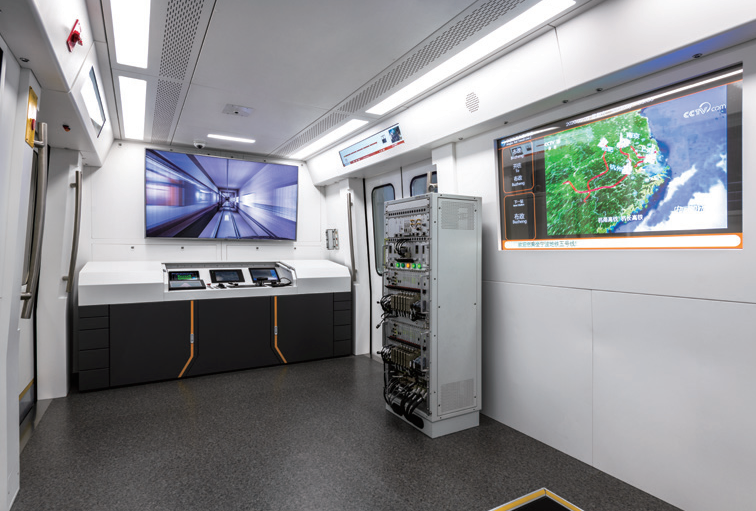

MUX Series Communication Interface Device for Security and Stability Control System
Nanjing NR Electric Co., Ltd.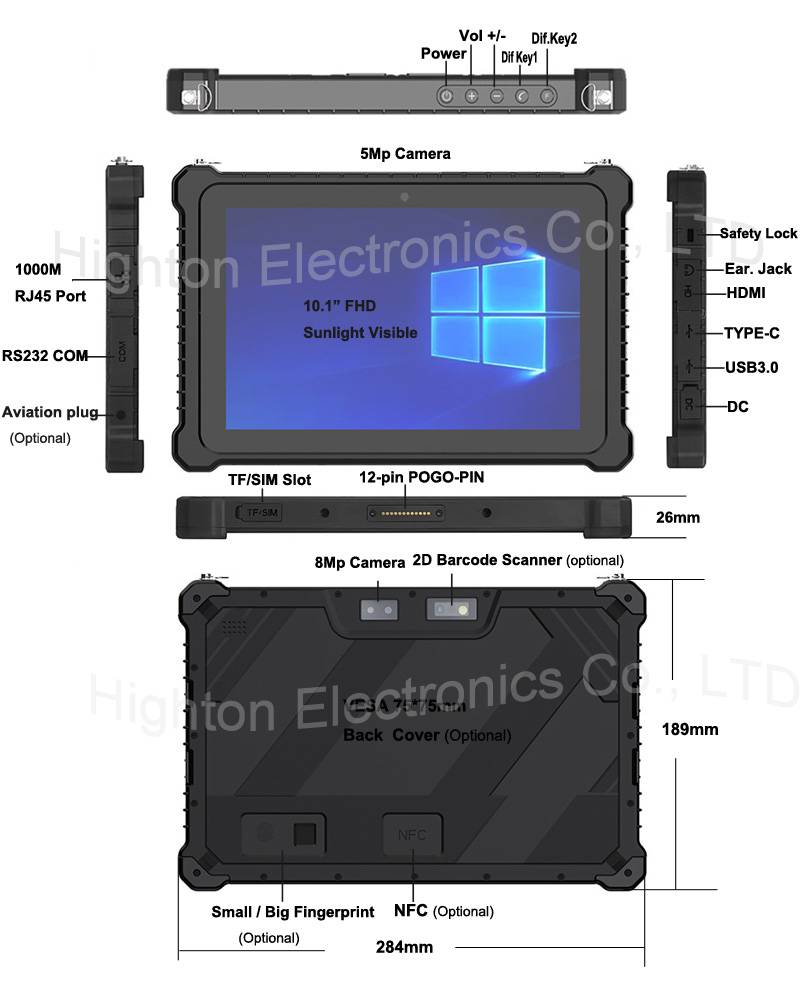
Hot Selling 10 Inch Intel N5100 I5 I7 FHD 8 +128GB 16+256GB Win10 Pro Win11 Pro 4G 5G Rugged Tablet PC Pad with NFC Barcode
Highton Electronics Co., Ltd.