Microsoft Plans September Release of Maia 300 Chip
en.Wedoany.com Reported - On August 10, plans for Microsoft's next-generation in-house AI chip, the Maia 300, came to light, with the product slated to debut in the fall of 2026, potentially as early as September. Currently, the chip remains in its pre-launch phase, and Microsoft has not yet disclosed its architecture, manufacturing process, computing power, memory configuration, or official deployment timeline.

Microsoft is in talks with TSMC regarding manufacturing capacity for the Maia 300, aiming to secure production capability for over 300,000 chips, with delivery scheduled for 2027. Future capacity targets could expand to more than 1 million units, but the exact scale will depend on the supply of key components and the outcome of capacity negotiations between the two parties.
Microsoft also plans to encourage large cloud computing customers, including Anthropic, to adopt the Maia 300, broadening the use of its in-house chips within Azure's AI infrastructure. However, Microsoft has not yet disclosed any related customer testing, procurement, or deployment agreements, and it remains uncertain whether the Maia 300 will be made available to external Azure customers.
Regarding production scale, Andrew Wall, General Manager of Microsoft's Azure Maia business, stated that the company will continue to treat in-house chips as part of its long-term AI infrastructure strategy but will not disclose specific production volumes; the figures currently circulating do not accurately reflect the project's actual scale. TSMC has not yet responded to the related capacity negotiations.
The Maia 300 will succeed the Maia 200 inference accelerator, which Microsoft released in January 2026. The Maia 200 is built on TSMC's 3-nanometer process, integrates native FP8 and FP4 tensor cores, and features 216GB of HBM3e high-bandwidth memory, 7TB per second of memory bandwidth, and 272MB of on-chip static random-access memory.
The Maia 200 has been deployed in Microsoft's U.S. data centers, primarily handling inference tasks for Copilot and Azure AI services. Microsoft claims that this chip processes over 30% more tokens per dollar compared to its existing chips. The specific performance of the Maia 300 and its architectural changes relative to the Maia 200 remain to be officially announced by Microsoft.
Related Products
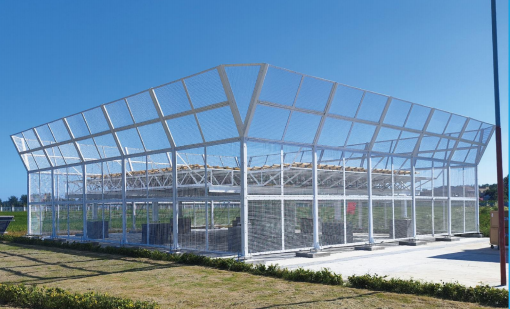

TWP16 P-Band Tropospheric Wind Profile Radar
China Huayun Meteorological Technology Group Co., Ltd.
MUX Series Communication Interface Device for Security and Stability Control System
Nanjing NR Electric Co., Ltd.





Comprehensive Mining Automation Control System
Beijing Tianma Intelligent Control Technology Co., Ltd.