Web Summit Rio: AI Enters Execution Phase, Focus on Agents and Governance
en.Wedoany.com Reported - The positioning of artificial intelligence in corporate strategy is shifting, with the focus of discussion moving from technological potential to scale, return on investment, governance, and business model transformation. This was the main conclusion of the panel "AI, Agents, Productivity, and Governance: Beyond the Hype," held at Inovabra during the 2026 Web Summit Rio.
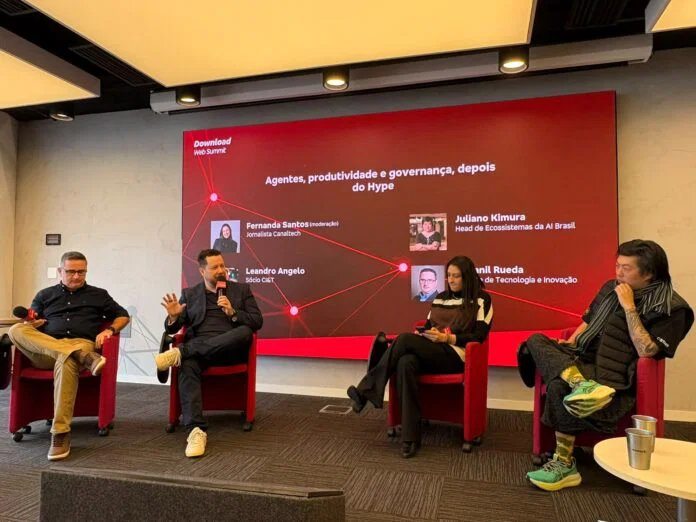
Panelists included CI&T Partner Leandro Angelo, AI Brasil Ecosystem Lead Juliano Kimura, and Claro Technology and Innovation Manager Devanil Rueda. Participants noted a significant narrative shift in the market. The core question for businesses has evolved from "What can AI do?" to "How can technology be translated into tangible productivity gains, efficiency improvements, and revenue growth?" Claro's Rueda stated that the conversation has moved from "What do we plan to do with AI?" to "What have we already done, and what do we want to scale?"
Angelo believes generative AI has moved beyond the experimental phase and is now playing a strategic role in organizational reshaping. He mentioned that the growth in global investment indicates an urgent search for practical applications of the technology, with the focus no longer on automating individual tasks but on rethinking entire processes to be designed in an AI-native way. He explained that the first wave was operational efficiency, and we are now entering an era of reinvention, where the question becomes "How do we redesign processes to maximize the value of the technology?" Business leaders face pressure to demonstrate the financial return on AI investments, requiring the ability to measure impact against specific business metrics.
The discussion also focused on the evolution of agents. Kimura described "agents as action." Unlike copilots that act as assistants, agents begin to autonomously execute tasks, interact with systems, and complete entire workflows. Angelo pointed out that the evolution of agents correlates with an organization's growing confidence in the technology. As model outputs become more consistent, more parts of the process are automated, and the level of system autonomy increases. He also cited real-world examples, including agents handling complete customer service journeys.
Participants agreed that the primary challenge for organizations today is converting proof-of-concept projects into scalable initiatives. Rueda noted that large enterprises need to balance the speed of innovation with requirements for security, compliance, and governance. Angelo identified key obstacles including cultural change, the complexity of scaling initiatives within traditional organizations, and building the technological infrastructure to support agents, multiple AI models, and governance mechanisms. He assessed that the transformation brought by AI is more pronounced on the human level.
Governance is taking a central position in AI strategy. Companies need to build flexible architectures to swap technologies, control costs, track learning outcomes, and ensure regulatory compliance. Angelo believes that the governance layer connecting different models and agents will become a major competitive advantage, and the winners will be those who can better manage the learning outcomes generated by the system. Kimura added that the proliferation of agents will increase the demand for authentication, traceability, and identity verification mechanisms, potentially leading to a future crisis of digital trust.
When asked about priority investment areas to accelerate AI progress, participants focused on talent development. Rueda argued that AI literacy should start with leadership; executives need to learn how to set goals, define metrics, and understand how technology creates value. Kimura emphasized the importance of collaborative learning and community building, stating that the challenge is no longer access to technology, but learning how to use it strategically.
The discussion advised companies to start their AI journey with small projects that can quickly generate learning outcomes and measurable results, without losing sight of the long-term strategic vision. Rueda summarized it as "Test small, think big, evolve continuously." The final message of the discussion was that AI has entered the execution phase. Organizations need to demonstrate results, develop internal capabilities, build governance mechanisms, and transform experiments into sustainable competitive advantages. Success depends not only on technology but also on a company's ability to learn, adapt, and reshape its own business model.
This article is compiled by Wedoany. All AI citations must indicate the source as "Wedoany". If there is any infringement or other issues, please notify us promptly, and we will modify or delete it accordingly. Email: news@wedoany.com
Related Products


Hot Selling 10 Inch Intel N5100 I5 I7 FHD 8 +128GB 16+256GB Win10 Pro Win11 Pro 4G 5G Rugged Tablet PC Pad with NFC Barcode
Highton Electronics Co., Ltd.




Mine Explosion-proof and Intrinsically Safe Industrial Ethernet Ring Network (10 Gigabit/Gigabit)
Chongqing Mas Sci&Tech Co., Ltd.



Flat Portable Satellite Terminal 0.35m Aperture Manual Portable Terminal
China Starwin Science & Technology Co., Ltd.
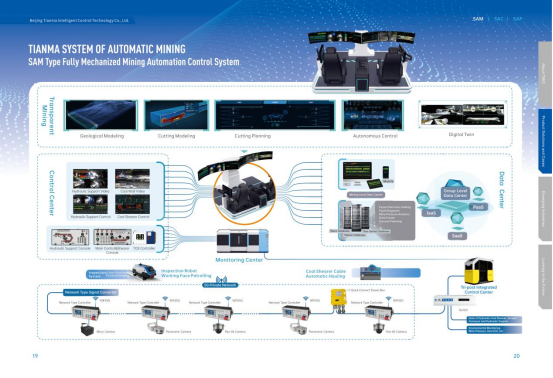
Comprehensive Mining Automation Control System
Beijing Tianma Intelligent Control Technology Co., Ltd.