UK-based Mindstone Launches Fair Source Agent Operating System Rebel
en.Wedoany.com Reported - London-based AI transformation startup Mindstone has launched an agent AI operating system called Rebel, which adopts a local-first architecture and is distributed under a "Fair Source" license. Mindstone CTO Greg Detre stated that shared memory is one of the most empowering things AI can achieve for knowledge workers.

Unlike development frameworks such as LangGraph, CrewAI, and AutoGPT, which require teams to independently combine databases, cloud infrastructure, and state management logic, Rebel stores the agent's core memory and instructions in local markdown (.md) text files. The main configuration file, agents.md, serves as the agent's core instruction layer and runtime boundary. Teams with no more than 100 total users can use the system for free, while organizations with more users need to purchase an enterprise license.
This architectural choice considers cost and vendor lock-in risks. Mindstone believes that common office formats like Word documents and PDFs contain formatting and metadata overhead that consumes model token context and increases API costs. The Markdown file format brings information closer to raw text, allowing more model context windows to be used for actual tasks. Additionally, since agent instructions and memory are stored locally as text files, enterprises are not locked into the interface or database of a single SaaS provider.
Another key feature of Rebel is multi-model orchestration. The system can decompose tasks into multiple parts and route different steps to different models, including splitting between local and cloud models based on information sensitivity. More powerful models handle planning or complex reasoning; lower-cost models handle routine work; local models handle sensitive steps or approval checks. Greg Detre explained that he wants to simply instruct the system to handle tasks, and the system can automatically distinguish between personal information, sensitive information, and shareable global information. This setup enables enterprises to dynamically switch models based on data privacy and security needs while controlling costs.
In terms of the memory system, Rebel adopts a hierarchical memory structure. When an interaction occurs, the system estimates the likelihood of that information being useful again. High-value information is written to a local readme.md file bound to a specific project space, medium-value information becomes reference links pointing to deeper historical records, and low-priority material is stored in an indexed memory directory, remaining available but dormant.
For large organizations, the Mindstone Pro version offers an impact dashboard that displays the time and cost saved by Rebel across various business units. The company states that the dashboard uses an independent closed LLM to evaluate telemetry data and adopts a conservative lower bound to calculate business impact, avoiding exaggerated productivity claims. The dashboard is isolated from personal workspaces, allowing IT and business leaders to assess adoption and return on investment without viewing employees' private agent activities.
Rebel is released under a Fair Source license. Under this license, individuals and organizations with no more than 100 concurrent users can run it for free. Organizations exceeding that threshold need to purchase a commercial Mindstone Pro license. Additionally, the license includes a two-year sunset clause: 24 months after a given version is released, that version automatically converts to an MIT open-source license.
In terms of security features, developer Nikita Pokryschko asked on the tech product sharing platform Product Hunt whether approval checks for sensitive operations could run entirely on local models. Detre responded by explaining Rebel's separation between planning, execution, and background security logic, adding that companies can configure Rebel to rely entirely on local models for gating decisions. Another developer, Clement Morel, asked how the system decides which memories can be shared. Detre stated that Rebel uses the user's local "Chief of Staff README" and defined spaces to separate personal, team, and company-wide information. When the agent encounters ambiguous context, the system pauses and requests user approval. CEO Joshua Wöhle emphasized that if an agent is to reside in an employee's workspace and remember context, the employee should be able to see how it works.
In terms of deployment cases, Mindstone stated that Rebel has been deployed among 250 employees at client Epignosis, covering sales, engineering, product, finance, and customer success teams. Over a 12-week deployment, Mindstone claimed Epignosis reclaimed the equivalent of eight full-time positions. Epignosis CEO Dimitris Tsingos stated in a press release that the boundary between learning and doing is disappearing, changing how organizations scale everything.
Mindstone has secured $5 million in funding from private investors, including Pearson Ventures, Moonfire Ventures, and Zanichelli Venture. The company was founded in 2020 under the leadership of CEO Joshua Wöhle, who previously co-founded digital child safety company SuperAwesome. Initially positioned in the consumer education technology market, the company shifted to business-to-business enablement between 2022 and 2024. Currently, Mindstone has signed commercial contracts with companies such as The Home Depot, Hyatt Hotels Corporation, Pearson, and Ernst & Young. Rebel is now available for macOS (Intel and Apple Silicon models) and Windows, with a Linux version under development.
This article is compiled by Wedoany. All AI citations must indicate the source as "Wedoany". If there is any infringement or other issues, please notify us promptly, and we will modify or delete it accordingly. Email: news@wedoany.com
Related Products

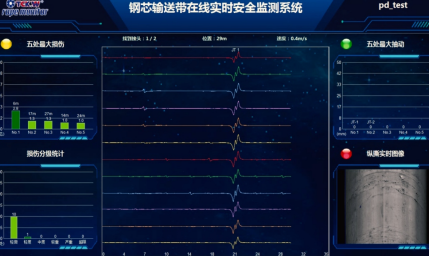
Conveyor Belt Intelligent Monitoring System
LUO YANG WIRE ROPE INSPECTION TECHNOLOGY CO., LTD.

Comprehensive Mining Automation Control System
Beijing Tianma Intelligent Control Technology Co., Ltd.


Multi-function Marine Monitoring Low-altitude Detection Radar Sea-air Boundary Ocean Dynamic Environment Measurement
Chengdu Dixin Technology Co., Ltd.
TWP16 P-Band Tropospheric Wind Profile Radar
China Huayun Meteorological Technology Group Co., Ltd.